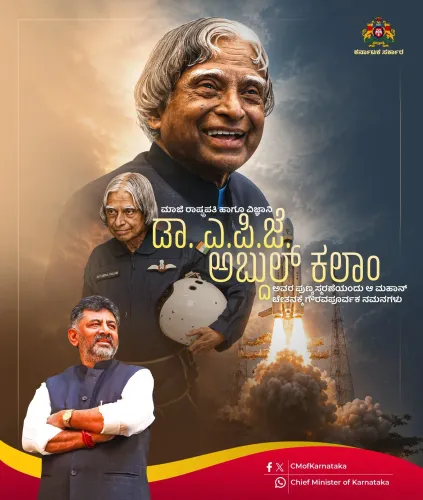
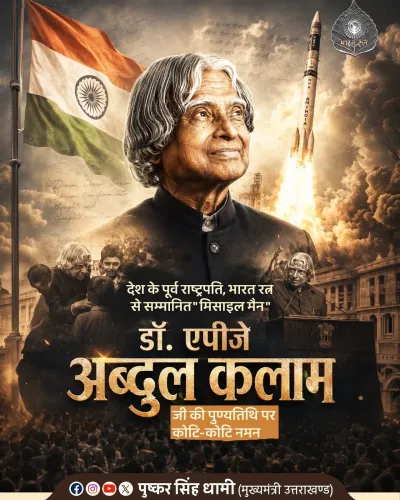
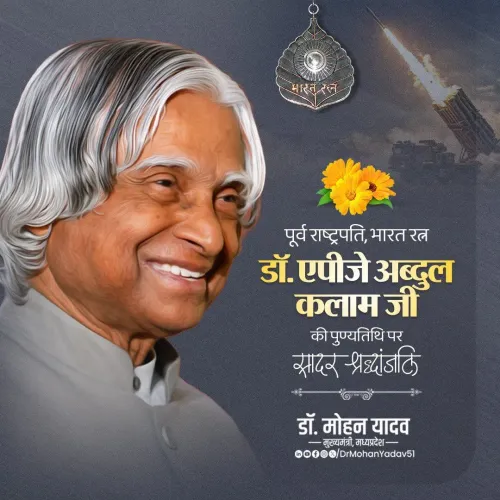
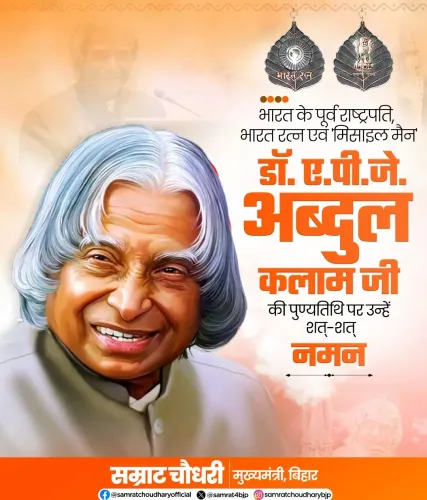
Gadkari pays tribute to Missile Man Dr Kalam on death anniversary
Synopsis
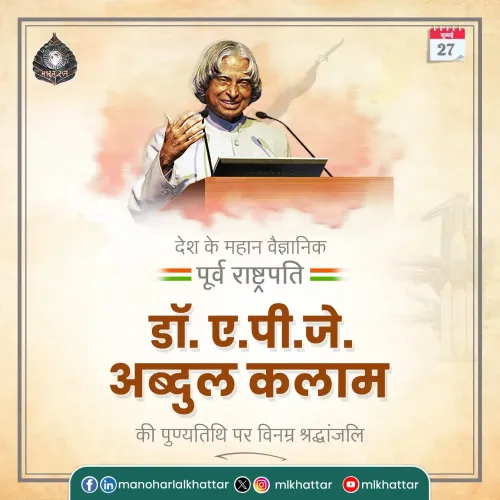
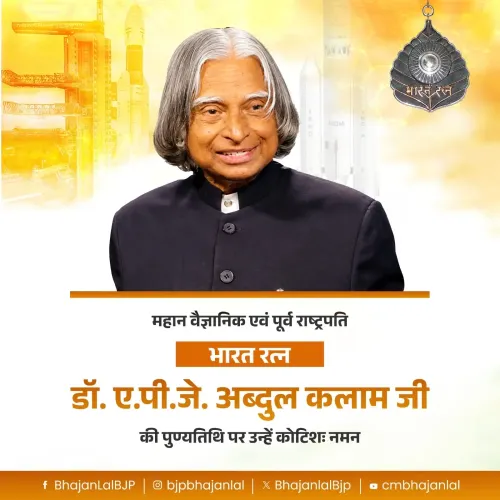
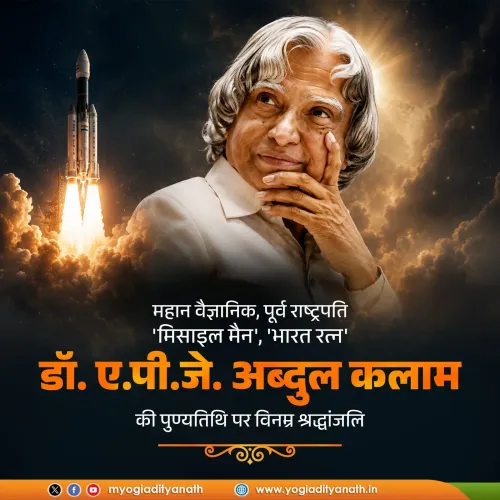
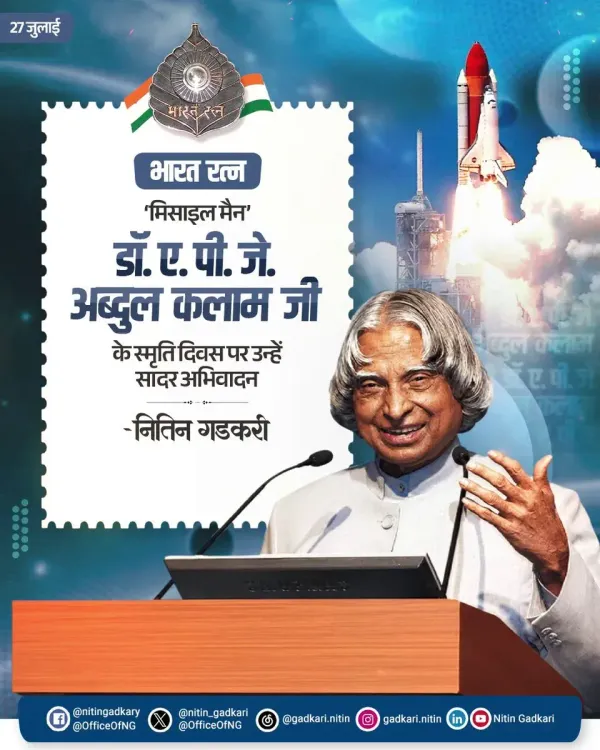
Union Minister Nitin Gadkari on 27 July paid tribute to former President and Bharat Ratna awardee Dr. A.P.J. Abdul Kalam on his death anniversary, honouring the 'Missile Man of India' whose scientific and presidential legacy continues to inspire the nation.
Key Takeaways
Nitin Gadkari posted a tribute on X on 27 July marking the death anniversary of Dr.
Kalam passed away on 27 July 2015 at the IIM Shillong campus.
He was awarded the Bharat Ratna in 1997 and served as President of India from 2002 to 2007 .
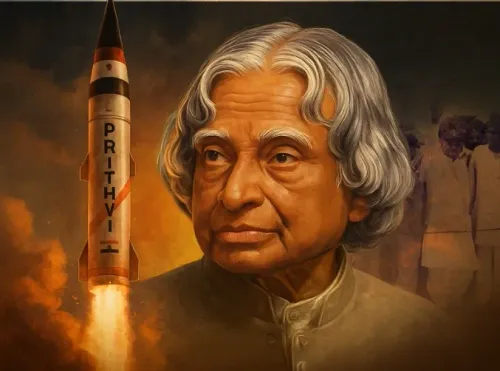
Kalam led the Integrated Guided Missile Development Programme (IGMDP) in the 1980s, earning him the title 'Missile Man of India'.
Leaders across party lines observe 27 July as a national remembrance day for Dr.
Kalam each year since 2015.
Commemorations are held annually at the Dr.
Kalam Memorial in Rameswaram, Tamil Nadu .
Union Road Transport and Highways Minister Nitin Gadkari on Monday, 27 July paid homage to former President and Bharat Ratna recipient Dr. A.P.J. Abdul Kalam on his death anniversary, honouring the scientist-statesman's enduring legacy in a post on X.
Gadkari's tribute, written in Hindi, described Dr. Kalam as a 'pūrva rāṣṭrapati, mahān vaijñānik' (former President and great scientist) and extended respectful salutations on the occasion of his 'smriti divas' (remembrance day). The post carried the national flag emoji and a folded-hands gesture, reflecting the reverence with which the minister addressed the memory of the 'Missile Man of India'.
Context
Dr. Avul Pakir Jainulabdeen Abdul Kalam passed away on 27 July 2015 while delivering a lecture at the Indian Institute of Management, Shillong. Since then, political leaders, scientists, educators, and citizens across India have observed the date as a day of national remembrance. Gadkari's post is part of this annual cross-party tradition, with tributes flowing from leaders of virtually every political formation in the country.
Policy Backdrop
Dr. Kalam served as Scientific Adviser to the Defence Minister and was the driving force behind the Integrated Guided Missile Development Programme (IGMDP), launched in the 1980s, which produced missiles including Agni and Prithvi. He also made foundational contributions to ISRO and DRDO, helping establish India's strategic and space technology capabilities. Awarded the Bharat Ratna in 1997, he later served as the 11th President of India from 2002 to 2007, becoming one of the most beloved occupants of Rashtrapati Bhavan.
Beyond his scientific contributions, Dr. Kalam was celebrated as 'the People's President' and remained deeply engaged with India's youth and education agenda throughout his post-presidential years, authoring widely read books and delivering thousands of lectures at schools and universities.
Stakeholders and Impact
Dr. Kalam's death anniversary resonates strongly with India's scientific community, defence establishment, and student population. His vision — encapsulated in initiatives such as Vision 2020 — continues to inform discourse around science education and indigenous technology development. Memorials at his birthplace Rameswaram, Tamil Nadu and at institutions he was associated with typically witness large commemorative gatherings on this date.
Political tributes such as Gadkari's serve to reinforce the national consensus around Dr. Kalam's legacy, cutting across ideological lines. The BJP, like other parties, has consistently invoked his memory to underscore commitments to self-reliance in technology and defence — themes central to current government policy.
What's Next
Annual commemorations at the Dr. A.P.J. Abdul Kalam Memorial in Rameswaram and at institutions bearing his name are expected to mark the occasion. Policymakers may also reference his legacy in upcoming science, space, or defence budget discussions, as his vision of a technologically self-reliant India remains a touchstone in those debates.
Point of View
Reflecting the rare political consensus the former President commands in Indian public life. For the BJP, invoking Dr. Kalam carries particular resonance: his legacy of indigenous missile and space technology aligns neatly with the government's 'Aatmanirbhar Bharat' and defence self-reliance narrative. The tribute also signals the party's continued effort to claim ownership of a scientific and secular nationalist icon who transcends religious and regional identities. Such gestures cost little politically but yield consistent dividends in projecting a forward-looking, science-friendly image.
NationPress
27 Jul 2026
Frequently Asked Questions
When did Dr. APJ Abdul Kalam die?
Dr. A.P.J. Abdul Kalam passed away on 27 July 2015 while delivering a lecture at the Indian Institute of Management in Shillong, Meghalaya.
Why is Nitin Gadkari paying tribute to Dr. Kalam?
27 July is the death anniversary of Dr. Kalam, and Union Minister Nitin Gadkari posted a tribute on X to honour the former President's memory, as is customary among Indian political leaders on this date.
Why is Dr. Kalam called the Missile Man of India?
Dr. Kalam earned the title 'Missile Man of India' for leading the Integrated Guided Missile Development Programme (IGMDP) in the 1980s, which developed key missiles including Agni and Prithvi for India's defence forces.
What awards did Dr. APJ Abdul Kalam receive?
Dr. Kalam was awarded the Bharat Ratna in 1997 , India's highest civilian honour, among several other national awards for his contributions to science and public service.
When did Dr. Kalam serve as President of India?
Dr. A.P.J. Abdul Kalam served as the 11th President of India from 2002 to 2007 , widely regarded as one of the most popular presidents in the country's history.