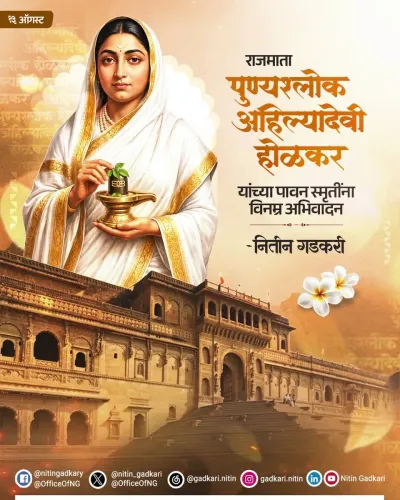
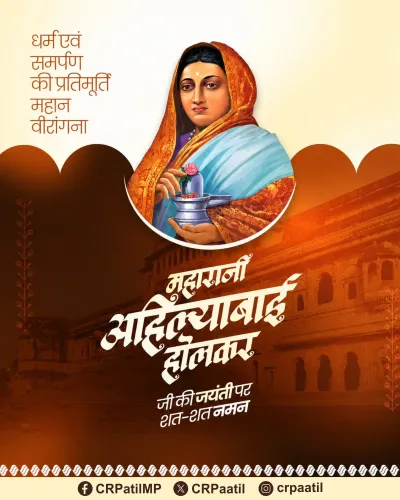
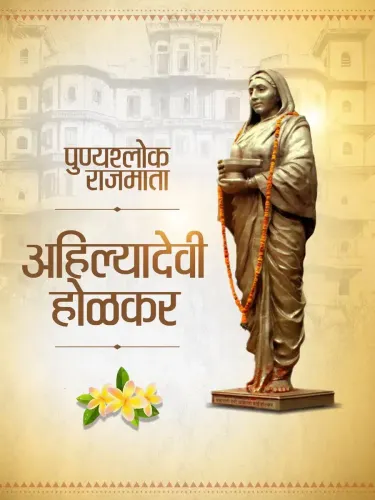
Gadkari pays tribute to Ahilyadevi Holkar on her Jayanti
Synopsis
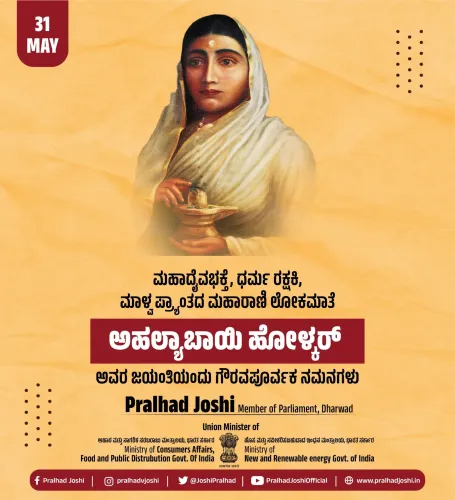
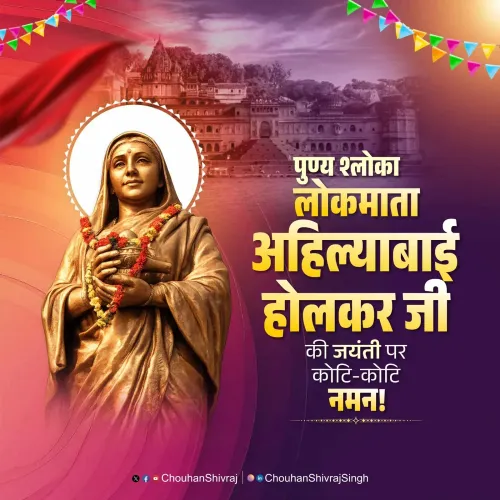
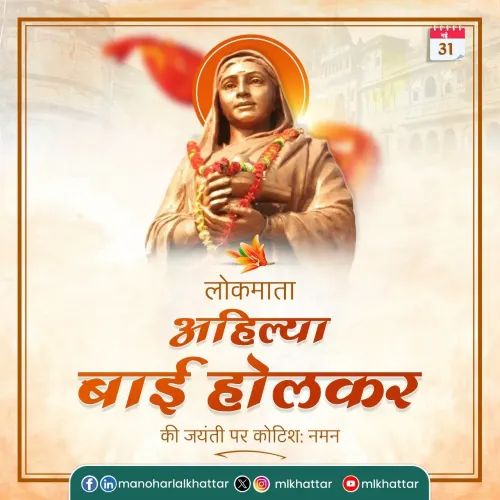
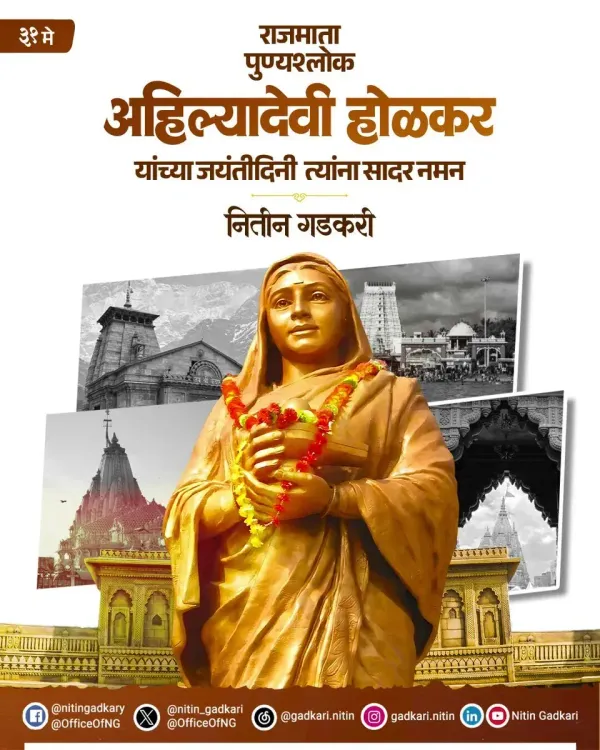
Union Minister Nitin Gadkari on 31 May 2026 paid tribute to Punyashlok Ahilyadevi Holkar on her Jayanti, honouring the 18th-century Holkar dynasty queen's legacy of benevolent governance, public works, and devout administration in a Marathi post on X.
Key Takeaways
Union Minister Nitin Gadkari posted a tribute to Punyashlok Ahilyadevi Holkar on her Jayanti on 31 May 2026 .
The post was written in Marathi and described her as a philosopher-queen who lived with self-respect and dignity.
Gadkari honoured her with titles including 'generous benefactor', 'accomplished', 'devout', and 'efficient ruler'.
Ahilyadevi Holkar ruled the Malwa region from Maheshwar , Madhya Pradesh , in the 18th century and is renowned for building roads, temples, and ghats across central India.
The tribute reflects a broader BJP pattern of marking anniversaries of pre-colonial Maratha and central Indian rulers on social media.
Commemorative events are expected in Maharashtra and Madhya Pradesh on the occasion.
Union Road Transport and Highways Minister Nitin Gadkari on Sunday, 31 May 2026, paid tribute to Punyashlok Ahilyadevi Holkar, the 18th-century philosopher-queen of the Holkar dynasty, on her birth anniversary, honouring her legacy as a self-respecting, benevolent, and devout ruler.
Context
Gadkari's post, written in Marathi, described Ahilyadevi Holkar as a ruler who embodied the philosophy of the Holkar dynasty and lived with dignity and self-respect. He saluted her with the words 'सादर नमन' (respectful salutations), noting that she rightfully earned titles such as 'danshoora' (generous benefactor), 'kartrutvaan' (accomplished), 'dharmapraayan' (devout), and 'karyaksham' (efficient) ruler. The post was accompanied by a video.
Ahilyadevi Holkar Jayanti is observed annually to commemorate the birth of one of India's most celebrated pre-colonial women administrators. She is officially recognised by the Government of India with the honorific Punyashlok, denoting a life of great virtue.
Policy Backdrop
Ahilyadevi Holkar ruled the Malwa region from her capital at Maheshwar on the Narmada river in present-day Madhya Pradesh during the 18th century. She is historically credited with an extraordinary record of public works — constructing roads, temples, ghats, rest houses, and water tanks across central India and beyond, making her a figure of enduring relevance to infrastructure and public administration discourse.
The symbolic resonance between Gadkari's own portfolio — overseeing India's road and highway network — and Ahilyadevi's documented legacy of building roads and public facilities is frequently noted in political and cultural commentary. Her model of governance centred on welfare, public infrastructure, and religious patronage continues to be cited as a benchmark of enlightened administration.
Stakeholders and Impact
The tribute carries particular significance for Maharashtra and Madhya Pradesh, where Ahilyadevi Holkar commands deep reverence among the Marathi-speaking population and among communities across the Malwa belt. Cultural organisations and historical societies in both states regularly organise commemorative events on her Jayanti.
Senior BJP leaders, including Gadkari, have consistently marked the birth anniversaries of pre-colonial Maratha and central Indian rulers on social media, a practice that reinforces the party's broader effort to elevate indigenous governance traditions within national historical narratives. Gadkari, who represents Nagpur and maintains a strong connect with the Marathi public, is among the most prominent voices in this tradition.
What's Next
State governments in Madhya Pradesh and Maharashtra are expected to hold official commemorations and cultural programmes to mark Ahilyadevi Holkar Jayanti. Observers will watch for any announcements of new infrastructure projects, cultural institutions, or civic facilities named in her honour, continuing a pattern of translating such commemorations into tangible policy gestures. Gadkari's tribute is likely to be echoed by other senior leaders across party lines, reflecting the broad, cross-partisan reverence for her legacy.
Point of View
Reinforcing his connect with the Marathi electorate while aligning with the BJP's sustained effort to centre pre-colonial Hindu rulers in the national imagination. The symbolic overlap between Ahilyadevi's record of building public infrastructure and Gadkari's own ministerial identity as India's roads czar lends the tribute an added layer of political coherence. Such posts, now routine among senior BJP leaders, serve simultaneously as historical commemoration and soft identity politics. The consistency of this pattern across anniversaries suggests an institutionalised social-media strategy rather than isolated gestures.
NationPress
19 Sept 2026
Frequently Asked Questions
Who was Ahilyadevi Holkar?
Ahilyadevi Holkar was an 18th-century ruler of the Holkar dynasty who governed the Malwa region from Maheshwar on the Narmada river in present-day Madhya Pradesh. She is celebrated for her extensive public works — roads, temples, ghats, and charitable endowments — and is officially honoured with the title Punyashlok by the Government of India.
When is Ahilyadevi Holkar Jayanti celebrated?
Ahilyadevi Holkar Jayanti is observed annually to mark her birth anniversary. In 2026, tributes including Nitin Gadkari's post were shared on 31 May.
Why did Nitin Gadkari pay tribute to Ahilyadevi Holkar?
Gadkari posted a tribute on X on her Jayanti, honouring her as a self-respecting, benevolent, and devout ruler of the Holkar dynasty. Senior BJP leaders regularly mark such anniversaries on social media to highlight indigenous governance traditions.
What is the connection between Nitin Gadkari and Ahilyadevi Holkar's legacy?
Gadkari, as Union Minister for Road Transport and Highways, shares a symbolic connection with Ahilyadevi Holkar, who is historically credited with building roads and public infrastructure across central India in the 18th century.
Where was Ahilyadevi Holkar's capital?
Ahilyadevi Holkar ruled from Maheshwar, a town on the banks of the Narmada river in present-day Madhya Pradesh, which was the seat of her architectural and religious patronage.