Giriraj Singh Hails 12 Years of Modi Govt Farm Reforms
Synopsis
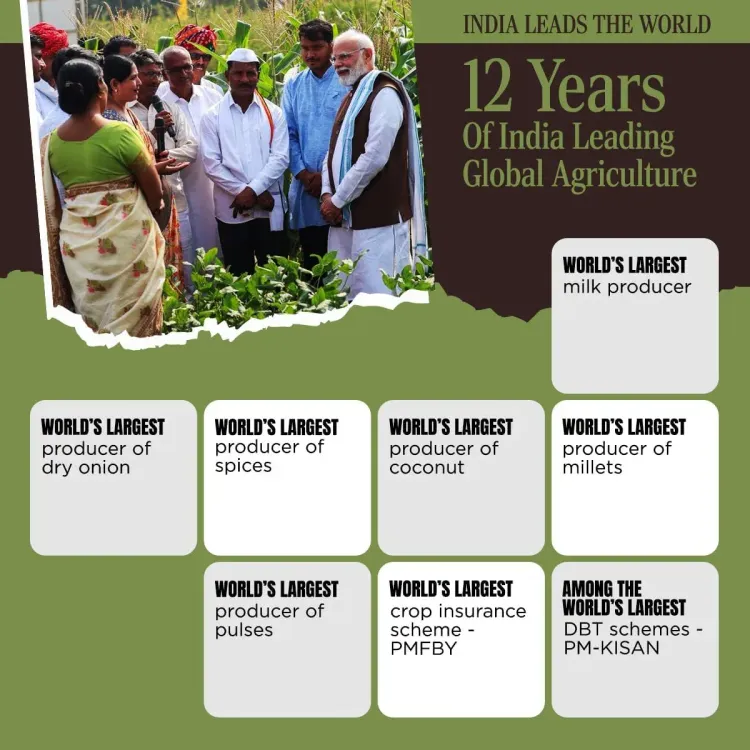
Union Textiles Minister Giriraj Singh praised PM Modi's twelve-year agricultural record on 11 June 2026, highlighting DBT, MSP protection and e-NAM as tools that have shifted Indian farming from subsistence to commercial viability under the #12YearsOfKisanSamriddhi campaign.
Key Takeaways
Union Textiles Minister Giriraj Singh posted on 11 June 2026 crediting 12 years of PM Modi's leadership with transforming Indian agriculture.
He cited Direct Benefit Transfer (DBT) , MSP protection and the e-NAM digital platform as the three key instruments of this transformation. e-NAM was launched in April 2016 to link state mandis into a single electronic trading network, reducing intermediary dependence.
The PM-KISAN scheme provides Rs 6,000 annually to landholding farmer families via direct bank transfer.
The government has raised MSP for kharif and rabi crops every year since 2014 , targeting a 50 per cent return over production cost.
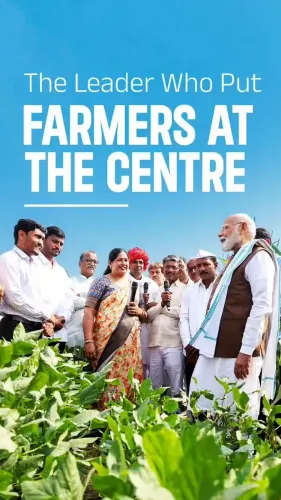
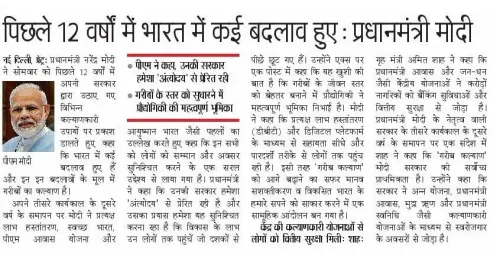
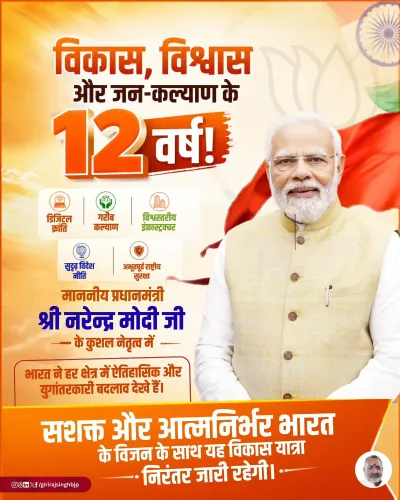
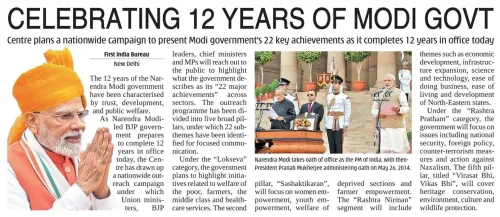
The post was part of the BJP's #12YearsOfKisanSamriddhi campaign marking the Modi government's twelve-year milestone.
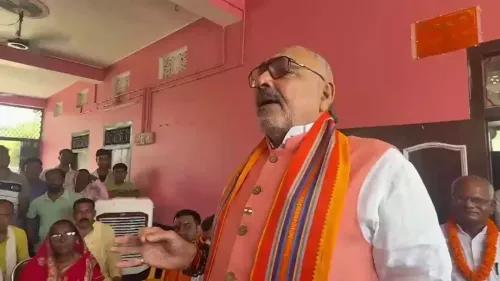
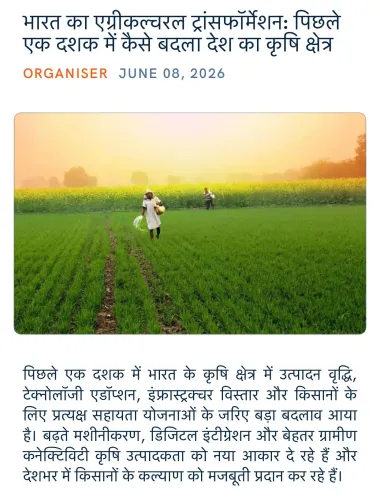
Union Textiles Minister Giriraj Singh on Thursday, 11 June 2026, credited Prime Minister Narendra Modi's twelve years in office with transforming Indian agriculture from a subsistence-oriented sector into a technology-driven, financially secure and globally recognised enterprise. Posting on X, the senior BJP leader from Begusarai, Bihar, said the country's farmers — the 'annadata' (providers of food) — have become the primary pillar of India's economic progress.
In his post, Singh wrote that Indian agriculture has moved beyond the traditional mindset of mere 'jeevan-yapat' (subsistence living) and is now being empowered through technology, strong financial security and global recognition. He specifically cited Direct Benefit Transfer (DBT), Minimum Support Price (MSP) protection, and the digital marketplace platform e-NAM as the instruments driving this shift.Context
The post was tagged with the hashtag #12YearsOfKisanSamriddhi, placing it within a coordinated BJP communication campaign marking the completion of twelve years of the Modi government, which took office in May 2014. Singh, though currently heading the Textiles Ministry, has long been a vocal commentator on rural and agricultural issues, reflecting the party's continued emphasis on farmer welfare as a core political plank.
Policy Backdrop
e-NAM, the Electronic National Agriculture Market, was launched in April 2016 to connect mandis across states into a single online trading platform, reducing the role of intermediaries and allowing farmers to access better prices. The PM-KISAN scheme, announced in the 2019-20 Union Budget, provides Rs 6,000 annually to landholding farmer families through direct bank transfers under the DBT framework.
The government has also announced periodic MSP increases for both kharif and rabi crops every year since 2014, with a stated objective of ensuring a 50 per cent return over the cost of production. Together, these measures form the agricultural pillar of the broader Atmanirbhar Bharat framework, which seeks to integrate rural producers into formal markets and reduce subsidy leakages.
Stakeholders and Impact
The primary beneficiaries of the schemes cited by Singh are India's farming households, mandi traders and rural communities. DBT channels have been credited with reducing leakages in subsidy delivery by routing funds directly into beneficiary bank accounts, bypassing traditional intermediary chains. e-NAM's expansion to additional mandis and commodities has sought to give farmers price discovery tools previously unavailable at the village level.
Mandi traders and agricultural value-chain participants have also been affected, as digital platforms shift price-setting dynamics. The broader rural economy, including input suppliers, logistics providers and rural financial institutions, is interlinked with the health of these policy mechanisms.
What's Next
Parliamentary debates on the next MSP revision cycle and any proposed expansion of e-NAM coverage to additional mandis or commodities remain key policy watchpoints. As the BJP continues to mark its twelve-year governance milestone through targeted campaigns such as #12YearsOfKisanSamriddhi, the government's agricultural record is likely to remain a central theme in political messaging ahead of upcoming electoral cycles. The durability of these reforms — and whether they translate into measurable income gains for the average farming household — will define their long-term political and economic legacy.
Point of View
MSP and e-NAM to anchor a broad claim of agricultural transformation in verifiable policy landmarks. By invoking the 'annadata' framing alongside Atmanirbhar Bharat language, the BJP reinforces a narrative that positions farmer welfare as both a moral and economic achievement of the Modi era. The timing, twelve years to the month since the 2014 mandate, suggests a coordinated pre-electoral consolidation of the rural voter base. Whether the messaging resonates will depend on ground-level income realities in agrarian states like Bihar, Singh's own constituency.
NationPress
21 Sept 2026
Frequently Asked Questions
What did Giriraj Singh say about Modi government's farm policies?
Giriraj Singh posted on X on 11 June 2026 saying that under PM Modi's twelve years of leadership, Indian agriculture has moved beyond subsistence farming and is now empowered through technology, financial security tools like DBT and MSP, and digital platforms like e-NAM.
What is e-NAM and how does it help farmers?
e-NAM, or the Electronic National Agriculture Market, was launched in April 2016 to connect mandis across India into a single online trading platform, giving farmers access to better price discovery and reducing dependence on intermediaries.
What is PM-KISAN and how much do farmers get?
PM-KISAN is a direct income support scheme announced in the 2019-20 Union Budget that provides Rs 6,000 annually to landholding farmer families, transferred directly into their bank accounts through the DBT framework.
What is the MSP and has it increased under Modi?
The Minimum Support Price is a government-announced floor price for 23 crops to protect farmers from market volatility. The government has announced MSP increases for kharif and rabi crops every year since 2014, with a stated target of ensuring a 50 per cent return over production cost.
What is the #12YearsOfKisanSamriddhi hashtag about?
#12YearsOfKisanSamriddhi is a BJP campaign hashtag marking twelve years of the Modi government, used to highlight agricultural welfare measures and farmer-focused policies implemented since May 2014.