Giriraj Singh Leads Outreach Drive in Bakhri for Modi's 12-Year Mark
Synopsis
Union Textiles Minister Giriraj Singh conducted a special public contact campaign in Bakhri, Bihar, on June 18, 2026, marking 12 years of the Modi government. He offered prayers at a local temple, honoured its head priest, and discussed central welfare schemes and the Viksit Bharat 2047 vision with rural residents.
Key Takeaways
Union Textiles Minister Giriraj Singh participated in a public outreach event in Bakhri assembly constituency, Bihar , on June 18, 2026 .
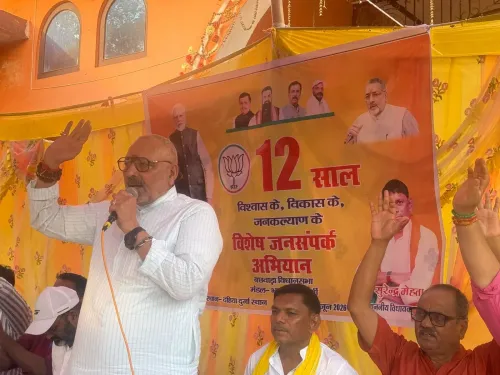
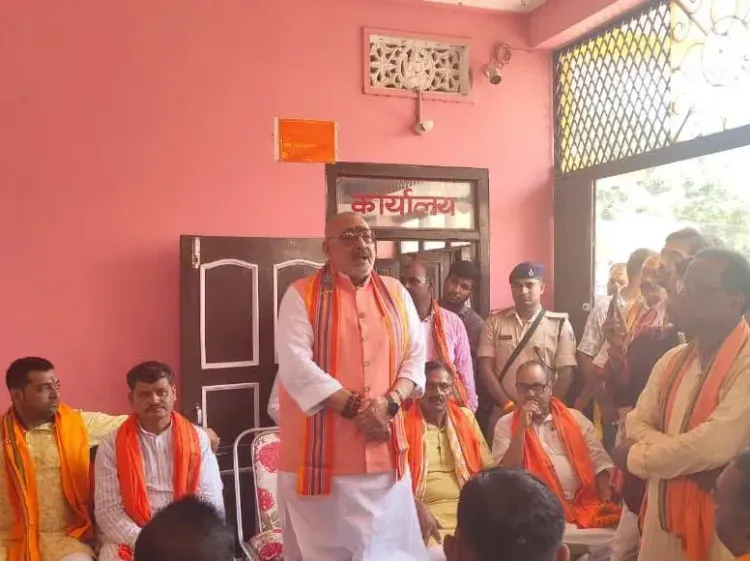
The campaign marks 12 years of the Narendra Modi -led central government under the theme '12 Saal Vishwas, Vikas aur Jankalyan ke.' Singh offered prayers at Baba Harigiridham Gadpura temple and honoured the temple's Panda ji before engaging with local residents.
Discussions at the event covered central welfare schemes, governance achievements, and the Viksit Bharat 2047 vision.
The outreach is part of a broader BJP pattern of combining temple visits with grassroots political communication, especially in electorally significant Bihar .
Singh stated that 'public trust and public participation are the greatest strength of a Developed India.'
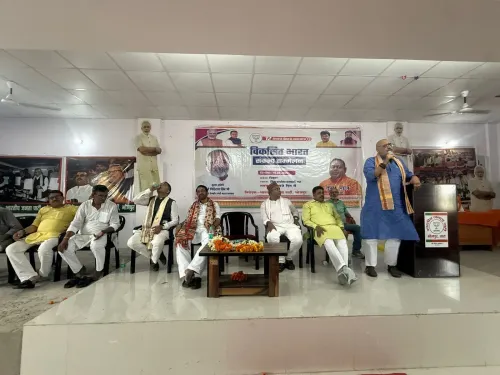
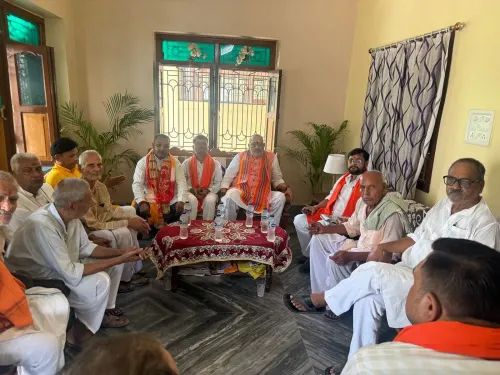
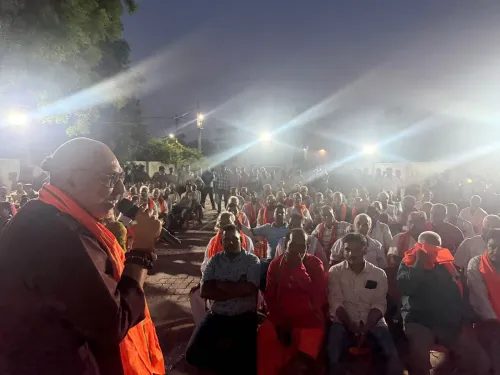
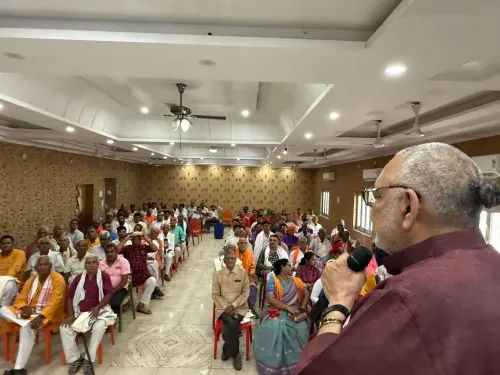
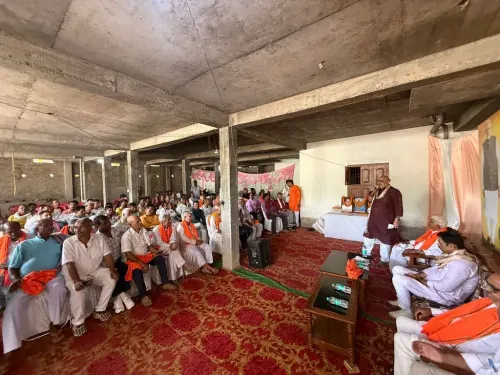
Union Textiles Minister Giriraj Singh on Thursday, June 18, 2026, participated in a special public contact campaign in the Bakhri assembly constituency of Bihar, marking the completion of 12 years of the Narendra Modi-led central government. The minister offered prayers at the Baba Harigiridham Gadpura temple, honoured the temple's Panda ji (head priest), and engaged in direct conversation with rural residents of the area.
Context
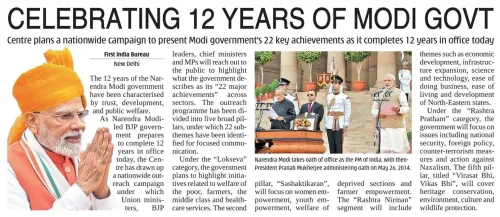
Singh's post, shared in Hindi, described the event as part of a vishesh jansamparka abhiyan — a special public outreach drive — held to mark what the Bharatiya Janata Party is calling '12 Saal Vishwas, Vikas aur Jankalyan ke' ('12 years of trust, development, and public welfare'). The occasion marks the period since May 2014, when Prime Minister Modi was first sworn into office. Singh wrote that the gathering included detailed discussion on the central government's welfare schemes, its 'historic achievements,' and the resolve toward a Viksit Bharat (Developed India).
The minister concluded his post with the assertion: 'Janvishwas aur janbhagidari hi Viksit Bharat ki sabse badi shakti hai' — 'Public trust and public participation are the greatest strength of a Developed India.'
Policy Backdrop
The outreach is consistent with the BJP's Viksit Bharat 2047 vision — the government's stated goal of transforming India into a fully developed nation by the centenary of independence. The Viksit Bharat Sankalp Yatra, launched nationally in 2023, was an earlier large-scale initiative to carry awareness of central welfare schemes directly to rural households. The current campaign appears to be a continuation of that grassroots communication strategy, now anchored to the 12-year governance milestone.
Bihar, as one of India's most populous and politically significant states, has been a consistent focus for such outreach. Begusarai, Singh's Lok Sabha constituency, falls within the state and has seen repeated BJP-led public engagement drives linking development narratives with local cultural events.
Stakeholders and Impact
The primary audience for such campaigns is rural Bihar — communities that are both significant beneficiaries of central welfare schemes such as housing, cooking gas connections, and direct benefit transfers, and a critical electoral base. By combining a temple visit with a public dialogue session, the event blends cultural outreach with political communication, a format the BJP has employed consistently since 2014.
Local religious figures, represented here by the Panda ji of Baba Harigiridham Gadpura, serve as community anchors in such events, lending the gatherings a degree of local credibility and reach beyond formal party structures. Rural residents engaged directly by a Union Minister on scheme benefits represent a direct feedback loop between the Centre and the ground.
What's Next
The BJP is expected to sustain similar public contact programmes across constituencies in Bihar and other states through the coming months, with the Viksit Bharat 2047 framework serving as the overarching narrative. Parliamentary discussions on the implementation and budgetary allocations of central welfare schemes — particularly in the monsoon session — will likely reflect the political emphasis being placed on this 12-year record. How effectively scheme outcomes on the ground match the outreach messaging will shape voter response in the state ahead of future electoral cycles.
Point of View
Local priests — as entry points for delivering a governance narrative to rural audiences. The timing, pegged to the 12-year milestone, signals a deliberate effort to consolidate the party's record into a single, shareable political brand ahead of future electoral contests in Bihar. Bihar's weight in national coalition arithmetic makes sustained grassroots presence there a strategic imperative for the BJP, not merely a ceremonial gesture. The Viksit Bharat 2047 frame gives these local events a national ideological anchor, linking village-level conversations to a long-horizon development promise.
NationPress
17 Sept 2026
Frequently Asked Questions
Why did Giriraj Singh visit Bakhri on June 18 2026?
Giriraj Singh visited Bakhri as part of a special public contact campaign marking 12 years of the Narendra Modi government, during which he offered prayers at the Baba Harigiridham Gadpura temple and spoke with rural residents about central welfare schemes.
What is the BJP's '12 Saal Vishwas Vikas aur Jankalyan' campaign?
It is a public outreach drive by the BJP to mark 12 years of the Modi government since May 2014, highlighting welfare scheme delivery, development milestones, and the Viksit Bharat 2047 vision through grassroots events across constituencies.
What is Viksit Bharat 2047?
Viksit Bharat 2047 is the central government's stated vision to make India a fully developed nation by 2047, the centenary of independence, promoted through public awareness campaigns and scheme delivery at the grassroots level.
What is Giriraj Singh's constituency?
Giriraj Singh is the Lok Sabha Member of Parliament from Begusarai in Bihar and currently serves as the Union Minister of Textiles in the Modi government.
What was discussed at the Bakhri public outreach event?
The event included discussions on the central government's welfare schemes, its governance achievements over 12 years, and the resolve to achieve a Developed India by 2047, according to Giriraj Singh's post.