Giriraj Singh shares RBI Governor's note on India's resilience
Synopsis
Union Textiles Minister Giriraj Singh shared RBI Governor Sanjay Malhotra's assessment on August 12, 2026, stating that India's economy and banks are well-positioned to handle the West Asia crisis and global trade risks, backed by strong forex reserves and banking buffers.
Key Takeaways
Union Textiles Minister Giriraj Singh shared the RBI Governor's resilience assessment on August 12, 2026 .
RBI Governor Sanjay Malhotra stated that India's economy and banks are well-positioned to tackle West Asia crisis and trade risks.
India's resilience rests on large foreign exchange reserves and strong banking sector capital adequacy and liquidity buffers.
West Asia disruptions can spike oil prices and pressure India's current account — making the RBI's confidence signal significant.
The government has a pattern of amplifying central bank assessments to project economic stability during geopolitical turbulence.
The next RBI monetary policy review and external sector report will be key indicators to watch.
As West Asia tensions ripple through global oil markets and trade corridors, Union Textiles Minister Giriraj Singh on Wednesday, August 12, 2026 amplified a key reassurance from the top of India's financial establishment — that the Indian economy and its banks are well-positioned to weather the storm.
What RBI Governor Malhotra said
RBI Governor Sanjay Malhotra assessed that India's economy and banking sector hold a strong position to handle risks stemming from the West Asia crisis and broader trade disruptions. The statement, shared by the Minister via the NaMo App, signals the government's intent to project stability at a moment of heightened global uncertainty.
Why West Asia matters for India's economy
West Asia sits at the intersection of India's energy security and remittance flows. Conflict in the region can spike crude oil prices, widen India's import bill, and pressure the current account. India has historically been among the most exposed large emerging economies to Middle East volatility — which makes a central bank endorsement of resilience carry real weight.
The Reserve Bank of India has built its case for resilience on two pillars: India's swelling foreign exchange reserves, which provide a buffer against external shocks, and the banking sector's strengthened capital adequacy and liquidity coverage ratios. These buffers have been stress-tested against commodity price spikes before — most notably after the 2022 Russia-Ukraine conflict jolted global energy and food markets.
A minister's amplification, and what it signals
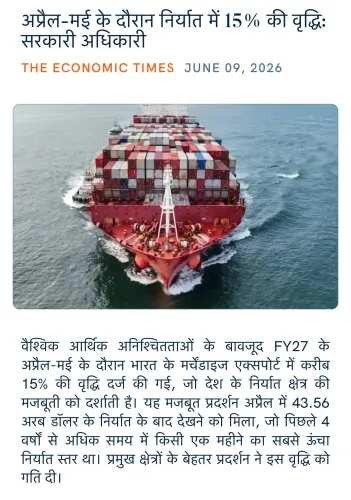
Giriraj Singh's decision to share this assessment fits a recognisable pattern: the government using credible, independent central bank voices to reinforce economic confidence during periods of geopolitical turbulence. The Textiles Ministry's stake is direct — India's export-oriented textile sector is sensitive to shipping disruptions and demand shifts in key markets that route through West Asian trade corridors.
The next RBI monetary policy review and quarterly external sector report will be the real test of whether the optimism holds.
Point of View
Giriraj Singh is doing more than routine information-sharing — he is lending a minister's megaphone to a central bank signal at a moment when markets and exporters are watching West Asia closely. This fits the BJP government's broader communication strategy of using independent institutional voices to anchor economic confidence. The Textiles Ministry's involvement is telling: India's garment and fabric export chains are acutely sensitive to Red Sea and Gulf shipping disruptions. If the RBI's optimism proves durable through the next policy review, it strengthens the government's hand in resisting pressure for emergency fiscal intervention.
NationPress
27 Sept 2026
Frequently Asked Questions
What did RBI Governor Malhotra say about India and the West Asia crisis?
RBI Governor Sanjay Malhotra assessed that the Indian economy and its banks are well-positioned to handle risks arising from the West Asia crisis and global trade disruptions, citing strong financial buffers.
Why does the West Asia crisis affect the Indian economy?
West Asia is central to India's oil imports and remittance flows. Conflict there can spike crude prices, widen the import bill, disrupt shipping routes, and pressure the rupee and current account deficit.
What buffers does India have against external economic shocks?
India's key buffers include large foreign exchange reserves and a banking sector with strong capital adequacy ratios and liquidity coverage, both of which the RBI has highlighted in its resilience assessments.
Why did Union Textiles Minister Giriraj Singh share this economic update?
Giriraj Singh shared the RBI Governor's assessment to amplify confidence in India's economic stability during a period of geopolitical uncertainty, consistent with the government's pattern of using central bank signals for public reassurance.
What should I watch next regarding India's economy and West Asia risks?
The next RBI monetary policy committee meeting and the quarterly external sector report will provide updated assessments of how trade and oil price risks from West Asia are affecting India.