Giriraj Singh flags India medical tourism revenue rise in FY26
Synopsis
Union Textiles Minister Giriraj Singh on 25 May 2026 flagged that India's medical tourism revenue grew in FY26 despite the West Asia conflict and Bangladesh crisis, underscoring the sector's resilience as a strategic foreign-exchange earner for India.
Key Takeaways
Union Textiles Minister Giriraj Singh shared the medical tourism revenue data via the NaMo App on 25 May 2026 .
India's medical tourism revenue reportedly rose in FY26 despite disruptions from the West Asia conflict and the Bangladesh crisis .
West Asia and Bangladesh are two of India's largest source markets for inbound medical tourists.
India has promoted medical value travel since the early 2000s , with dedicated Medical Visa categories and expanded e-visa facilities introduced between 2005 and 2016 .
Official annual medical tourism statistics from the Ministry of Tourism and Ministry of Health are expected in the second half of 2026 .
The sector supports healthcare providers, hospitality, and allied industries, contributing to India's broader services export earnings.
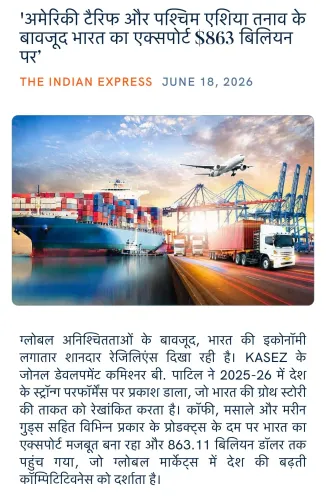
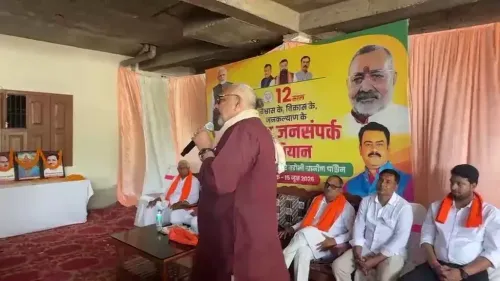
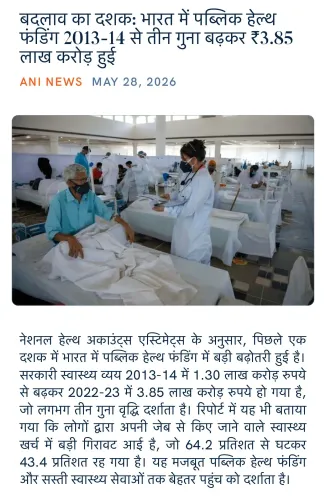
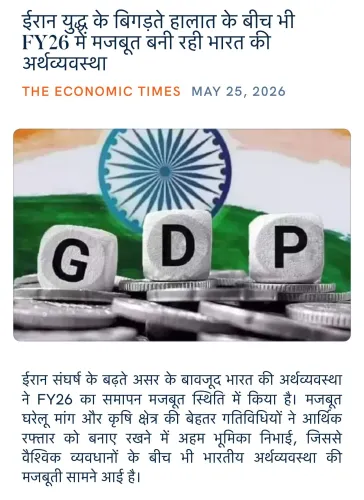
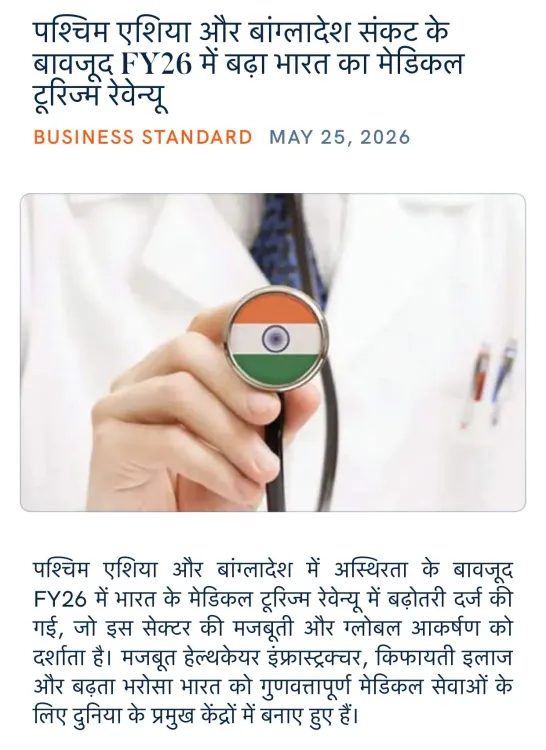
Union Textiles Minister Giriraj Singh on Monday, 25 May 2026, shared a report highlighting that India's medical tourism revenue recorded growth in FY26 despite disruptions caused by the West Asia conflict and the Bangladesh crisis, posting the development via the NaMo App on his official X account.
Context
The post, shared in Hindi, translates as: 'Pashchim Asia aur Bangladesh sankat ke bawajood FY26 mein badha Bharat ka medical tourism revenue' ['Despite the West Asia and Bangladesh crisis, India's medical tourism revenue grew in FY26']. The minister's amplification of the data signals the ruling establishment's interest in projecting India's services sector resilience even as two of its key source-market corridors faced significant stress.
West Asia has historically been a major origin region for patients travelling to India for affordable, high-quality medical care. Bangladesh, which shares a long land border with India, has also been a consistent and large source of medical tourists, particularly for patients seeking treatment at hospitals in Kolkata and other eastern Indian cities. Political instability in Dhaka and conflict-driven travel disruptions across West Asia had raised concerns about a potential dip in inflows during the fiscal year.
Policy Backdrop
India's push to position itself as a medical value travel destination dates to the early 2000s, with the Ministry of Tourism and the Ministry of Health jointly promoting the sector. Dedicated Medical Visa categories were introduced between 2005 and 2010, and e-visa facilities were expanded between 2014 and 2016 to cover medical treatment, broadening access for patients from neighbouring countries and the Gulf region.
Medical tourism has been treated by successive governments as a strategic services-export sector alongside IT and wellness tourism, with hospital accreditation frameworks and visa liberalisation used as key policy levers. The sector contributes to foreign exchange earnings and supports a wide ecosystem of hospitals, diagnostics, hospitality, and allied services across the country.
Stakeholders and Impact
Healthcare providers — particularly large private hospital chains with internationally accredited facilities — stand to benefit most directly from sustained inbound patient flows. The tourism and hospitality industry, including medical facilitation agencies and specialised accommodation, also depends significantly on this segment.
For international patients, especially those from lower-income brackets in South Asia and Africa, India's cost advantage relative to Western healthcare systems remains a primary draw. The FY26 growth figure, if confirmed by official statistics, would reinforce India's positioning as a preferred destination even when geopolitical headwinds affect traditional travel patterns.
What's Next
The Ministry of Tourism and the Ministry of Health are expected to release comprehensive annual medical tourism statistics in the second half of 2026, which will provide verified figures on patient arrivals and revenue. Analysts and industry stakeholders will watch for any fresh budgetary allocations or regulatory updates related to hospital accreditation and medical visa processing in the coming months.
The broader pattern suggests that India's health services trade has consistently demonstrated counter-cyclical growth during episodes of regional geopolitical stress — a trend that, if sustained in FY26, would strengthen the case for deeper policy investment in the sector.
Point of View
Even if Giriraj Singh's primary portfolio is textiles rather than health or tourism. The move fits a wider pattern in which the ruling establishment uses social media to frame India's economic resilience as a governance dividend. Medical tourism sits at the intersection of foreign exchange earnings, soft power, and healthcare infrastructure — making it a politically useful data point ahead of any mid-year economic review. The FY26 performance, once officially verified, could strengthen arguments for further visa liberalisation and hospital accreditation investment.
NationPress
26 Sept 2026
Frequently Asked Questions
Did India's medical tourism revenue grow in FY26?
According to a report shared by Union Textiles Minister Giriraj Singh on 25 May 2026, India's medical tourism revenue grew in FY26 despite disruptions caused by the West Asia conflict and the Bangladesh political crisis. Official government statistics are expected to be released in the second half of 2026.
Why did West Asia and Bangladesh affect India's medical tourism?
West Asia is a major source region for patients travelling to India for affordable medical care, while Bangladesh — sharing a long land border with India — is one of the largest single-country sources of medical tourists. Conflict in West Asia and political instability in Bangladesh disrupted travel and patient mobility during FY26.
What is India's medical visa policy?
India introduced dedicated Medical Visa categories between 2005 and 2010 to facilitate inbound patients. E-visa facilities were further expanded between 2014 and 2016 to cover medical treatment, making it easier for patients from neighbouring and Gulf countries to access Indian hospitals.
Which ministry handles medical tourism in India?
Medical tourism is jointly promoted by the Ministry of Tourism and the Ministry of Health in India, with hospital accreditation frameworks and visa policy coordinated across both ministries to attract international patients.
Why is Giriraj Singh commenting on medical tourism if he is the Textiles Minister?
Giriraj Singh shared the information in his capacity as a senior BJP leader and public commentator on national economic developments, not specifically in his role as Textiles Minister. Senior ministers frequently amplify positive economic data across sectors on social media platforms.