Giriraj Singh flags Bihar road growth under double-engine govt
Synopsis
Union Textiles Minister Giriraj Singh has lauded road connectivity expansion in Bihar, citing Union Minister Nitin Gadkari and Chief Minister Samrat Choudhary's guidance and the BJP's 'double engine' Centre-state coordination as catalysts for trade, industry, and investment growth.
Key Takeaways
Giriraj Singh posted on November 3, 2026 highlighting accelerating road and infrastructure development in Bihar.
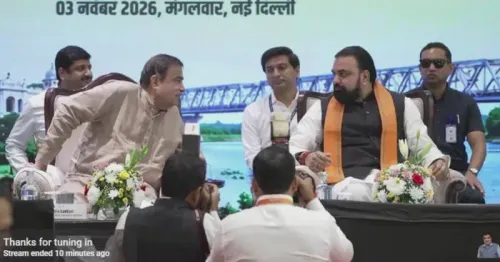
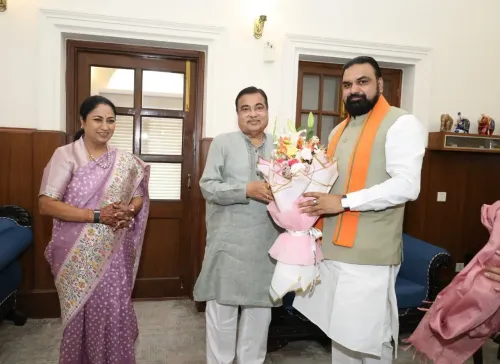
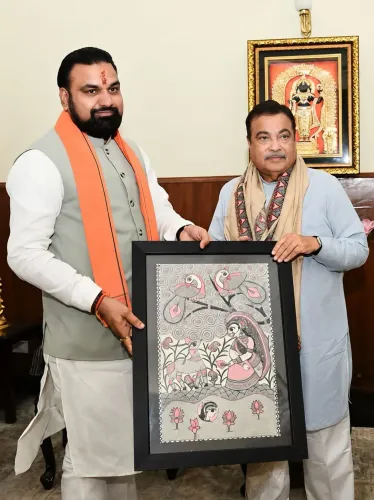
He credited Union Road Transport Minister Nitin Gadkari and Bihar Chief Minister Samrat Choudhary for guiding the expansion.
The post invokes the BJP's 'double engine' government thesis — same-party alignment at Centre and state enabling faster coordination.
The Bharatmala Pariyojana , launched in 2015 , targets over 34,000 km of new highways nationally, with key Bihar components.
Improved connectivity is expected to reduce logistics costs and strengthen Bihar's pitch to investors and industry.
Fresh Union Budget allocations for road infrastructure will be a key indicator of continued momentum for Bihar.
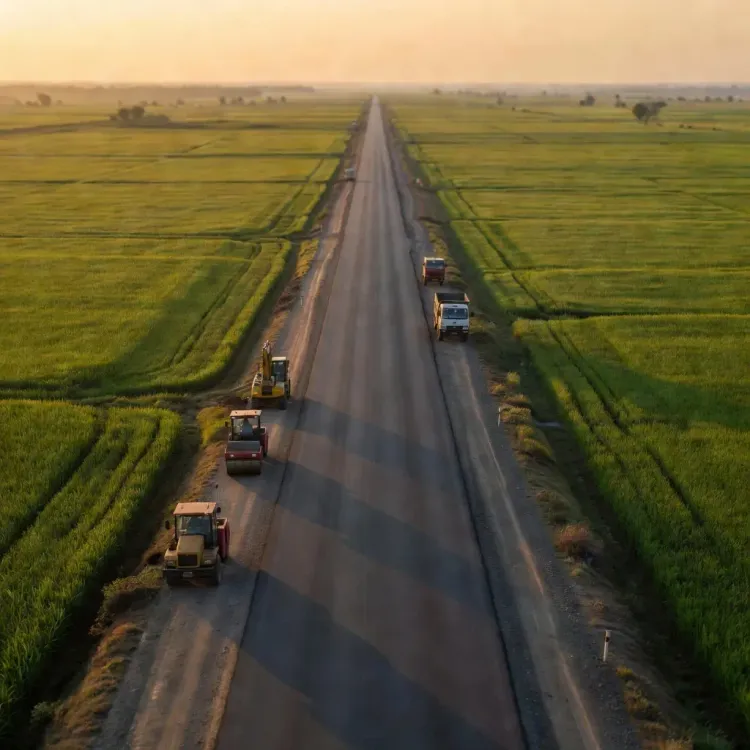
Bihar's roads are carrying more than just traffic — they are carrying the weight of an economic promise. Union Textiles Minister Giriraj Singh took to X on Tuesday, November 3, 2026, to spotlight the accelerating pace of road and infrastructure development in Bihar, crediting the coordinated push by the Centre and the state government for opening new horizons for trade, industry, and investment.
In the post, Singh wrote: 'बिहार में सड़क संपर्क और आधारभूत संरचना का विस्तार राज्य के विकास को नई गति देने वाला है' — ('The expansion of road connectivity and infrastructure in Bihar is set to give new momentum to the state's development'). He specifically named Union Road Transport and Highways Minister Nitin Gadkari and Bihar Chief Minister Samrat Choudhary as the driving forces behind this momentum.
Bharatmala's eastern push and what Bihar stands to gain
The structural backbone of this push is the Bharatmala Pariyojana, the central highway development programme launched in 2015 with an ambition to develop over 34,000 km of national highways — with significant components covering Bihar's road-starved stretches. Under Nitin Gadkari's stewardship at the Ministry of Road Transport and Highways, the programme has been one of the most capital-intensive infrastructure bets in post-independence India.
Bihar, long seen as a state where poor connectivity throttled economic potential, is one of the biggest intended beneficiaries. Better highways mean lower logistics costs for traders, faster movement of agricultural produce to markets, and a more credible pitch to investors who have historically avoided the state precisely because of its infrastructure deficit.
The 'double engine' argument — and what it means in practice
Singh invoked the BJP's signature 'double engine' framing — the idea that having the same party in power at both the Centre and the state unlocks faster fund flow and fewer bureaucratic bottlenecks. 'डबल इंजन की सरकार में केंद्र और राज्य के बेहतर समन्वय से बिहार विकास के नए आयाम स्थापित कर रहा है' — ('Under the double-engine government, Bihar is establishing new dimensions of development through better Centre-state coordination'), he wrote.
This framing has been a consistent feature of BJP election and governance messaging in eastern India since 2014, deployed across multiple phases of highway construction announcements. Whether the coordination translates into on-ground delivery at scale is the question Bihar's traders and industry bodies — the most direct stakeholders — will be watching closely in the months ahead.
With the next Union Budget expected to signal fresh allocations for road infrastructure, every kilometre laid down in Bihar before that window will count as evidence — or its absence will speak just as loudly.
Point of View
But the messaging is calibrated to reinforce the electoral logic that same-party governance at Centre and state is a prerequisite for development. Bihar's deep infrastructure deficit means road connectivity is not merely a policy issue but an emotive one, making it fertile ground for this framing. The real test will come when specific highway completion timelines and budget allocations are placed on the table.
NationPress
3 Nov 2026
Frequently Asked Questions
What did Giriraj Singh say about Bihar roads?
On November 3, 2026, Giriraj Singh posted that expanding road connectivity in Bihar would give new momentum to the state's development, ease movement, and boost trade, industry, and investment — crediting Nitin Gadkari and Bihar CM Samrat Choudhary.
What is the Bharatmala Pariyojana and how does it affect Bihar?
Bharatmala Pariyojana is a central highway development scheme launched in 2015 that targets over 34,000 km of national highways across India, with significant stretches planned in Bihar to improve connectivity and reduce logistics costs.
What does 'double engine government' mean in BJP's context?
'Double engine government' is the BJP's term for having the same party in power at both the Centre and the state, with the argument that political alignment enables faster fund flow, fewer bottlenecks, and better coordination on development projects.
Who is the Union Road Transport Minister handling Bihar highway projects?
Nitin Gadkari serves as Union Minister of Road Transport and Highways and is overseeing national highway expansion, including projects in Bihar under the Bharatmala Pariyojana.
How will better roads help Bihar's economy?
Improved road connectivity is expected to lower logistics costs for traders, speed up agricultural supply chains, and make Bihar a more attractive destination for investors who have historically cited poor infrastructure as a barrier.