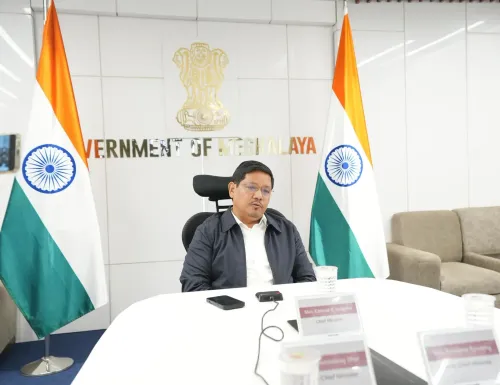
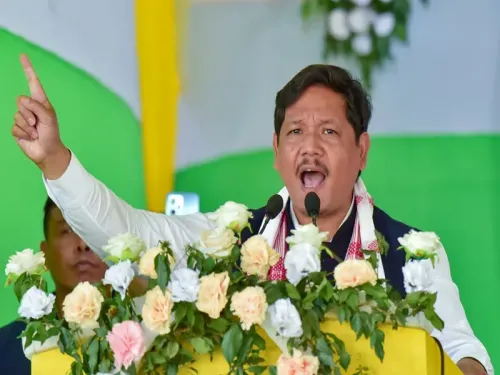
CM Conrad Sangma at Living Heritage Festival, Shillong
Synopsis
Meghalaya Chief Minister Conrad Sangma attended the State Level Living Heritage Arts and Craft Village Festival in Shillong under Jan Jatiya Gaurav Divas, highlighting the government's identification of 11 Arts and Craft Villages to preserve tribal traditions and support artisan livelihoods.
Key Takeaways
Conrad Sangma attended the Living Heritage Arts and Craft Village Festival at U Soso Tham Auditorium, Shillong on November 3, 2026 .
The Meghalaya government has identified 11 Arts and Craft Villages to preserve traditional practices and support artisan livelihoods.
The festival was held under Jan Jatiya Gaurav Divas , observed on November 15 each year to honour tribal freedom fighters.
Jan Jatiya Gaurav Divas was instituted by the central government in 2021 to mark the birth anniversary of Birsa Munda .
Sangma tagged Union Minister Arjun Munda and the Ministry of Tribal Affairs , signalling pursuit of central scheme linkages.
The initiative frames cultural heritage preservation as an economic development tool, converting traditional skills into documented, funded livelihoods.
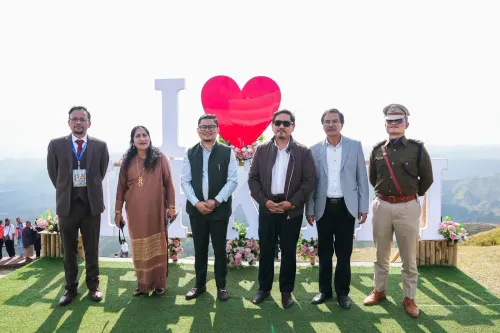
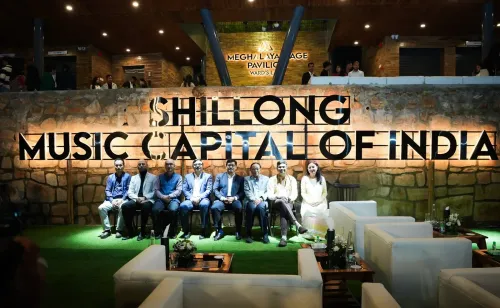
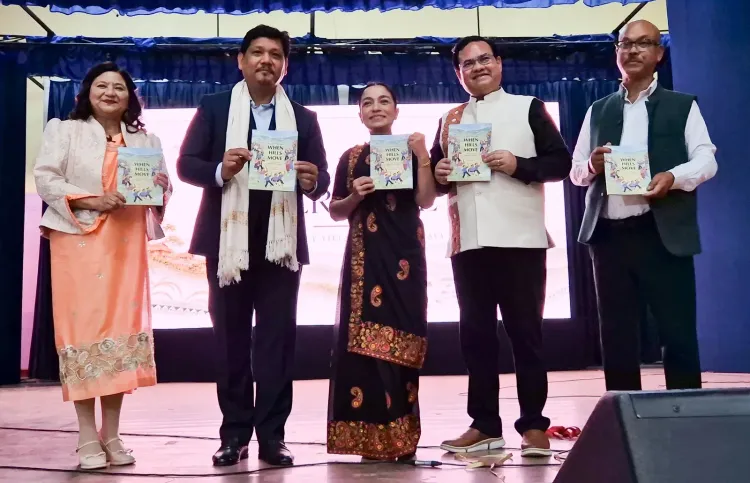
At the U Soso Tham Auditorium in Shillong on Tuesday, November 3, 2026, Meghalaya Chief Minister Conrad Sangma stood before tribal artisans and cultural practitioners to make a pointed case: living heritage does not survive by sentiment alone — it needs government architecture behind it.
Eleven villages, one mission to keep traditions alive
Addressing the State Level Living Heritage Arts and Craft Village Festival held under Jan Jatiya Gaurav Divas, Sangma announced that the Meghalaya government has identified 11 Arts and Craft Villages as dedicated platforms to preserve traditional practices while generating sustainable livelihoods for artisans. The logic is deliberate: root cultural preservation in economic reality, so the skills that survive a festival also survive the next decade.
'Preserving our cultural heritage requires conscious efforts and sustained Government intervention to ensure that our traditions, skills and indigenous knowledge are passed on to future generations,' Sangma said in his post, tagging Union Minister Arjun Munda and the Ministry of Tribal Affairs — a signal that the state is seeking to lock in central scheme linkages alongside its own investment.
Birsa Munda's legacy and the freedom fighters behind the day
Jan Jatiya Gaurav Divas, observed every November 15 to mark the birth anniversary of tribal icon Birsa Munda, was instituted by the central government in 2021 to formally recognise the outsized role tribal communities played in India's independence movement. Sangma used the occasion to pay tribute to the freedom fighters and cultural personalities whose contributions are often absent from mainstream historical accounts.
That framing matters in Meghalaya, where the state's tribal identity — Khasi, Jaintia, and Garo communities among them — is inseparable from its governance culture and its arts traditions. Festivals like this one are not peripheral; they are where policy and identity meet.
Northeast's broader push to link heritage with livelihoods
The Shillong event fits a larger pattern emerging across India's northeastern states: coordinated central and state efforts that treat cultural documentation not as archival work, but as an economic development tool. Tribal artisans who receive formal recognition through designated craft villages gain access to markets, training pipelines, and welfare schemes that informal practitioners do not.
The Ministry of Tribal Affairs has been expanding this model, and Sangma's tagging of both Munda and the ministry suggests Meghalaya is positioning its 11-village initiative to attract central funding in the next fiscal cycle. The kicker for artisan communities: government-backed platforms convert a dying practice into a documented, funded, transferable skill.
Point of View
Heritage preservation is increasingly being repositioned as a livelihood policy, not a purely cultural one, giving these programmes political durability they previously lacked. Jan Jatiya Gaurav Divas has become a useful annual occasion for both central and state governments to demonstrate tribal outreach without requiring new legislation. For Sangma specifically, leading a tribal-majority state as head of the National People's Party, this event doubles as governance branding and community affirmation.
NationPress
3 Nov 2026
Frequently Asked Questions
What is Jan Jatiya Gaurav Divas and when is it celebrated?
Jan Jatiya Gaurav Divas is observed on November 15 every year to honour tribal freedom fighters and mark the birth anniversary of Birsa Munda . It was instituted by the central government in 2021 .
What are the 11 Arts and Craft Villages in Meghalaya?
The Meghalaya government has identified 11 Arts and Craft Villages as dedicated platforms to preserve traditional arts, crafts, and indigenous knowledge while generating sustainable livelihoods for tribal artisans. Specific village names are yet to be widely documented.
Where was the Living Heritage Arts and Craft Village Festival held?
The festival was held at the U Soso Tham Auditorium in Shillong , the capital of Meghalaya, on November 3, 2026 .
Who is Arjun Munda and why did Conrad Sangma tag him?
Arjun Munda is an Indian politician who served as Union Minister of Tribal Affairs . Sangma tagged him and the Ministry of Tribal Affairs to signal the state's interest in linking its cultural initiatives with central government tribal welfare programmes.
What is the significance of Birsa Munda to India's tribal communities?
Birsa Munda was a revered tribal freedom fighter and folk hero whose birth anniversary on November 15 is now formally observed as Jan Jatiya Gaurav Divas to honour the tribal community's contribution to India's independence movement.