CM Conrad Sangma Hails Hally War's Padma Shri for Root Bridges
Synopsis
Meghalaya Chief Minister Conrad Sangma praised Hally War on receiving the Padma Shri from President Droupadi Murmu, calling the honour richly deserved for his decades of work nurturing the state's iconic living root bridges in Siej village.
Key Takeaways
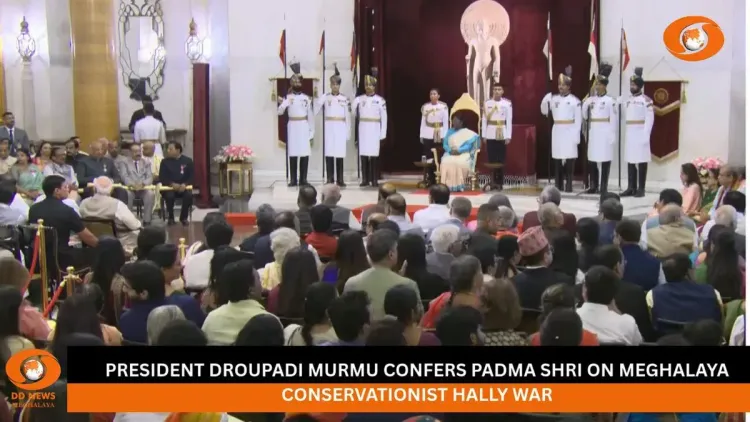
Hally War was conferred the Padma Shri by President Droupadi Murmu on 25 May 2026 .
War has spent decades nurturing and maintaining Meghalaya's living root bridges , grown from rubber fig tree roots by Khasi communities.
CM Conrad Sangma personally trekked to Siej village to witness the root bridges and acknowledged War's 'immense knowledge and quiet dedication.' Living root bridges are recognised eco-tourism assets under Meghalaya's state tourism policy since the mid-2010s.
The Padma award continues a pattern of central government recognition for indigenous ecological knowledge from Northeast India.
The honour is expected to spur renewed focus on documentation, conservation, and tourism infrastructure around root bridge sites.
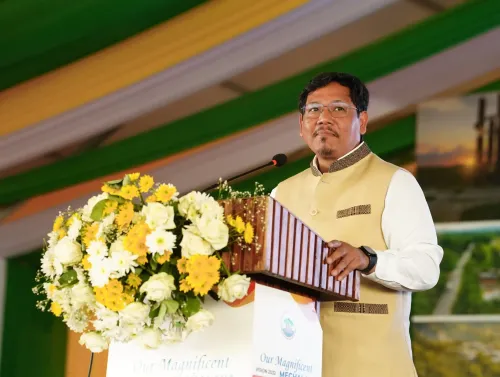
Meghalaya Chief Minister Conrad Sangma on Monday, 25 May 2026 expressed pride as Hally War, a lifelong custodian of the state's iconic living root bridges, received the Padma Shri — India's fourth-highest civilian honour — from President Droupadi Murmu at a formal investiture ceremony.
Context
Sharing his reaction on social media, CM Sangma wrote that he was 'honoured to witness' the conferment, describing Hally War — referred to affectionately as Bah Hally, a term of respect in Khasi — as someone who has 'devoted decades of his life to weaving and nurturing our iconic living root bridges.' The Chief Minister recalled a personal trek to Siej village in Meghalaya where he had 'the privilege of witnessing these remarkable living structures' and was 'deeply inspired by Bah Hally's immense knowledge, quiet dedication, and profound respect for the environment.'
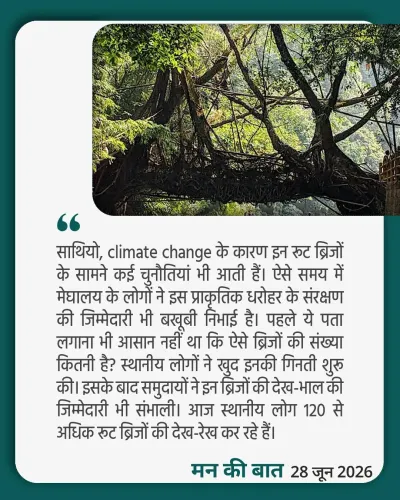
Living root bridges are unique bio-engineering structures grown over generations from the aerial roots of rubber fig trees (Ficus elastica) by the Khasi and Jaintia communities of Meghalaya. Some bridges take 15 to 30 years to become fully functional and can last for centuries, representing a rare confluence of indigenous ecological knowledge and practical infrastructure.
Policy Backdrop
The Padma awards have periodically shone a spotlight on artisans, knowledge holders, and environmental stewards from Northeast India, fitting a broader pattern of central government recognition for indigenous and tribal heritage. Meghalaya's state tourism policy has, since the mid-2010s, promoted living root bridges as flagship eco-tourism assets, with Siej village and the double-decker bridge near Nongriat drawing visitors from across the country and abroad.
Such national honours also reinforce coordination between regional governments and the centre on heritage matters. The National People's Party (NPP), which CM Sangma leads as national president, has consistently positioned cultural preservation and eco-tourism as pillars of Meghalaya's development identity.
Stakeholders and Impact
The recognition carries significance well beyond a single individual. For the Khasi community and heritage conservationists, the Padma Shri validates decades of quiet, unglamorous work — maintaining living structures that require continuous tending, training young hands, and resisting the encroachment of modern materials. CM Sangma noted that Bah Hally's journey 'reminds us that true nation-building also lies in preserving our heritage, protecting nature, and passing on traditions that define who we are.'
Eco-tourism operators, local guides, and village communities around root bridge sites in the East Khasi Hills and West Jaintia Hills districts stand to benefit from the heightened national and international attention that a Padma award typically generates for a craft or practice.
What's Next
The award is likely to renew calls for a formal state-level documentation and conservation programme for root bridges, including mapping lesser-known structures and training younger community members in the traditional techniques. Observers will watch whether the Meghalaya government follows the recognition with concrete tourism infrastructure announcements — better trail access, interpretation centres, or community-managed homestay schemes — at key root bridge sites. CM Sangma's public endorsement signals that the state administration views such heritage stewardship as central to its governance narrative going forward.
Point of View
Publicly celebrating the award — and invoking his personal trek to Siej village — reinforces his administration's identity as a steward of Meghalaya's unique natural and cultural assets. The gesture also reflects a wider strategic calculus in which the centre and regional governments co-invest in 'soft power' recognition to build goodwill in tribal-majority states. Whether this translates into hard budgetary commitments for root bridge conservation remains the real test.
NationPress
11 Oct 2026
Frequently Asked Questions
Who is Hally War and why did he receive the Padma Shri?
Hally War is a Meghalaya resident who has devoted decades to growing, maintaining, and promoting the state's iconic living root bridges — bio-engineered structures crafted from rubber fig tree roots by Khasi and Jaintia communities. He received the Padma Shri in recognition of this lifelong contribution to heritage conservation and environmental stewardship.
What are living root bridges?
Living root bridges are natural structures formed by training the aerial roots of rubber fig trees across streams and gorges over many years — sometimes decades. Found primarily in the Khasi and Jaintia hills of Meghalaya, they are a unique example of indigenous bio-engineering and can last for centuries with proper tending.
Where is Siej village and why is it significant?
Siej village is located in Meghalaya and is home to living root bridges maintained by local communities including Hally War. CM Conrad Sangma visited the village on a personal trek and cited the experience as a source of inspiration when congratulating War on the Padma Shri.
What is the Padma Shri award?
The Padma Shri is India's fourth-highest civilian honour, awarded by the President of India for distinguished service in various fields including arts, literature, science, public affairs, and social work. It is announced annually on Republic Day and conferred at formal investiture ceremonies.
How does the Padma Shri for Hally War connect to Meghalaya's tourism policy?
Meghalaya has promoted living root bridges as flagship eco-tourism assets since the mid-2010s. National recognition through the Padma Shri is expected to boost visibility for these sites, potentially driving tourism infrastructure investment and greater conservation efforts by the state government.