Giriraj Singh flags Dhar PM MITRA Park as 3-lakh jobs engine
Synopsis
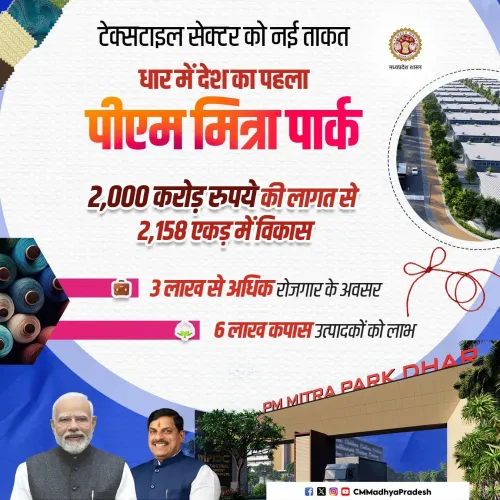
Union Textiles Minister Giriraj Singh has highlighted the PM MITRA Textile Park in Dhar, Madhya Pradesh, projecting roughly 3 lakh jobs and a full yarn-to-logistics value chain under one roof, advancing Modi's Atmanirbhar Bharat manufacturing push.
Key Takeaways
PM MITRA Textile Park is being developed in Dhar, Madhya Pradesh as part of a central scheme to build seven integrated textile parks across India.
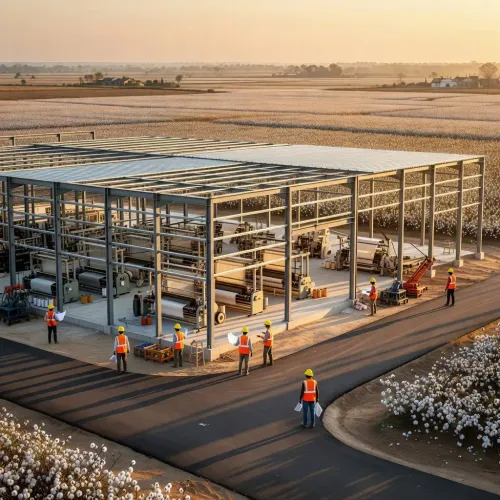
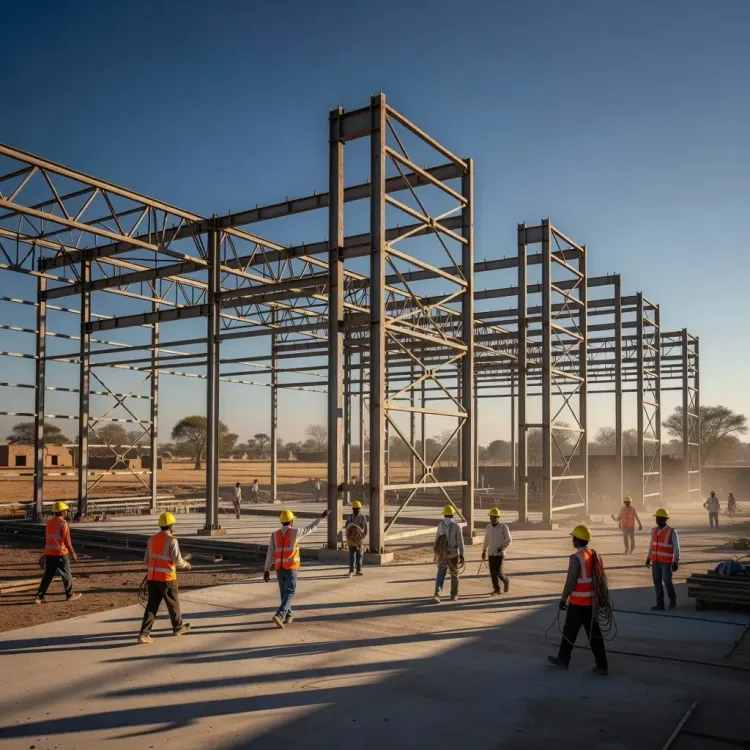
The park aims to consolidate the entire textile value chain — from yarn/thread manufacturing to logistics — under one roof with plug-and-play infrastructure.
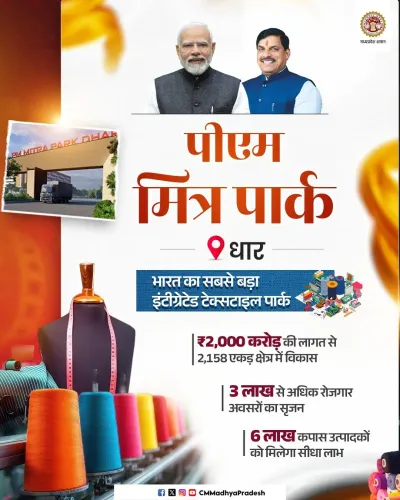
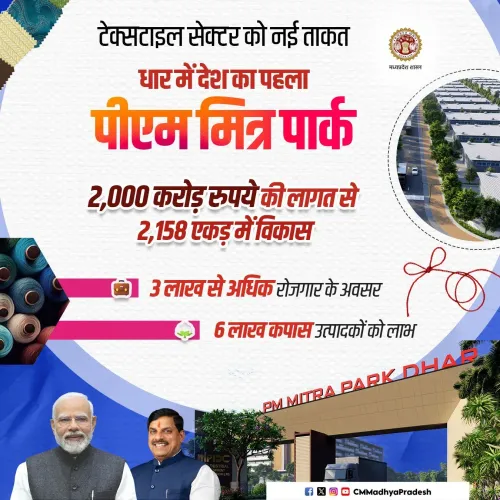
The project is projected to generate approximately 3 lakh direct and indirect jobs , boosting employment for local youth and the regional economy.
The PM MITRA scheme was announced in the Union Budget 2021-22 ; similar parks are approved in Tamil Nadu, Gujarat, and Uttar Pradesh .
The parks complement the PLI scheme for man-made fibres and apparel (2021), together forming India's core textile export-growth strategy.
A single textile park in Madhya Pradesh's Dhar district could reshape the employment map of central India — that is the promise Union Textiles Minister Giriraj Singh put on record on Sunday, 1 November 2026, when he spotlighted the PM MITRA Textile Park being developed in Dhar as a landmark project under Prime Minister Narendra Modi's Atmanirbhar Bharat (self-reliant India) vision.
Writing on X in Hindi, the Minister declared that India's textile sector is 'scripting a new chapter of self-reliance and fresh opportunities' under Modi's 'visionary leadership.' The Dhar park, he said, will not only become a hub of modern infrastructure but will pull the entire value chain — from yarn manufacturing right through to logistics — under a single roof.
Dhar's place in India's seven-park textile grid
The PM MITRA (Prime Minister Mega Integrated Textile Region and Apparel) scheme was announced in the Union Budget 2021-22 with an ambition to build seven mega integrated textile parks across India. The concept is straightforward but powerful: give an investor plug-and-play infrastructure where spinning, weaving, dyeing, garment manufacturing, and logistics all co-exist, slashing the fragmentation that has historically handicapped Indian textiles against rivals like Bangladesh and Vietnam.
Dhar joins an expanding list of approved PM MITRA locations that includes sites in Tamil Nadu, Gujarat, and Uttar Pradesh. Each park is designed to anchor an entire regional manufacturing ecosystem rather than a standalone factory cluster.
The 3-lakh jobs projection and what it means for MP's youth
Minister Singh put a headline number to the Dhar project: approximately 3 lakh direct and indirect jobs. That figure, drawn from the post, underlines the government's argument that integrated textile infrastructure is not just an industrial play — it is a social-mobility story for districts far from metro centres.
Madhya Pradesh has a large young population and a significant agrarian base; textile parks of this scale can absorb both first-generation industrial workers and spin-off MSME suppliers. Local traders, transporters, and ancillary service providers stand to benefit alongside the anchor manufacturers.
PM MITRA's fit in the wider manufacturing push
The Dhar park does not stand alone in policy terms. The Production Linked Incentive (PLI) scheme for man-made fibres and apparel, also introduced in 2021, was designed to run in tandem with PM MITRA — PLI pulls in large manufacturers with output-linked cash incentives while MITRA gives them the industrial real estate and shared utilities to operate efficiently. Together, they form the backbone of India's bid to grow textile exports and reduce dependence on imported intermediates.
The Minister's post arrives as industry watchers are tracking construction milestones across the seven MITRA sites. Progress in Dhar will be a bellwether for how quickly the scheme can translate land allocation into live production floors — and ultimately into paycheques for workers in the Malwa region.
For a sector that employs tens of millions and is India's second-largest source of employment after agriculture, the pace of MITRA's rollout is not a bureaucratic footnote. It is the difference between a policy announced and a promise delivered.
Point of View
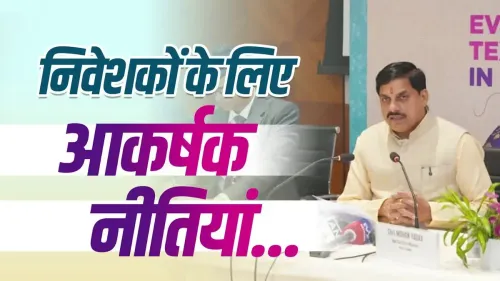
Singh is both reassuring domestic manufacturers and signalling to investors that the MITRA pipeline is live. The timing also reflects the BJP's broader electoral calculus in Madhya Pradesh, where industrial job creation in semi-urban districts is a key message. How fast Dhar transitions from infrastructure development to operational production lines will ultimately determine whether the MITRA promise becomes a political asset or a liability.
NationPress
1 Nov 2026
Frequently Asked Questions
What is the PM MITRA Textile Park scheme?
PM MITRA (Prime Minister Mega Integrated Textile Region and Apparel) is a central government scheme announced in the Union Budget 2021-22 to develop seven mega integrated textile parks across India, offering end-to-end infrastructure from spinning and weaving to garment manufacturing and logistics under one roof.
Where is the PM MITRA Textile Park in Madhya Pradesh located?
The PM MITRA Textile Park in Madhya Pradesh is being developed in Dhar district, one of seven approved locations under the scheme that also includes sites in Tamil Nadu, Gujarat, and Uttar Pradesh.
How many jobs will the Dhar PM MITRA Textile Park create?
Union Textiles Minister Giriraj Singh has cited a projection of approximately 3 lakh direct and indirect jobs from the Dhar PM MITRA park, benefiting local youth and the wider regional economy.
What is the connection between PM MITRA and the PLI scheme for textiles?
The PM MITRA parks provide integrated industrial infrastructure, while the Production Linked Incentive (PLI) scheme for man-made fibres and apparel — also launched in 2021 — offers output-linked financial incentives to manufacturers. The two schemes are designed to work together to scale up India's textile manufacturing and exports.
Who is Giriraj Singh and what is his role in the textile sector?
Giriraj Singh is the Union Minister of Textiles in the Government of India, a senior BJP leader, and Lok Sabha MP from Begusarai, Bihar. He is responsible for the policy implementation of schemes such as PM MITRA and PLI for the textile sector.