Giriraj Singh Flags ₹2,205 Cr Boost for Tejas Radar
Synopsis
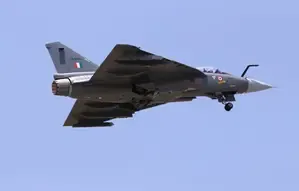
Union Textiles Minister Giriraj Singh flagged a ₹2,205 crore boost for a Make in India radar programme aimed at strengthening target-tracking on the Tejas light combat aircraft, underscoring India's sustained push for defence self-reliance under Atmanirbhar Bharat.
Key Takeaways
A ₹2,205 crore funding boost has been announced for a Make in India radar programme linked to the Tejas light combat aircraft.
The programme is aimed at enhancing Tejas's target-tracking capability, likely through the indigenously developed Uttam AESA radar by DRDO .
HAL is the manufacturing and integration partner for Tejas and associated onboard systems.
The funding fits India's Atmanirbhar Bharat defence policy launched in 2020 , which prioritises indigenous radar, avionics, and fighter development.
Next milestones include flight trials of the upgraded radar on Tejas Mk1A aircraft and potential follow-on production orders.
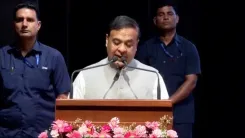
Union Textiles Minister Giriraj Singh amplified the development via the NaMo App on 1 August 2026 .
India's drive to arm its homegrown fighter with homegrown eyes just got a significant push. Union Textiles Minister Giriraj Singh on Saturday, 1 August 2026 shared news of a ₹2,205 crore funding boost for a Make in India radar programme designed to sharpen the target-tracking capability of the Tejas light combat aircraft — a signal that India's self-reliance push in defence technology continues to attract serious capital.
What the ₹2,205 crore is actually buying
At the centre of this funding is the effort to equip Tejas with an indigenously developed radar — widely understood to be the Uttam Active Electronically Scanned Array (AESA) radar, built by DRDO (Defence Research and Development Organisation). AESA radars are the gold standard for modern combat aircraft: they can simultaneously track multiple targets, resist jamming, and switch modes between air-to-air and air-to-ground missions within milliseconds. For a fighter that has long relied on imported sensor systems, a domestically developed AESA is the missing crown jewel.
HAL (Hindustan Aeronautics Limited), which manufactures and integrates systems on Tejas, stands to be a key beneficiary as the funding flows into flight testing, system integration, and eventual squadron-ready production. The Indian Air Force, which inducted its first Tejas squadron in 2016, has been pushing for a radar upgrade as it scales up orders for the more capable Tejas Mk1A variant.
Make in India meets Atmanirbhar Bharat in the skies
The funding fits squarely into a decade-long policy arc. Make in India, launched by Prime Minister Narendra Modi in September 2014, named defence as a priority sector from day one — the explicit goal being to cut India's position as the world's largest arms importer. That ambition was turbocharged in 2020 with the Atmanirbhar Bharat defence push, which ring-fenced budgets for indigenous radar, avionics, and fighter development.
DRDO began work on the Uttam radar in the early 2010s precisely to replace the imported radar on Tejas with something designed and built in India. Progress has been incremental — lab development, ground testing, early flight trials — and each successive funding injection moves the programme closer to operational deployment. A boost of this scale typically covers the critical final stretch: rigorous flight trials on production-standard aircraft, software maturation, and the certification milestones the Air Force needs before it can declare the system combat-ready.
Why a Textiles Minister is amplifying a defence story
Giriraj Singh's post is a reminder of how senior BJP leaders routinely champion the broader Modi government agenda beyond their own ministerial portfolio — defence self-reliance, like infrastructure and manufacturing, is a whole-of-government narrative the party actively promotes. His amplification, shared via the NaMo App, signals the political salience the ruling party attaches to visible milestones in indigenous defence production ahead of an election cycle where 'Atmanirbhar Bharat' remains a core campaign plank.
Next in line to watch: flight trials of the upgraded radar on Tejas Mk1A airframes, and whether this funding tranche triggers a follow-on production order or a technology-transfer milestone that brings the Uttam radar closer to full induction.
India is no longer just assembling foreign designs — it is building the eyes that guide its own fighters. That shift, one funded programme at a time, is what ₹2,205 crore looks like in practice.
Point of View
205 crore allocation represents more than a line item — it is a measurable step in India's decade-long effort to exit the import dependency trap in critical defence technologies. Successive governments have funded DRDO's Uttam radar in tranches, and a boost of this scale suggests the programme has cleared enough technical gates to warrant production-oriented investment. For the BJP, amplifying this through senior ministers signals that Atmanirbhar Bharat in defence is a political asset, not just a policy goal. The real test will come when the Uttam radar completes flight trials and the Air Force decides whether to certify it for operational squadrons — that verdict will define whether this funding translates into genuine strategic autonomy.
NationPress
1 Aug 2026
Frequently Asked Questions
What is the Make in India radar programme for Tejas?
It is an indigenous programme, primarily led by DRDO, to develop and integrate a domestically built AESA radar — known as the Uttam radar — on the Tejas light combat aircraft, replacing imported sensor systems and strengthening its target-tracking capability.
What is the Uttam AESA radar?
The Uttam Active Electronically Scanned Array radar is an indigenously developed radar by DRDO designed for the Tejas fighter. AESA radars can track multiple targets simultaneously, resist electronic jamming, and switch between air-to-air and air-to-ground modes rapidly.
Why did Giriraj Singh post about a defence programme?
Giriraj Singh is a senior BJP leader and Union Minister who regularly amplifies the Modi government's broader policy achievements, including Atmanirbhar Bharat milestones in defence, beyond his own Textiles portfolio.
What is the current status of the Tejas fighter programme?
The Tejas achieved initial operational clearance in 2013 and final clearance in 2014. The Indian Air Force inducted its first Tejas squadron in 2016. The more advanced Tejas Mk1A variant, which is expected to carry the upgraded radar, is currently under production by HAL.
What does Atmanirbhar Bharat mean for Indian defence?
Atmanirbhar Bharat, announced in 2020, is India's self-reliance policy that prioritises domestic development and production of defence equipment — including radars, avionics, and aircraft — to reduce dependence on foreign imports and build indigenous industrial capability.