Giriraj Singh hails Army's Divyastra Mk-1 test as Make in India win
Synopsis
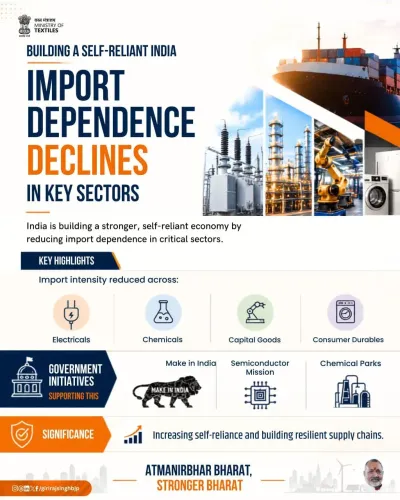
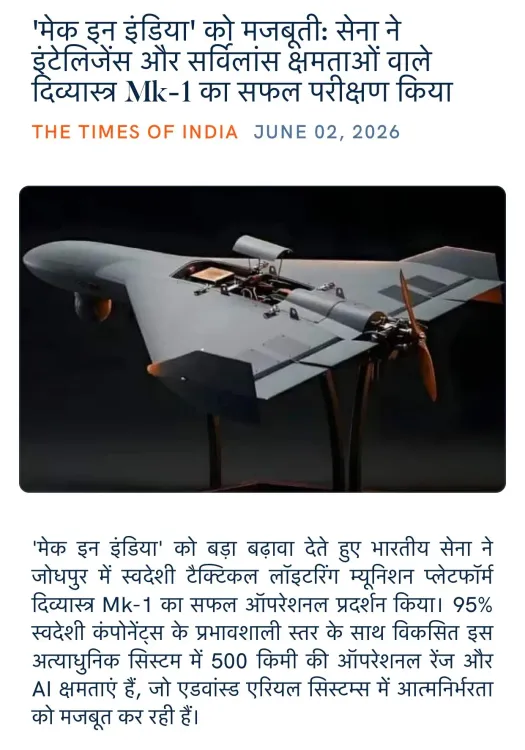
Union Textiles Minister Giriraj Singh on June 2, 2026, hailed the Indian Army's successful test of the Divyastra Mk-1 — a domestically developed intelligence and surveillance system — as a major boost to the Make in India and Atmanirbhar Bharat initiatives.
Key Takeaways
Union Textiles Minister Giriraj Singh shared the news on June 2, 2026 via X and the NaMo App.
The Indian Army successfully tested the Divyastra Mk-1 , described as an intelligence and surveillance system.
Singh framed the test as a significant win for the Make in India programme.
The Make in India initiative was launched in September 2014 ; the Atmanirbhar Bharat Abhiyan in May 2020 deepened its defence focus.
The test could pave the way for extended Army user trials and potential inclusion in the service's modernisation roadmap.
Intelligence and surveillance systems have been a priority area for defence indigenisation under the Defence Procurement Procedure 2020 .
Union Textiles Minister Giriraj Singh on Tuesday, June 2, 2026, took to X to celebrate a milestone in India's defence indigenisation drive, sharing news of the Indian Army's successful test of the Divyastra Mk-1, a domestically developed intelligence and surveillance system, calling it a boost to the Make in India initiative.
Context
Singh shared the development via the NaMo App, framing it as a validation of the government's push for self-reliance in defence manufacturing. His post, written in Hindi, declared: 'Make in India ko mazbooti' — 'Strengthening Make in India' — before noting that the Army had conducted a successful test of the Divyastra Mk-1, described as carrying intelligence and surveillance capabilities.
While Singh serves as Union Minister of Textiles, his amplification of a defence achievement reflects the broader political messaging around Atmanirbhar Bharat, which cuts across all sectors of manufacturing, including defence.
Policy Backdrop
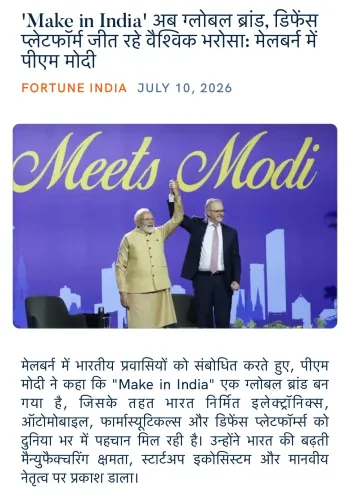
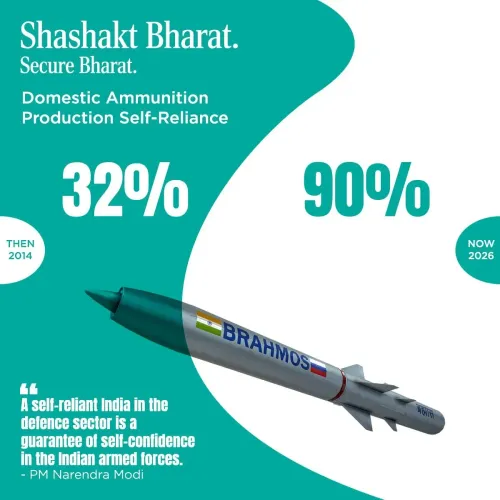
The Make in India programme, launched in September 2014, was designed to reduce the country's dependence on imported goods and build a competitive domestic manufacturing base — including in defence. The Atmanirbhar Bharat Abhiyan, announced in May 2020, sharpened this focus with dedicated defence indigenisation measures, including positive lists that restrict or ban imports of specific defence items to compel domestic sourcing.
The Defence Procurement Procedure 2020 further revised acquisition rules to give preference to domestically designed, developed, and produced platforms. Intelligence, surveillance, and reconnaissance systems have been a priority area, as they were historically among the more import-dependent segments of the armed forces' equipment inventory.
Stakeholders and Impact
The Indian Army stands as the primary stakeholder, gaining a domestically developed surveillance asset that, if inducted, would reduce dependence on foreign intelligence and surveillance platforms. Domestic defence manufacturers and research establishments involved in the Divyastra Mk-1's development stand to benefit from the validation that a successful test provides, both in terms of credibility and future procurement prospects.
For the broader defence-industrial ecosystem, each successful indigenous test strengthens the case for allocating a greater share of the capital procurement budget to Indian suppliers, a stated goal under successive policy frameworks since 2014.
What's Next
The successful test is typically a precursor to extended user trials by the Army, after which a system may be considered for inclusion in the service's formal modernisation roadmap. Analysts and parliamentary committees tracking indigenisation targets will watch whether the Divyastra Mk-1 features in future Defence Budget allocations or in Standing Committee reports on indigenous procurement progress.
With India's defence indigenisation targets becoming a recurring benchmark in annual budget discussions, the Divyastra Mk-1 test adds another data point to the government's narrative of building sovereign military capability — a theme that senior leaders across ministries have consistently amplified.
Point of View
Not a sector-specific claim. The timing — shared via the NaMo App — underscores the BJP's strategy of using every successful indigenous test as evidence of a policy arc stretching back to 2014. For the defence establishment, ministerial endorsement from outside the defence portfolio adds political weight to indigenisation milestones that might otherwise receive narrower attention. The broader pattern suggests the government intends to keep the Atmanirbhar Bharat story alive across all verticals ahead of future electoral and budgetary cycles.
NationPress
18 Oct 2026
Frequently Asked Questions
What is the Divyastra Mk-1?
The Divyastra Mk-1 is an indigenously developed intelligence and surveillance system tested by the Indian Army, highlighted as a Make in India achievement by Union Minister Giriraj Singh in June 2026.
Why did Textiles Minister Giriraj Singh post about a defence test?
Singh shared the news as part of the broader Make in India and Atmanirbhar Bharat narrative, which spans all manufacturing sectors including defence, and is actively promoted by senior BJP leaders across ministries.
What is Make in India and how does it relate to defence?
Make in India is a national programme launched in September 2014 to promote domestic manufacturing. In defence, it is reinforced by the Atmanirbhar Bharat Abhiyan and the Defence Procurement Procedure 2020, which prioritise indigenous design and production.
What happens after a successful defence system test in India?
A successful test typically leads to extended user trials by the relevant armed service, after which the system may be considered for formal induction and inclusion in procurement and budget planning.
What is the Atmanirbhar Bharat Abhiyan in defence?
Announced in May 2020, Atmanirbhar Bharat Abhiyan includes dedicated defence indigenisation measures such as positive lists banning or restricting imports of specific defence items to encourage domestic production.