Giriraj Singh Highlights India's Rise as Logistics, Data Centre Hub
Synopsis
Global consultancy Savills reported a 19 per cent rise in Asia-Pacific real estate investment in Q1 2026, with India standing out as a key destination for logistics and data centre capital. Union Textiles Minister Giriraj Singh amplified the finding, underlining India's policy-driven infrastructure momentum.
Key Takeaways
Asia-Pacific real estate investment rose 19 per cent in Q1 2026 , according to Savills .
India is identified as a leading growth market for logistics parks and data centre assets in the region.
Union Textiles Minister Giriraj Singh shared the finding on 29 May 2026 via the NaMo App .
Policy foundations include Make in India (2014), Digital India (2015), PM Gati Shakti (2021), and the National Logistics Policy (2022).
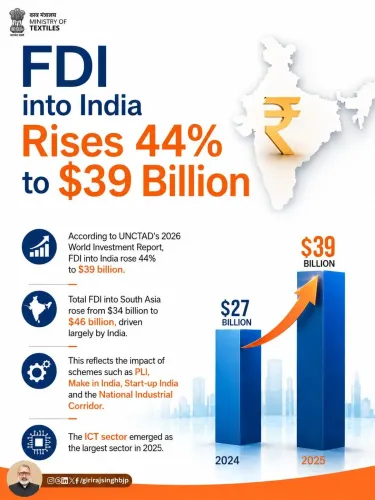
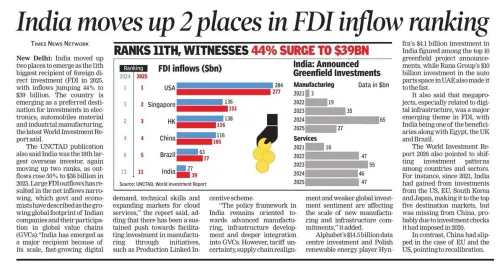
Rising logistics investment is directly relevant to textile export competitiveness, linking the minister's portfolio to the broader infrastructure narrative.
Subsequent quarterly reports and new state or central incentives for data centres and logistics parks will be key indicators to watch.
Union Textiles Minister Giriraj Singh on Friday, 29 May 2026 shared a report finding that Asia-Pacific real estate investment rose 19 per cent in the first quarter, with India emerging as a key growth market for logistics parks and data centres, citing global real estate consultancy Savills.
Context
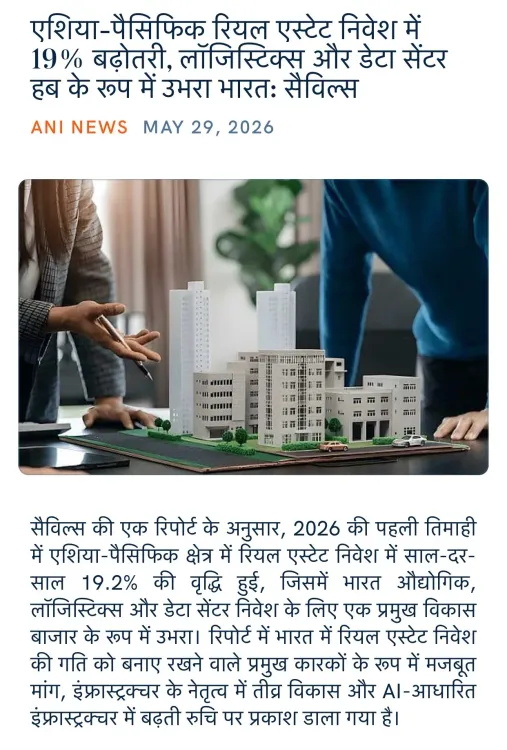
The minister shared the Savills finding via the NaMo App, drawing attention to India's growing stature in cross-border real estate capital flows. The post, originally in Hindi, reads: 'एशिया-पैसिफिक रियल एस्टेट निवेश में 19% बढ़ोतरी, लॉजिस्टिक्स और डेटा सेंटर हब के रूप में उभरा भारत: सैविल्स' — translated as 'Asia-Pacific real estate investment rises 19%, India emerges as logistics and data centre hub: Savills.' The signal being amplified is that global capital is treating India as a structural destination, not merely a cyclical bet.
Policy Backdrop
India's emergence in these asset classes is rooted in a decade of successive policy interventions. The Make in India initiative launched in 2014 began attracting foreign direct investment in manufacturing and supporting supply-chain infrastructure, while the Digital India programme from 2015 laid the groundwork for expanded data capacity. The National Logistics Policy, released in September 2022, set explicit targets to reduce logistics costs as a share of GDP, improving the commercial case for warehousing and freight-corridor investment.
The PM Gati Shakti National Master Plan, launched in 2021, further accelerated integrated multimodal connectivity — the backbone that makes large-scale logistics parks viable for institutional real estate investors. Together these schemes have compressed the policy risk premium that once deterred long-horizon capital from committing to Indian industrial and digital infrastructure.
Stakeholders and Impact
The beneficiaries of rising real estate investment in these segments span a wide value chain. Logistics companies gain access to modern, well-located warehousing that lowers last-mile and inter-city freight costs. Data centre operators — both domestic and multinational — find a more favourable investment climate as demand from cloud services, financial technology, and government digitisation programmes keeps occupancy rates high. Real estate investors, including sovereign wealth funds and pension funds active in the Asia-Pacific region, increasingly see India as a counterweight to concentration risk in more mature markets such as Japan, Singapore, and Australia.
For the broader economy, sustained inflows into these asset classes support job creation in construction, facility management, and technology operations, reinforcing the government's employment-generation narrative ahead of upcoming state elections.
What's Next
Analysts and industry participants will watch subsequent quarterly investment updates from global consultancies to assess whether the Q1 2026 momentum extends through the year. Fresh central or state-level incentives — such as reduced stamp duty on industrial land or dedicated data-centre zones — could further tilt the competitive balance in India's favour within the Asia-Pacific allocation decisions of large fund managers. The Textiles Ministry's interest in logistics infrastructure is also notable, given that textile export competitiveness is directly tied to the efficiency and cost of supply-chain networks connecting mill towns to ports.
Point of View
Rather than textiles directly, suggests the BJP is framing India's economic story around digital and supply-chain modernity rather than traditional manufacturing alone. For Giriraj Singh specifically, connecting logistics growth to his Textiles portfolio is a subtle but coherent move: textile export competitiveness is inseparable from logistics efficiency, so the minister claims ownership of a broader economic win. The post also reflects the government's habitual use of the NaMo App ecosystem to distribute policy-positive content, blending party communication with ministerial visibility.
NationPress
13 Oct 2026
Frequently Asked Questions
What did the Savills report say about India in Q1 2026?
The Savills report cited by Minister Giriraj Singh found that Asia-Pacific real estate investment rose 19 per cent in Q1 2026 and identified India as a key growth market for logistics parks and data centre assets.
Why is India emerging as a logistics and data centre hub?
India's emergence is linked to a series of government policies including Make in India (2014), Digital India (2015), PM Gati Shakti (2021), and the National Logistics Policy (2022), which together lowered costs, improved connectivity, and attracted institutional real estate capital.
What is PM Gati Shakti and how does it help logistics investment?
PM Gati Shakti is the National Master Plan launched in 2021 for integrated multimodal logistics infrastructure. It coordinates road, rail, port, and digital connectivity, making large-scale logistics parks commercially viable for long-horizon investors.
Why did Textiles Minister Giriraj Singh share a real estate investment report?
Logistics infrastructure is central to textile export competitiveness. By highlighting India's rise as a logistics hub, the minister connects a broader economic win to his own portfolio and the government's FDI narrative.
What should investors watch after the Q1 2026 Savills data?
Investors and analysts should track subsequent quarterly reports from global real estate consultancies as well as any new central or state incentives — such as data-centre zones or stamp-duty relief on industrial land — that could sustain or accelerate the investment momentum.