Giriraj Singh hails Amarnath Yatra infrastructure, safety gains
Synopsis
Union Textiles Minister Giriraj Singh on 8 July 2026 highlighted the steady expansion of safety, medical, communication, and environmental infrastructure along the Amarnath Yatra route in Jammu and Kashmir, calling the pilgrimage a divine path of devotion and Shiva's essence.
Key Takeaways
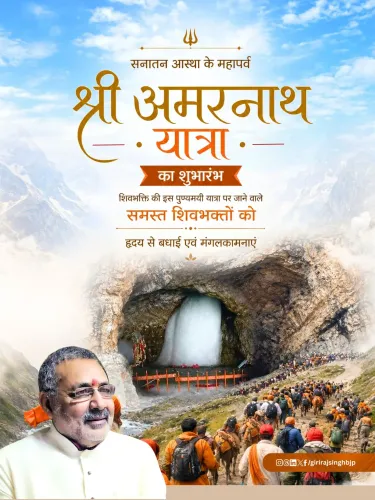
Giriraj Singh , Union Textiles Minister and senior BJP leader, posted on X on 8 July 2026 about the Amarnath Yatra .
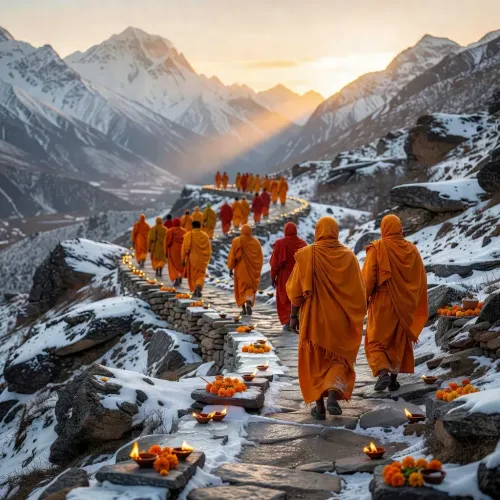
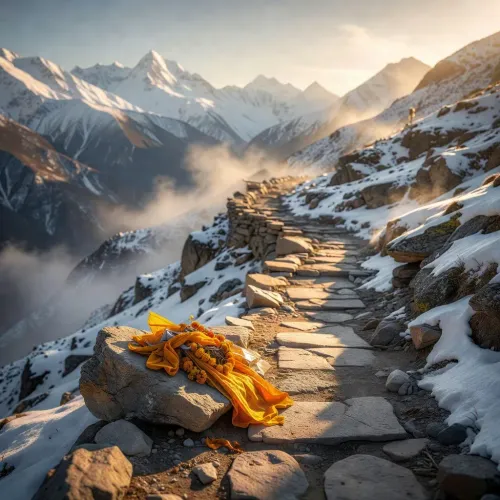
He described the pilgrimage as a divine path combining physical ascent to the Himalayas with inner experiences of devotion, patience, service, and Shiva.
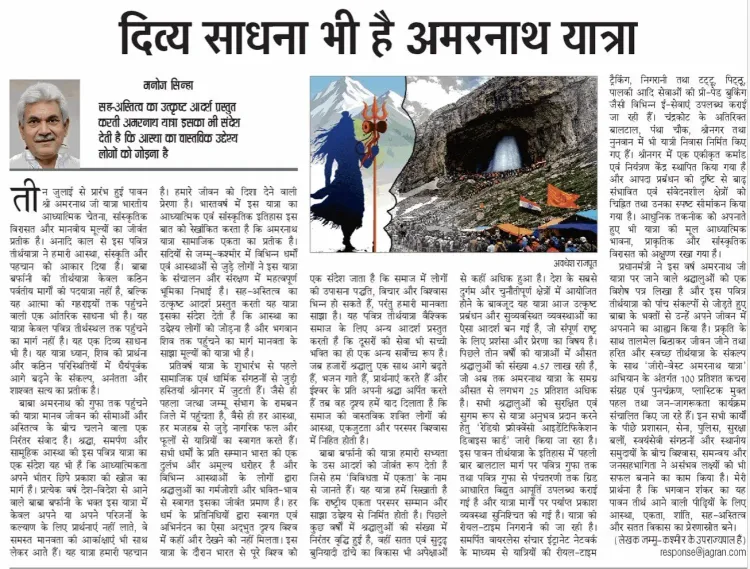
Singh acknowledged continuous expansion of safety, medical, communication, and other essential facilities along the yatra route, making it safer and better organised.
He specifically cited growing environmental conservation efforts as reinforcing the sanctity and dignity of the pilgrimage.
The Shri Amarnathji Shrine Board , established under the Jammu and Kashmir Shri Amarnathji Shrine Act, 2000 , governs the pilgrimage's administration.
Singh concluded with the traditional invocation 'Har Har Mahadev' , praying for peace, strength, harmony, and public welfare for all devotees.
Union Textiles Minister Giriraj Singh on Wednesday, 8 July 2026, invoked the spiritual and administrative dimensions of the Amarnath Yatra, describing the annual pilgrimage as a divine path of devotion, patience, service, and the experience of Shiva — while acknowledging the steady expansion of safety, medical, communication, and other essential facilities along the yatra route.
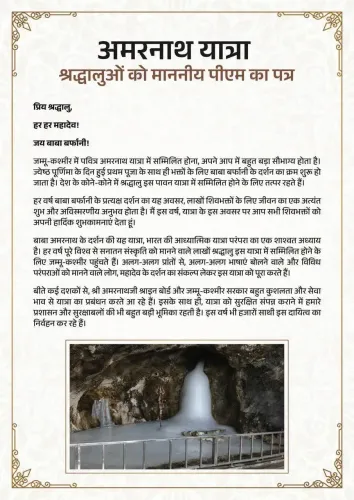
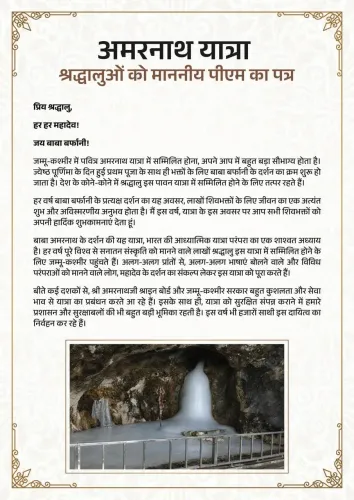
Posting in Hindi on X, Singh wrote: 'श्री अमरनाथ जी की पावन यात्रा हिमालय की दुर्गम चोटियों तक पहुँचने के साथ-साथ अपने भीतर श्रद्धा, धैर्य, सेवा और शिवत्व का अनुभव करने का भी दिव्य पथ है' — ('The sacred Amarnath Yatra is not only a journey to the inaccessible peaks of the Himalayas, but also a divine path to experience devotion, patience, service, and the essence of Shiva within oneself.')
Context
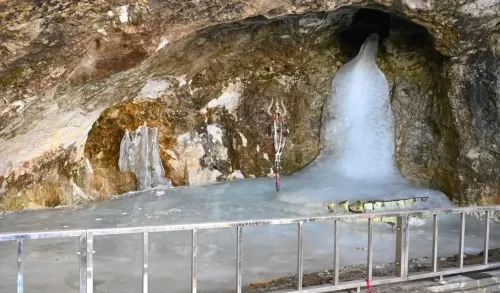
The Amarnath Yatra is among India's most demanding high-altitude pilgrimages, drawing hundreds of thousands of devotees each season to the Amarnath Cave in the Anantnag district of Jammu and Kashmir. The cave, situated at an altitude of approximately 3,888 metres, houses a naturally formed ice lingam revered as a manifestation of Lord Shiva. Singh concluded his post with the invocation 'Har Har Mahadev' — a traditional salutation to Shiva — and prayed that Baba Barfani's blessings bring peace, strength, harmony, and public welfare to all.
Singh also noted that growing efforts toward environmental conservation are reinforcing the sanctity of the pilgrimage. He observed that continuous improvements in infrastructure are making the yatra 'more comfortable, safer, and better organised' for devotees.
Policy Backdrop
The administration of the pilgrimage is governed by the Jammu and Kashmir Shri Amarnathji Shrine Act, 2000, which established the Shri Amarnathji Shrine Board to regulate and facilitate the annual event. Following the reorganisation of Jammu and Kashmir in 2019, the central government stepped up coordination on security, medical support, and transport logistics along both the Baltal and Pahalgam routes.
Successive administrations have progressively upgraded high-altitude pilgrimage infrastructure at sites such as Amarnath and Kedarnath, combining devotional outreach with governance updates on facilities. Environmental safeguards — including restrictions on single-use plastics and regulated camp sites — have become a standard component of these efforts to address ecological pressures in the fragile Himalayan ecosystem.
Stakeholders and Impact
Pilgrims undertaking the yatra are the primary beneficiaries of the infrastructure upgrades Singh referenced, with improvements in communication networks and medical posts along the route directly reducing risk at altitude. Jammu and Kashmir residents, particularly those in communities along the pilgrimage corridor, also see economic activity generated during the yatra season.
Environmental groups and local ecological bodies have a stake in how the Shrine Board balances pilgrim volumes with conservation mandates, a tension that has grown as annual registrations have climbed in recent years. Singh's explicit mention of environmental protection signals continued policy attention to this balance.
What's Next
Official notifications on pilgrim registration, route timings, daily movement caps, and environmental restrictions for the current and upcoming yatra seasons are expected from the Shri Amarnathji Shrine Board and the Ministry of Home Affairs. Singh's statement, coming from a senior cabinet minister, reinforces the central government's continued public engagement with the pilgrimage's administrative and spiritual dimensions — a pattern likely to continue as the season progresses.
Point of View
Reflecting growing institutional pressure to address ecological fragility along Himalayan pilgrimage corridors. Coming from a Textiles Minister rather than the Home or Tourism ministries, the post underscores how the Amarnath Yatra functions as a broad political touchstone for BJP leaders across portfolios. The statement is unlikely to shift policy on its own, but it reinforces the party's public positioning on religious heritage and responsible pilgrimage management.
NationPress
7 Oct 2026
Frequently Asked Questions
What did Giriraj Singh say about the Amarnath Yatra?
Giriraj Singh described the Amarnath Yatra as a divine path for experiencing devotion, patience, service, and the essence of Shiva, and praised the continuous expansion of safety, medical, communication, and environmental facilities along the route.
Who manages the Amarnath Yatra?
The Amarnath Yatra is managed by the Shri Amarnathji Shrine Board, established under the Jammu and Kashmir Shri Amarnathji Shrine Act, 2000, with increased central government coordination following the 2019 reorganisation of Jammu and Kashmir.
Where is the Amarnath Cave located?
The Amarnath Cave is located in the Anantnag district of Jammu and Kashmir at an altitude of approximately 3,888 metres, and houses a naturally formed ice lingam revered as a manifestation of Lord Shiva.
What infrastructure improvements have been made on the Amarnath Yatra route?
Successive governments have expanded security deployments, medical posts, communication networks, and transport facilities along both the Baltal and Pahalgam routes, alongside environmental safeguards such as restrictions on single-use plastics.
Why is environmental conservation important for the Amarnath Yatra?
The Amarnath Yatra passes through a fragile Himalayan ecosystem, and large pilgrim volumes create ecological pressure; the Shrine Board has introduced environmental restrictions to balance religious access with conservation of the high-altitude environment.