Giriraj Singh hails Bharat Tex 2026 as symbol of textile heritage and innovation
Synopsis
Union Textiles Minister Giriraj Singh on 15 July 2026 promoted Bharat Tex 2026 as a confluence of heritage and innovation, reinforcing the government's dual push on handloom welfare and modern manufacturing under Atmanirbhar Bharat.
Key Takeaways
Union Textiles Minister Giriraj Singh posted on 15 July 2026 promoting Bharat Tex 2026 as a blend of traditional heritage and modern innovation.
The post described the event as defining 'the identity of the new India's textile sector,' framing heritage and innovation as complementary strengths.
The PLI Scheme for Textiles (approved 2021 ) and PM MITRA Parks are the two flagship policy pillars underpinning India's textile growth agenda.
Key stakeholders include textile exporters , handloom weavers , and MSME units , with the sector employing millions across rural and semi-urban India.
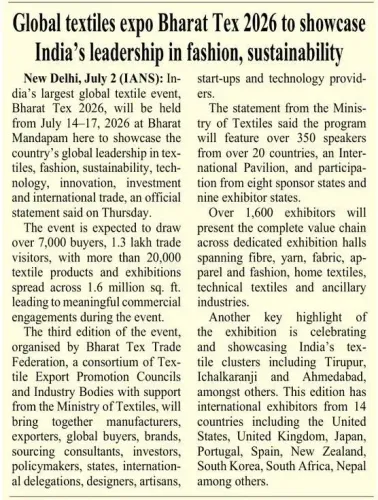
Official event dates, venue, and state participation details for Bharat Tex 2026 are yet to be announced by the ministry.
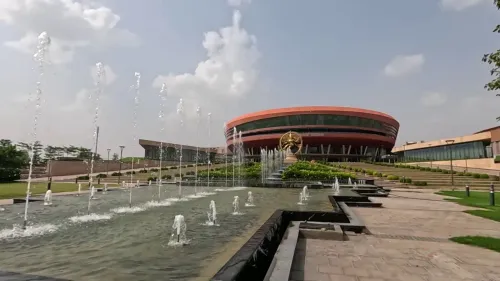
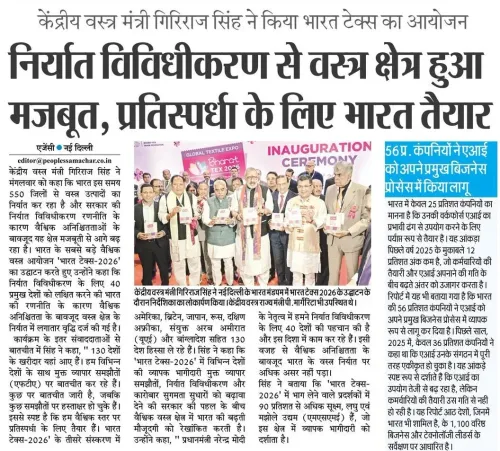
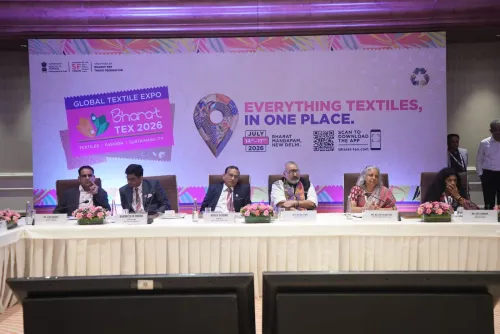
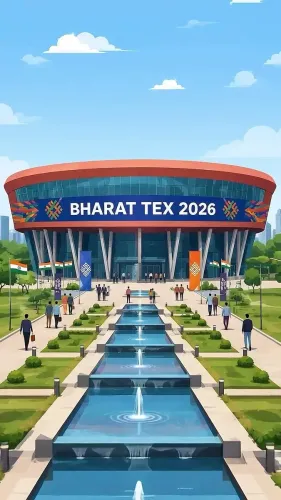
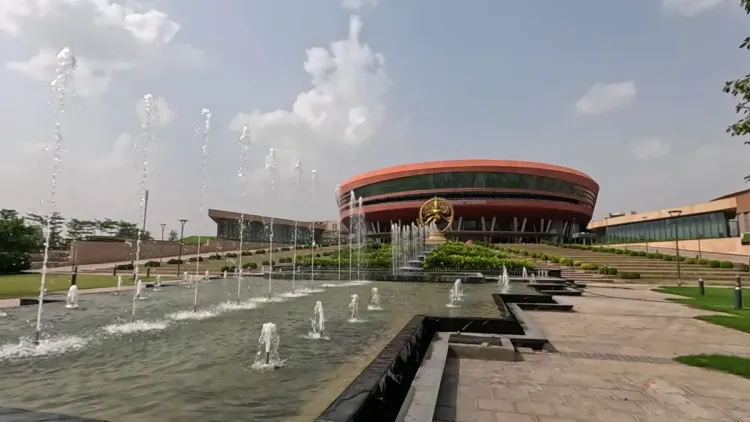
Union Textiles Minister Giriraj Singh on Wednesday, 15 July 2026 promoted Bharat Tex 2026, the government's flagship textiles showcase, describing it as a powerful confluence of tradition and modernity that defines the identity of India's textile sector under the new India vision.
Posting on X with the hashtags #BharatTex2026, #Textiles, and #Innovation, the minister wrote: 'परंपरा और आधुनिकता का सशक्त संगम — भारत टेक्स 2026' ('A powerful confluence of tradition and modernity — Bharat Tex 2026'), adding that 'heritage lives in every thread, the future in every innovation — this is the identity of the new India's textile sector.'
Context
Bharat Tex is a government-promoted flagship textiles event designed to position India as a global destination for both heritage crafts and cutting-edge fabric manufacturing. The event brings together handloom weavers, apparel exporters, MSME units, and technology partners under one platform. Minister Singh's post, accompanied by a video, signals an early promotional push ahead of the 2026 edition.
The framing — heritage and innovation as complementary, not competing, forces — mirrors the consistent communication strategy of the Ministry of Textiles under the Atmanirbhar Bharat and Make in India programmes. Successive Union Budgets have paired handloom welfare and Geographical Indication tag promotion with infrastructure-heavy schemes aimed at attracting foreign investment.
Policy Backdrop
Two landmark schemes underpin the government's textile ambitions. The Production Linked Incentive (PLI) Scheme for Textiles, approved in 2021, targets man-made fibre and technical textile manufacturing to diversify India's export basket beyond conventional cotton goods. Alongside it, the PM MITRA Parks scheme — also announced in 2021 — aims to create world-class integrated infrastructure for apparel and fabric manufacturing, reducing logistics costs and enabling plug-and-play facilities for investors.
Together, these schemes represent a multi-thousand-crore policy bet that India can capture a larger share of global textile supply chains, particularly as buyers diversify sourcing away from competing Asian manufacturing hubs. Bharat Tex serves as the diplomatic and commercial showcase for this ambition.
Stakeholders and Impact
Textile exporters, handloom weavers, and MSME units are the primary stakeholders the government hopes to spotlight at Bharat Tex 2026. For small weavers and artisan clusters, the event offers visibility with international buyers and potential GI-tag recognition. For large exporters and manufacturers, it is an opportunity to signal capacity and attract orders or investment commitments.
India's textile and apparel sector is one of the country's largest employers, supporting millions of workers — many of them women in rural and semi-urban areas. Any boost to exports or domestic investment in the sector carries significant livelihood implications, making ministerial promotion of events like Bharat Tex politically and economically consequential.
What's Next
The ministry is expected to release the official calendar, venue details, and participating state lineup for Bharat Tex 2026 in the coming weeks. Observers will watch closely for any new export incentives, PLI-linked announcements, or international buyer delegations confirmed for the event. The minister's early social-media push suggests the government intends to build sustained visibility for the 2026 edition well in advance, positioning it as a marquee moment for India's textile diplomacy and industrial ambition.
Point of View
Using Bharat Tex 2026 as a canvas to reinforce the BJP government's 'new India' textile narrative ahead of what could be a significant trade event. The 'tradition plus modernity' framing is not incidental — it allows the government to simultaneously court handloom constituencies and industrial investors, a political balancing act central to its textile policy. With the PLI scheme and PM MITRA parks still in execution, the ministry needs a visible showcase to demonstrate returns on policy investment. Bharat Tex 2026 is shaping up as that moment, and the minister's social-media push suggests the government intends to build its profile well before the event calendar is finalised.
NationPress
15 Jul 2026
Frequently Asked Questions
What is Bharat Tex 2026?
Bharat Tex 2026 is the Indian government's flagship textiles showcase event, designed to highlight India's blend of traditional handloom heritage and modern manufacturing innovation to domestic and international buyers and investors.
What did Giriraj Singh say about Bharat Tex 2026?
Union Textiles Minister Giriraj Singh described Bharat Tex 2026 as a 'powerful confluence of tradition and modernity,' stating that heritage lives in every thread and the future in every innovation, calling it the identity of new India's textile sector.
What is the PLI scheme for textiles in India?
The Production Linked Incentive (PLI) Scheme for Textiles was approved in 2021 to boost man-made fibre and technical textile manufacturing and exports, offering financial incentives to eligible manufacturers who meet production targets.
What are PM MITRA Parks?
PM MITRA Parks are integrated textile park clusters announced in 2021 to provide world-class infrastructure — including spinning, weaving, processing, and garment facilities — to attract investment and reduce logistics costs for textile manufacturers.
Who are the main stakeholders at Bharat Tex events?
The main stakeholders include textile exporters, handloom weavers, MSME units, state governments, and international buyers, all of whom use the platform for trade, investment, and showcasing India's textile capabilities.