Giriraj Singh hails Cabinet nod for Kamarajar Port terminal
Synopsis
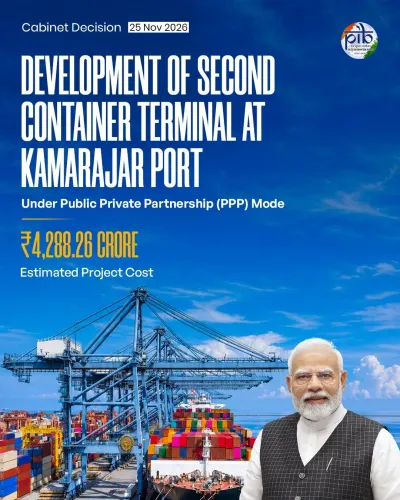
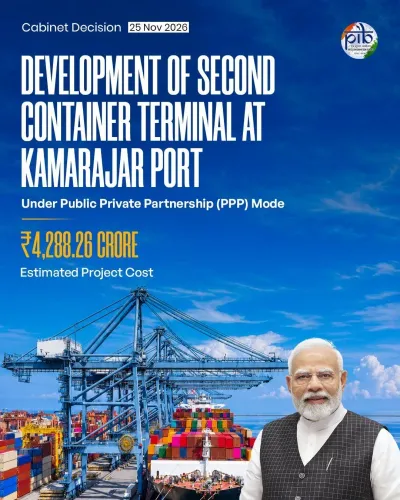
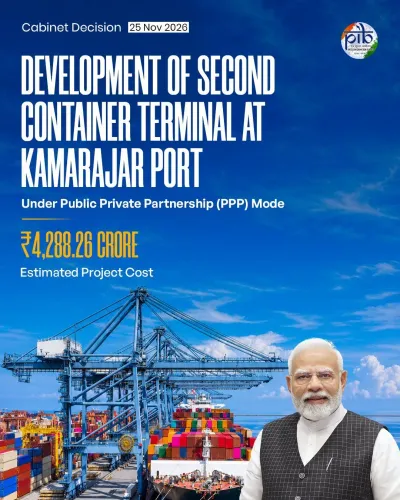
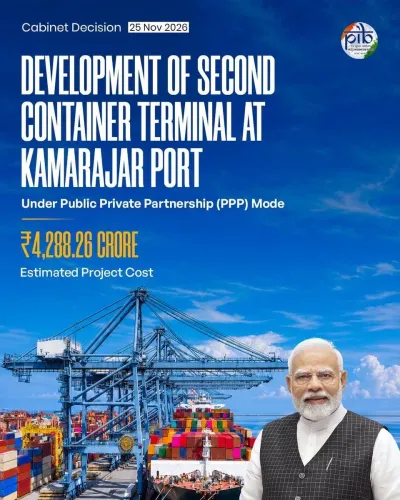
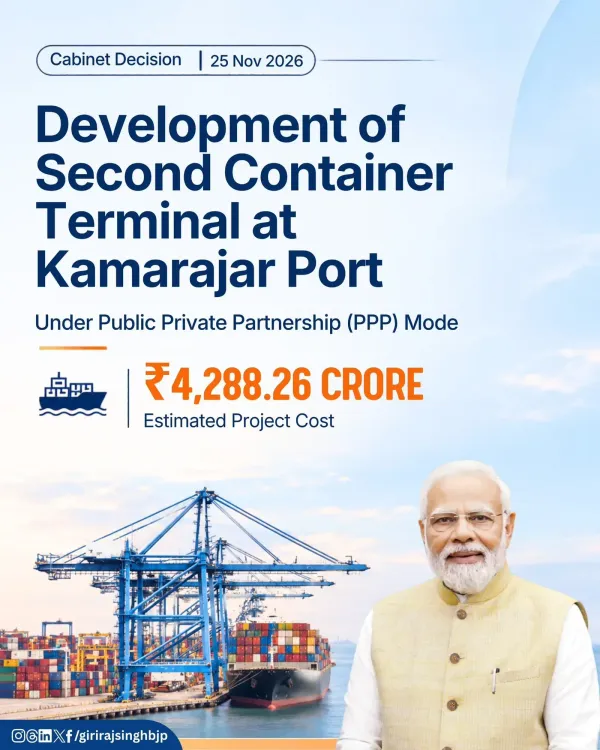
Union Textiles Minister Giriraj Singh on 25 November 2026 called Cabinet approval for a second container terminal at Kamarajar Port in Ennore a key step to raise India's port capacity and strengthen maritime trade and cargo handling.
Key Takeaways
Union Textiles Minister Giriraj Singh on 25 November 2026 said the Union Cabinet has approved a second container terminal at Kamarajar Port.
He called the move an important step to raise India's port capacity and strengthen maritime trade, cargo handling and trade facilities.
Kamarajar Port at Ennore, Tamil Nadu, was developed to ease congestion at Chennai Port and handle bulk cargo including coal and containers.
The expansion sits in the Sagarmala line launched in 2015 to modernise ports and cut logistics costs.
Port authorities, exporters and logistics firms are the stakeholders most directly tied to extra container capacity at an existing major port.
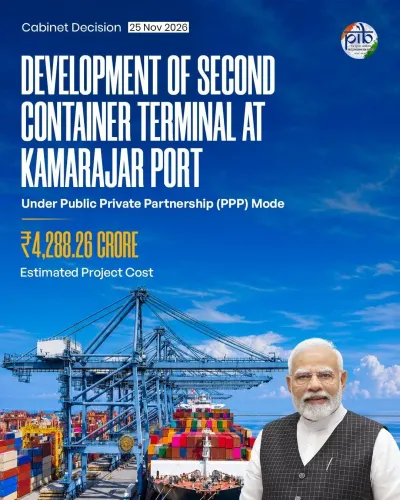
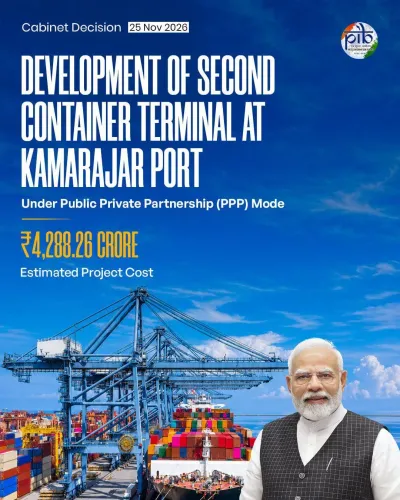
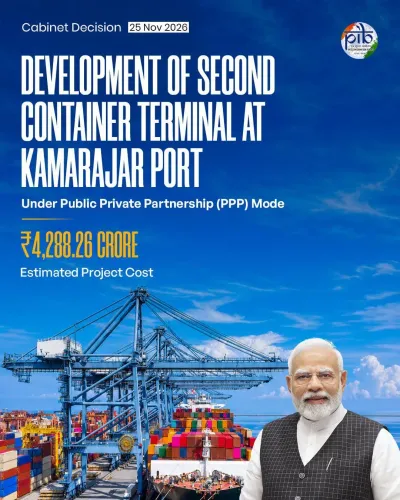
Union Textiles Minister Giriraj Singh on 25 November 2026 framed a Cabinet decision at Kamarajar Port in Ennore, Tamil Nadu as more than a new berth — a lever to expand India's harbour capacity and lock in stronger maritime trade. The second container terminal, he said, would boost cargo handling and trading facilities along the Tamil Nadu coast and beyond.
In his post, Singh called the Union Cabinet's approval for developing a second container terminal at Kamarajar Port an important step towards increasing the capacity of the country's ports and strengthening maritime trade. Isse mal dhalai aur vyaparik suvidhaon ko badhava milega (this will boost cargo handling and trade facilities), he wrote.
Kamarajar Port's Ennore footprint
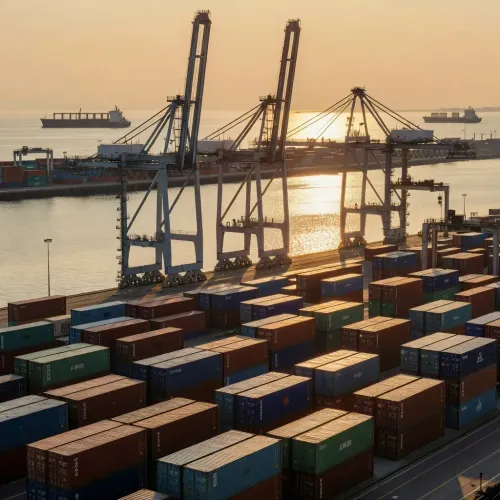
Kamarajar Port sits at Ennore on the Tamil Nadu coast. It was originally developed as a major port to relieve congestion at neighbouring Chennai Port and to handle bulk cargo, including coal and containers. A second container terminal would add capacity on an existing harbour, not a greenfield shoreline.
That matters because India's merchandise trade has grown faster than many older berths can comfortably clear. Extra boxes need extra quay — or they sit in the roads, and exporters pay for the wait.
Sagarmala and the logistics-cost squeeze
The Sagarmala programme, launched in 2015, set out to modernise ports, improve hinterland connectivity and cut logistics costs through coastal economic zones and terminal upgrades. Successive governments have treated expansions at working major ports such as Ennore as the practical way to absorb rising trade volumes without letting logistics swallow a larger share of GDP.
Port authorities, exporters and logistics firms are the first to feel a new container berth: more liner calls, shorter queues, and more room to move cargo inland. Steel in the water is the test; speeches are not.
From Cabinet nod to boxes on the quay
Singh's intervention puts a political spotlight on a harbour that already exists. What to watch is construction progress on the second terminal, capacity-utilisation data from the Ministry of Ports, Shipping and Waterways, and any related allocations in the next Union Budget.
If southern India's exporters are to keep pace with global liner schedules, Ennore's extra terminal has to become throughput — not just a line in a Cabinet note.
Point of View
Not on the announcement itself. For southern exporters, Ennore's extra berth is only as useful as the road and rail that feed it.
NationPress
25 Nov 2026
Frequently Asked Questions
What did Giriraj Singh say about Kamarajar Port?
Union Textiles Minister Giriraj Singh said the Union Cabinet's approval to develop a second container terminal at Kamarajar Port is an important step to increase India's port capacity and strengthen maritime trade. He added that it would boost cargo handling and trade facilities.
Where is Kamarajar Port located?
Kamarajar Port is a major port at Ennore in Tamil Nadu. It was developed to relieve congestion at Chennai Port and to handle bulk cargo including coal and containers.
What is the Sagarmala programme?
Sagarmala is a flagship initiative launched in 2015 to modernise ports, improve connectivity and reduce logistics costs. It includes coastal economic zones and terminal upgrades at existing harbours.
Why was Kamarajar Port developed?
Kamarajar Port was originally developed to relieve congestion at Chennai Port. It handles bulk cargo, including coal and containers, as a major port on the Tamil Nadu coast.
How could a second container terminal help Indian trade?
Additional container capacity at an existing major port can ease berth congestion and support rising merchandise trade. Exporters, logistics firms and port authorities are the first stakeholders to benefit if cargo handling improves.