Giriraj Singh hails GSLV-F18/NVS-03 as NavIC milestone
Synopsis
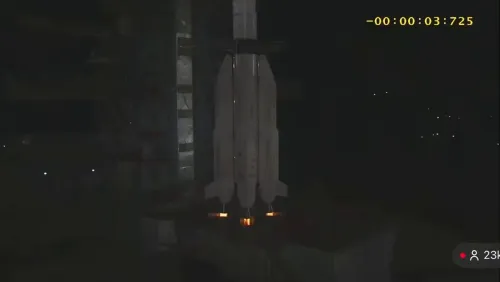
Union Textiles Minister Giriraj Singh on 5 November 2026 hailed ISRO's GSLV-F18/NVS-03 mission as a landmark step for India's indigenous NavIC navigation system, calling it proof of the nation's growing Atmanirbhar Bharat spirit in strategic space technology.
Key Takeaways
Union Textiles Minister Giriraj Singh publicly praised the ISRO GSLV-F18/NVS-03 mission on 5 November 2026 .
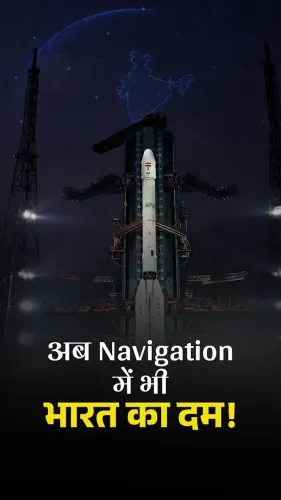
The NVS-03 satellite strengthens NavIC , India's indigenous regional navigation system designed to reduce GPS and GLONASS dependence.
The NavIC project was approved in 2006 ; the first constellation satellite launched in July 2013 .
ISRO , founded in 1969 , used the GSLV — built for heavier geostationary-orbit payloads — for this mission.
NavIC serves India's defence forces , aviation, maritime, and increasingly smartphone users across the country.
The mission reinforces the Atmanirbhar Bharat push to indigenise critical strategic technologies including space-based navigation.
India's space ambitions just got a fresh vote of confidence from one of the Union Cabinet's most vocal advocates of self-reliance. On Thursday, 5 November 2026, Union Textiles Minister Giriraj Singh took to X to celebrate the ISRO GSLV-F18/NVS-03 mission as a defining proof of India's growing technological independence — describing it as a powerful new example of Atmanirbhar Bharat in action.
In his post, the Minister wrote: 'Another strong example of India's growing self-reliance in the space sector! ISRO's GSLV-F18/NVS-03 mission is an important step towards giving new strength to the country's navigation system on the basis of indigenous technology and scientific capability.'What GSLV-F18/NVS-03 means for NavIC
The NVS-03 satellite is the latest addition to NavIC — Navigation with Indian Constellation — India's homegrown regional satellite-navigation system designed explicitly to free the country from dependence on foreign alternatives like the American GPS and Russian GLONASS. The NavIC project was approved by the Government of India in 2006, and the first satellite of the constellation, IRNSS-1A, lifted off in July 2013 aboard a PSLV. Each subsequent launch has extended coverage, improved signal accuracy, and fortified the constellation's redundancy. The Geosynchronous Satellite Launch Vehicle (GSLV) — the workhorse chosen for this mission — is built for the heavier lifting that geostationary-orbit placements demand. Its deployment here underlines how far ISRO, established in 1969, has come in mastering the full launch stack: from cryogenic upper stages to indigenous satellite payloads.From defence command rooms to everyday smartphones
NavIC's user base is wider than many realise. India's defence forces rely on it for positioning in theatres where foreign signal access cannot be guaranteed. Civilian applications are catching up fast: aviation authorities, maritime operators, and — in a development with enormous mass-market reach — smartphone chipset makers have begun integrating NavIC receivers into handsets sold in India. Every new satellite in the constellation tightens accuracy and boosts resilience across all these sectors simultaneously. The Atmanirbhar Bharat framework, the government's flagship self-reliance push, explicitly names strategic technologies — space, semiconductors, defence electronics — as priority domains. A senior BJP minister publicly amplifying an ISRO navigation mission is as much political signalling as it is genuine enthusiasm: it ties a technical achievement to a governing philosophy the ruling party has staked significant credibility on. For ISRO scientists who have spent years iterating through each NVS generation, ministerial endorsement at this level keeps budgetary and policy momentum firmly behind the constellation programme. The next frontier is integration depth — getting NavIC signals baked into every layer of India's critical infrastructure, from precision agriculture to emergency-response grids. With NVS-03 now in orbit, that frontier edges closer.Point of View
Making it one of the highest-value self-reliance bets the government has running. Each new NVS satellite raises the cost of any future administration walking back the programme, cementing NavIC as a bipartisan strategic asset. The push to embed NavIC in smartphones and critical infrastructure will be the real test of whether the constellation delivers on its civilian promise.
NationPress
5 Nov 2026
Frequently Asked Questions
What is the GSLV-F18/NVS-03 mission?
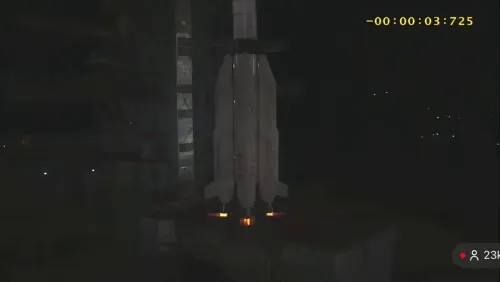
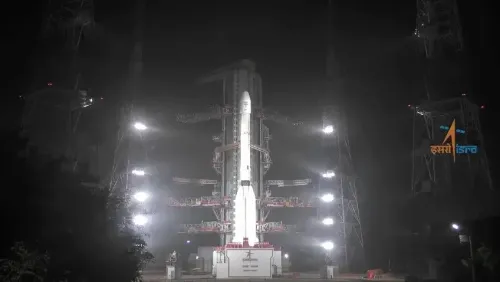
GSLV-F18/NVS-03 is an ISRO mission that places the NVS-03 navigation satellite into geostationary orbit using the Geosynchronous Satellite Launch Vehicle, adding a new satellite to India's NavIC regional navigation constellation.
What is NavIC and how is it different from GPS?
NavIC (Navigation with Indian Constellation) is India's own satellite-based navigation system, approved in 2006, designed to provide positioning services independent of foreign systems like the American GPS or Russian GLONASS — giving India sovereign control over its navigation infrastructure.
Why did Giriraj Singh comment on an ISRO launch?
Union Textiles Minister Giriraj Singh, a senior BJP leader, posted on X to celebrate the mission as an example of Atmanirbhar Bharat — the government's self-reliance policy — extended into strategic space technology.
Who uses NavIC in India?
NavIC is used by India's defence forces for secure positioning, by aviation and maritime operators, and increasingly by smartphone users as chipset makers integrate NavIC receivers into handsets sold in India.
When did India's NavIC programme begin?
The NavIC project was approved by the Government of India in 2006, with the first satellite IRNSS-1A launched in July 2013 by ISRO using a PSLV rocket.