Giriraj Singh Hails India-Australia Pacts on Defence, Nuclear, Minerals
Synopsis
Union Textiles Minister Giriraj Singh on 10 July 2026 welcomed India-Australia agreements on defence, maritime security, nuclear energy and critical minerals, calling them a milestone for Viksit Bharat 2047 and Aatmanirbhar Bharat under PM Modi's leadership.
Key Takeaways
Giriraj Singh on 10 July 2026 publicly endorsed new bilateral agreements between India and Australia on defence, maritime security, nuclear energy and critical minerals.
The minister linked the pacts to PM Narendra Modi 's broader strategy of deepening ties with 'trusted' partner nations.
India and Australia have maintained a Comprehensive Strategic Partnership since 2020 , covering defence, trade and technology cooperation.
Australia is one of the few countries supplying uranium to India under bilateral safeguards, supporting India's civilian nuclear programme.
The agreements align with the government's Aatmanirbhar Bharat and Viksit Bharat 2047 frameworks aimed at supply-chain resilience and domestic industrial development.
Both nations are members of the Quad , where critical minerals and maritime security are standing agenda items.
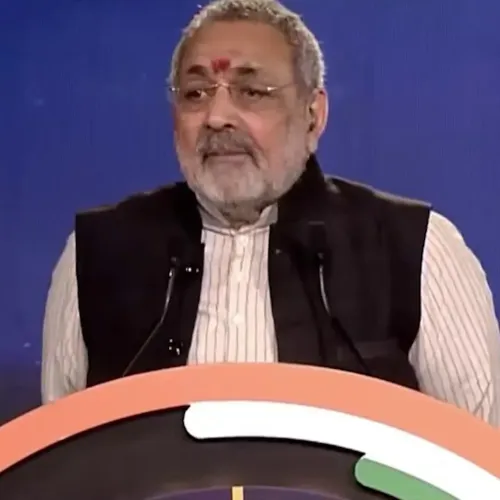
Union Textiles Minister Giriraj Singh on Friday, 10 July 2026, welcomed a fresh set of bilateral agreements between India and Australia covering defence, maritime security, nuclear energy and critical minerals, calling them a significant step toward a self-reliant and developed India under Prime Minister Narendra Modi.
Context
Posting on X in Hindi, Giriraj Singh wrote that under PM Modi's leadership, India is 'continuously strengthening its relations with trusted countries of the world.' He specifically cited agreements with Australia on raksha, samudri suraksha, parmanu urja aur mahatvapurn khanij (defence, maritime security, nuclear energy and critical minerals), asserting that these pacts would reinforce national security, promote clean energy and secure resources essential for future industries. He tagged the agreements as a step toward #ViksitBharat2047 and #AatmanirbharBharat.
Policy Backdrop
India and Australia elevated their bilateral relationship to a Comprehensive Strategic Partnership in 2020, creating a structured framework across defence, trade and technology. That architecture built on earlier milestones: following the 2008 Indo-US civil nuclear agreement, Australia began supplying uranium to India under bilateral safeguards, making it one of the few countries to do so. The two nations are also members of the Quad, revived in 2017, which has made critical minerals and maritime domain awareness central to its agenda.
The Aatmanirbhar Bharat campaign, launched in 2020, and the Viksit Bharat 2047 vision — India's roadmap to becoming a developed economy by its centenary of independence — together frame the government's push to secure reliable supply chains in strategic sectors including energy and mining. Agreements with mineral-rich partners like Australia directly support that goal.
Stakeholders and Impact
India's defence forces stand to gain from enhanced interoperability and maritime surveillance cooperation with Australia, a key Indo-Pacific partner. The nuclear energy component is significant: as India scales up its civilian nuclear programme, a steady and safeguarded uranium supply from Australia — one of the world's largest uranium producers — reduces dependence on any single supplier. The critical minerals dimension addresses India's vulnerability in sectors such as electric vehicles, semiconductors and clean-energy storage, where materials like lithium and cobalt are essential.
The mining and energy industries in both countries are among the primary beneficiaries, along with Indian manufacturers in electronics and defence production who rely on a stable input supply chain.
What's Next
Parliamentary or cabinet-level approvals will be required for the implementation of any new defence and minerals pacts, and outcomes from the next India-Australia Annual Summit will be closely watched for timelines and investment commitments. The agreements, if operationalised swiftly, could accelerate India's positioning in Indo-Pacific supply chains ahead of the 2047 development target. Analysts will monitor whether the nuclear energy component translates into additional uranium supply contracts or cooperation on small modular reactors, an area of growing bilateral interest.
Point of View
Reducing reliance on any single supplier for critical inputs. By invoking both Aatmanirbhar Bharat and Viksit Bharat 2047 in the same breath, the government is framing external partnerships not as contradictions of self-reliance but as enablers of it — a messaging pivot worth watching. The emphasis on nuclear energy and critical minerals also signals that India views the Australia relationship as a long-term industrial and security anchor, not merely a diplomatic formality.
NationPress
10 Jul 2026
Frequently Asked Questions
What agreements did India sign with Australia in July 2026?
According to Union Textiles Minister Giriraj Singh's post on 10 July 2026, India and Australia concluded agreements covering defence, maritime security, nuclear energy and critical minerals. Specific details of the pacts have not been independently verified.
Why is Australia important for India's critical minerals strategy?
Australia is among the world's largest producers of lithium, uranium and other critical minerals essential for electric vehicles, semiconductors and clean energy. India's cooperation with Australia helps secure supply chains under the Aatmanirbhar Bharat and Viksit Bharat 2047 frameworks.
What is the India-Australia Comprehensive Strategic Partnership?
The Comprehensive Strategic Partnership was established in 2020, elevating bilateral ties across defence, trade, technology and resources. It provides the institutional framework within which defence and minerals agreements are negotiated.
What is Viksit Bharat 2047?
Viksit Bharat 2047 is the Indian government's official vision to transform India into a fully developed economy by 2047, the centenary of independence, through self-reliance, industrial growth and global supply-chain integration.
What is India's nuclear energy cooperation with Australia?
Following the 2008 Indo-US civil nuclear agreement, Australia began supplying uranium to India under bilateral safeguards. This arrangement supports India's civilian nuclear power programme and reduces dependence on other uranium suppliers.