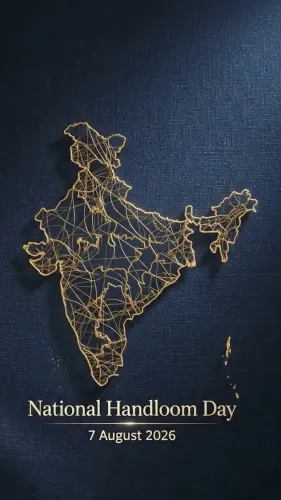
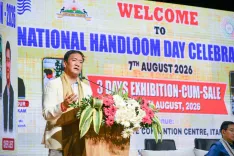
Giriraj Singh honours weavers on National Handloom Day 2026

Synopsis
On National Handloom Day, 7 August 2026, Union Textiles Minister Giriraj Singh congratulated weavers honoured with the Sant Kabir Handloom Award and National Handloom Award, celebrating India's Swadeshi legacy and the craftsmanship keeping its handloom traditions alive.
Key Takeaways
National Handloom Day is observed every year on 7 August , a date marking the 1905 Swadeshi movement's centenary.
Union Textiles Minister Giriraj Singh congratulated all recipients of the Sant Kabir Handloom Award and the National Handloom Award on 7 August 2026.
The Sant Kabir Handloom Award is named after the fifteenth-century poet-weaver saint, carrying deep cultural resonance in the handloom sector.
The day was instituted in 2015 to mark the centenary of the 1905 Swadeshi movement launch.
India's handloom industry is one of the country's largest cottage-industry employers, with major clusters in states including West Bengal, Assam, Andhra Pradesh, and Tamil Nadu .
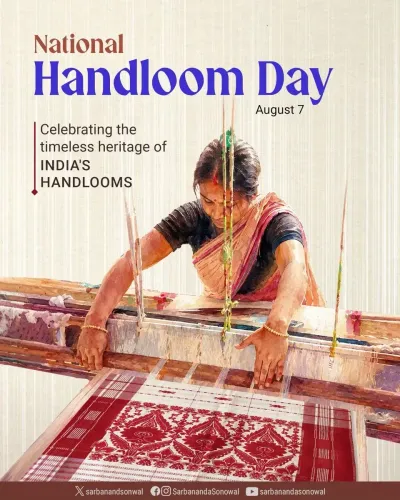
On the occasion of National Handloom Day, 7 August 2026, Union Textiles Minister Giriraj Singh extended warm congratulations to every weaver honoured with the Sant Kabir Handloom Award and the National Handloom Award — two of the highest national recognitions in the handloom sector.
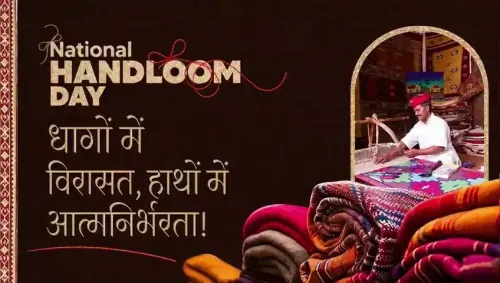
In his post on X, the minister wrote: 'संत कबीर हथकरघा पुरस्कार एवं राष्ट्रीय हथकरघा पुरस्कार से सम्मानित सभी बुनकरों को हार्दिक बधाई' — 'Heartfelt congratulations to all weavers honoured with the Sant Kabir Handloom Award and the National Handloom Award.' He added that the weavers' skill, dedication, and role in inspiring the next generation represent the greatest strength of India's rich handloom tradition.
A day rooted in the Swadeshi movement
National Handloom Day was instituted in 2015 to mark the centenary of the 1905 Swadeshi movement — the nationalist campaign that made indigenous cloth a symbol of resistance against colonial rule. The date, 7 August, commemorates the formal launch of that movement in Calcutta. Every year since, the day has served as a platform for the central government to spotlight handloom weavers as custodians of both cultural heritage and rural livelihoods.
Singh framed the occasion in exactly those terms, calling it 'हमारे स्वदेशी आंदोलन, सांस्कृतिक विरासत और बुनकरों के गौरव का उत्सव' — 'a celebration of our Swadeshi movement, cultural heritage, and the pride of weavers.' The invocation of Swadeshi is a recurring thread in Textiles Ministry messaging, linking current artisan-welfare policy to the early twentieth-century emphasis on indigenous production.
Awards that carry the sector's highest honour
The Sant Kabir Handloom Award and the National Handloom Award are the government's principal instruments for recognising outstanding craftsmanship in the sector. Named after the fifteenth-century poet-weaver saint Kabir, the former carries particular cultural resonance — Kabir himself worked a loom and made it a metaphor for spiritual and social equality. Both awards are conferred annually and are administered by the Ministry of Textiles.
Successive governments have used these designations alongside GI tagging of traditional weaves and artisan-welfare schemes to position the handloom sector as an economic pillar, not just a heritage artefact. India's handloom industry remains one of the largest cottage-industry employers in the country, concentrated heavily in states such as West Bengal, Assam, Andhra Pradesh, Telangana, Tamil Nadu, and Uttar Pradesh.
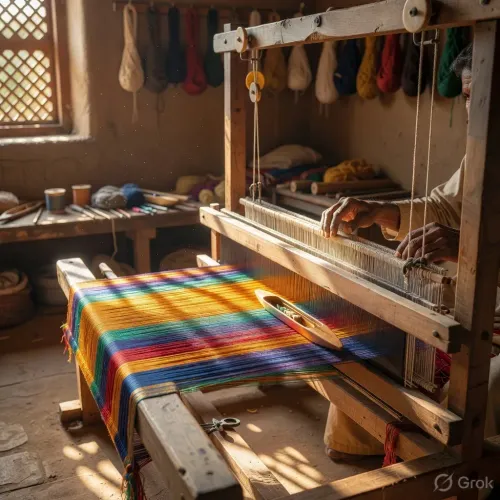
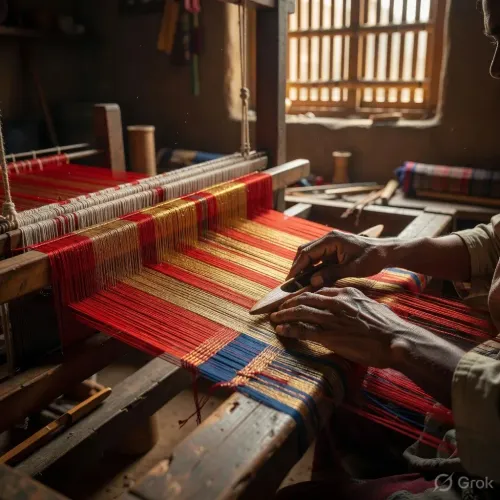
The loom does not just weave cloth — it weaves livelihoods. The minister's message on National Handloom Day 2026 is a reminder that behind every award is a weaver who kept that thread from breaking.
Point of View
The ministry frames handloom policy not merely as rural employment support but as a civilisational continuity project. The Sant Kabir Handloom Award adds a layer of social-equity signalling — Kabir's identity as a weaver-saint from a marginalised community resonates with the government's outreach to OBC and artisan constituencies. Whether the awards translate into structural improvements — better market access, credit, or GI enforcement — remains the metric that weavers themselves watch most closely.
NationPress
7 Aug 2026
Frequently Asked Questions
When is National Handloom Day celebrated in India?
National Handloom Day is celebrated every year on 7 August . The date marks the anniversary of the launch of the Swadeshi movement in 1905, and the day was officially instituted by the government in 2015.
What is the Sant Kabir Handloom Award?
The Sant Kabir Handloom Award is one of the highest national honours for handloom weavers in India, conferred by the Ministry of Textiles. It is named after the fifteenth-century poet-saint Kabir, who was himself a weaver.
What is the National Handloom Award?
The National Handloom Award is an annual government award that recognises excellence and outstanding craftsmanship among handloom weavers and artisans across India.
Why did Giriraj Singh post about National Handloom Day 2026?
As Union Textiles Minister , Giriraj Singh congratulated award-winning weavers on National Handloom Day, 7 August 2026, celebrating their skill and contribution to India's handloom heritage and the Swadeshi tradition.
Why was National Handloom Day started in 2015?
National Handloom Day was instituted in 2015 to mark the centenary of the 1905 Swadeshi movement , which championed indigenous production and made handloom cloth a symbol of national identity.