Giriraj Singh: India-UK FTA Opens Doors for Textiles, MSMEs
Synopsis
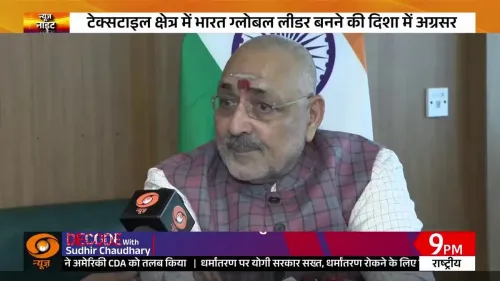
Union Textiles Minister Giriraj Singh on 15 July 2026 hailed the India-UK Free Trade Agreement as a landmark step for Indian exporters in textiles, apparel, leather and handicrafts, saying MSMEs and small entrepreneurs will gain improved access to the UK market while reinforcing the Vocal for Local agenda.
Key Takeaways
Union Textiles Minister Giriraj Singh welcomed the India-UK FTA on 15 July 2026 , calling it a new opportunity for Indian exports.
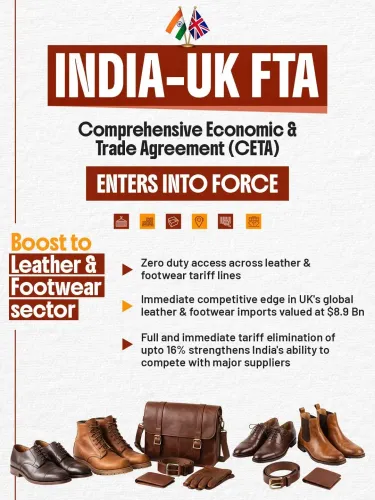
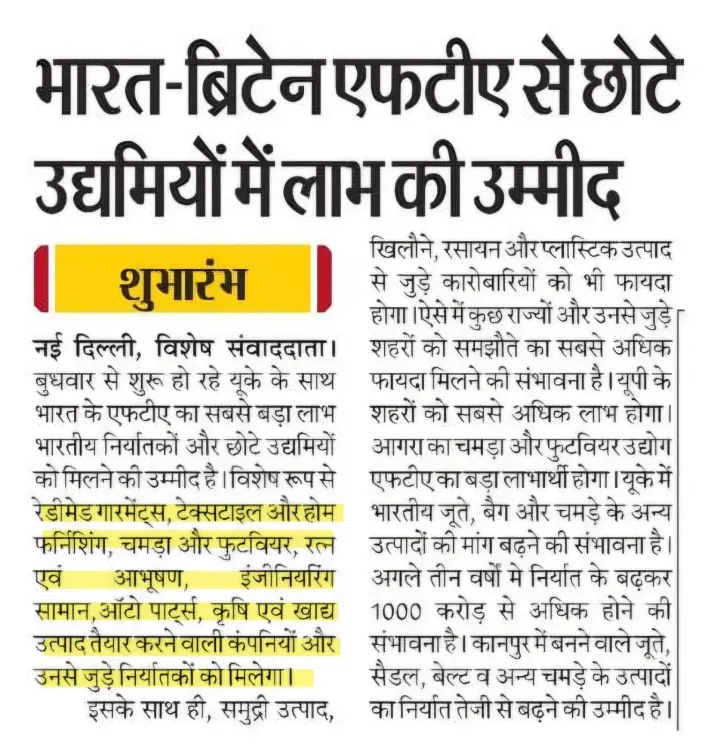
Sectors specifically cited include textiles, apparel, leather goods, and handicrafts , all of which are expected to gain better UK market access.
Benefits are framed as extending to MSMEs and small entrepreneurs , not just large industrial players.
The agreement is linked to the government's Vocal for Local and Atmanirbhar Bharat policy framework.
India-UK trade negotiations were formally launched in 2022 , making this a multi-year diplomatic and economic effort.
Tariff schedules and bilateral implementation mechanisms are the immediate next steps to watch.
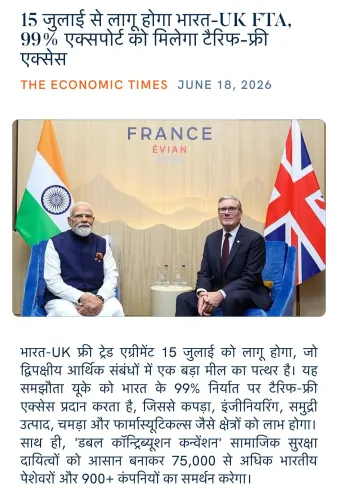
Union Textiles Minister Giriraj Singh on Wednesday, 15 July 2026 welcomed the implementation of the India-UK Free Trade Agreement, saying it opens new avenues for Indian exports across textiles, apparel, leather, and handicrafts, with benefits extending to MSMEs and small entrepreneurs alongside large industries.
Context
Posting on X, Singh said the agreement — "bharat ke niriyat ko gati dene, rojgar badhane aur Vocal for Local ke sankalp ko aur mazboot karne ki disha mein mahatvapurn kadam" [an important step towards accelerating India's exports, generating employment, and strengthening the resolve of Vocal for Local] — marks a turning point for labour-intensive sectors. He highlighted that domestic producers of textiles, garments, leather goods, and handicrafts would gain improved access to the United Kingdom market. The minister used the hashtags #IndiaUKFTA, #Exports, #Textiles, and #VocalForLocal to frame the announcement within the government's self-reliance narrative.
Policy Backdrop
Negotiations for a bilateral trade pact between India and the United Kingdom were formally launched in 2022 following a virtual summit between the two prime ministers, making it one of the most closely watched trade processes of the decade. The agreement is positioned as part of a broader Indian strategy of pursuing bilateral free trade deals with major economies — a template shaped in part by the Comprehensive Economic Partnership Agreement signed with the UAE in 2022. The Vocal for Local initiative, a core plank of the Atmanirbhar Bharat Abhiyan launched in 2020, has consistently guided how the government frames export-oriented agreements: not merely as market-access tools but as instruments of domestic value-chain strengthening.
Stakeholders and Impact
The sectors most directly cited by Singh — textiles, apparel, leather, and handicrafts — are among India's most employment-intensive export industries, with millions of workers engaged across both organised factories and informal cottage units. MSMEs, which form the backbone of India's manufacturing and export ecosystem, stand to benefit from preferential tariff access to one of Europe's largest single consumer markets. Local artisans and handicraft producers, often operating outside formal supply chains, are also specifically mentioned as intended beneficiaries, signalling a policy intent to distribute gains beyond large exporters.
What's Next
Attention will now turn to the official gazette notifications detailing the tariff schedules for textiles, leather, and handicrafts, which will determine the precise margin of preference Indian exporters receive in the UK market. The formation of any bilateral implementation or monitoring committees will be a further indicator of the pace at which trade flows are expected to shift. For India's export community, the agreement's real test will lie in how quickly the reduced-tariff pathways translate into on-ground orders and new employment, particularly in states with high concentrations of textile and handicraft production such as Gujarat, Tamil Nadu, Uttar Pradesh, and West Bengal.
Point of View
' the government ensures that a globally-oriented trade deal is packaged as a domestically-rooted, self-reliance story. This framing is consistent with the BJP's broader effort to present export liberalisation not as a concession to global capital but as an empowerment of small producers and artisans. The emphasis on MSMEs and handicrafts is also strategically significant: these are electorally visible constituencies in states like Uttar Pradesh, Gujarat, and Bihar — Singh's own home state. The real policy test, however, will come when tariff schedules are published and stakeholders can assess whether the preferential margins are deep enough to meaningfully shift UK buyer behaviour toward Indian suppliers.
NationPress
15 Jul 2026
Frequently Asked Questions
What is the India-UK Free Trade Agreement?
The India-UK Free Trade Agreement is a bilateral trade pact between India and the United Kingdom aimed at expanding market access for goods and services, with negotiations formally launched in 2022 after a virtual summit between the two countries' prime ministers.
How will the India-UK FTA benefit Indian textile exporters?
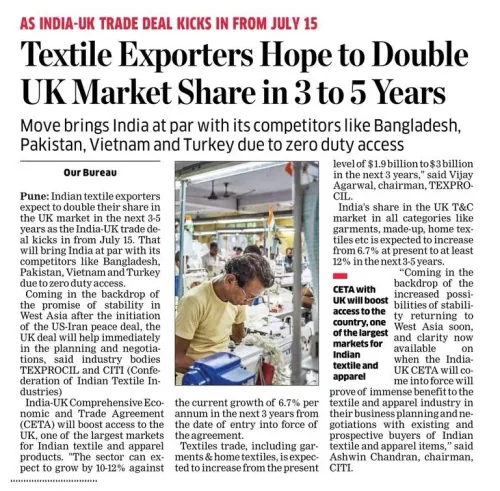
Indian textile and apparel exporters are expected to gain preferential tariff access to the UK market, making their products more price-competitive and opening new buyer relationships in one of Europe's largest consumer economies.
What is 'Vocal for Local' and how does it relate to the FTA?
'Vocal for Local' is a government initiative under the Atmanirbhar Bharat Abhiyan, launched in 2020, to promote Indian-made goods. The government has framed the India-UK FTA as reinforcing this goal by creating export demand for locally produced textiles, handicrafts, and leather goods.
Will MSMEs benefit from the India-UK trade deal?
Yes, Union Textiles Minister Giriraj Singh specifically stated that micro, small and medium enterprises and small entrepreneurs will benefit from the agreement alongside large industries, through improved access to the UK market.
Which Indian sectors gain the most from the India-UK FTA?
Textiles, apparel, leather goods, and handicrafts are the sectors most directly highlighted by the government as primary beneficiaries, given their labour-intensive nature and existing export potential to the United Kingdom.