Giriraj Singh: India's Energy Rise Draws Global Praise
Synopsis
Union Textiles Minister Giriraj Singh says India's unprecedented energy growth under PM Modi is now a global talking point, citing Australian PM Anthony Albanese's public appreciation. India aims for 500 GW non-fossil capacity by 2030 and has co-led the International Solar Alliance since 2015.
Key Takeaways
Giriraj Singh posted on 27 September 2026 highlighting that India's energy expansion has become a subject of global discussion.
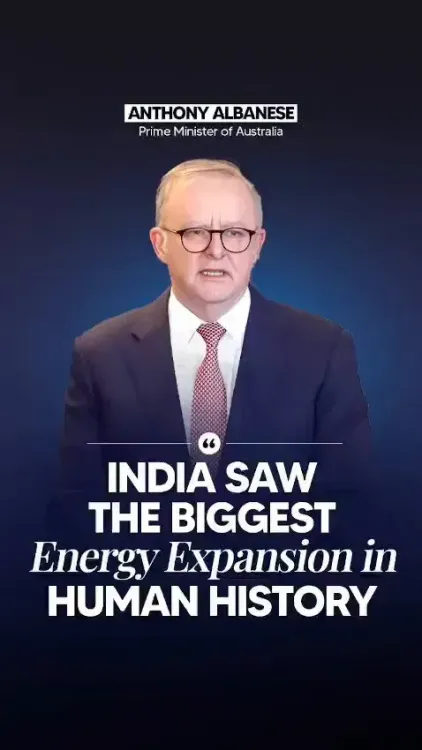
Australian PM Anthony Albanese has reportedly praised India's progress in the energy sector, per Singh's post.
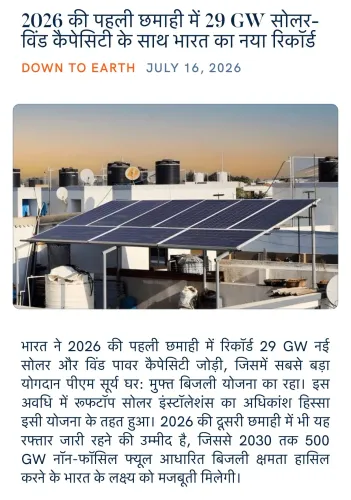
India targets 500 GW non-fossil fuel capacity by 2030 , a commitment made at COP26 in 2021 .
India co-founded the International Solar Alliance in 2015 to lead global solar deployment.
Australia is a key partner in India's critical minerals and clean energy supply chain strategy.
Energy cooperation between India and Australia has grown into a primary bilateral agenda item in recent years.
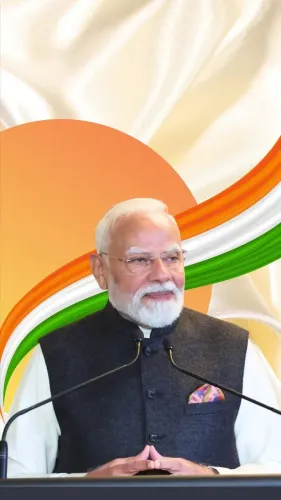
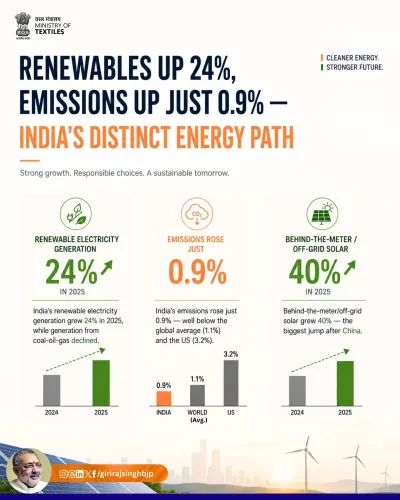
India's energy transformation has caught the world's attention — and now it is catching the ear of world leaders. Union Textiles Minister Giriraj Singh posted on Sunday, 27 September 2026, highlighting that the unprecedented expansion of India's energy sector under Prime Minister Narendra Modi has become a subject of global discussion, drawing appreciation from Australian Prime Minister Anthony Albanese.
In his post, Singh wrote: 'Bharat ki badhti urja shakti aaj vaishvik charcha ka vishay hai' — 'India's growing energy power is today a subject of global conversation.' He noted that the scale of what has been built under Modi's leadership is now attracting the world's attention, and singled out Albanese's appreciation as evidence of the sector's international resonance.
From 500 GW ambitions to a bilateral talking point
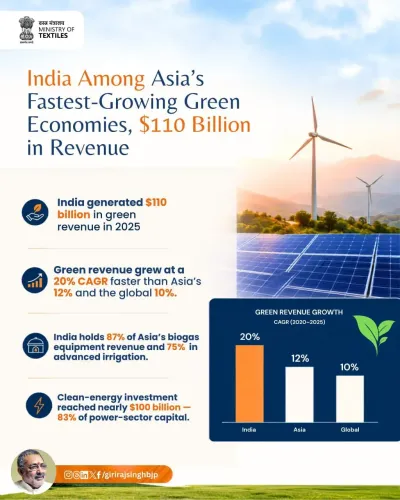
The backdrop is real and substantial. Since 2014, India has aggressively expanded across thermal, nuclear, and renewable energy, setting a landmark target of 500 GW non-fossil fuel capacity by 2030 — a goal India announced at COP26 in 2021. That pledge also anchors India's broader net-zero commitment by 2070. The numbers have made India one of the fastest-growing large energy markets on the planet.
India co-founded the International Solar Alliance in 2015, a coalition designed to accelerate solar deployment across sun-rich nations. The initiative has since grown into a symbol of India's ambition to lead the global clean energy transition — not merely participate in it.
Why Australia's voice carries weight here
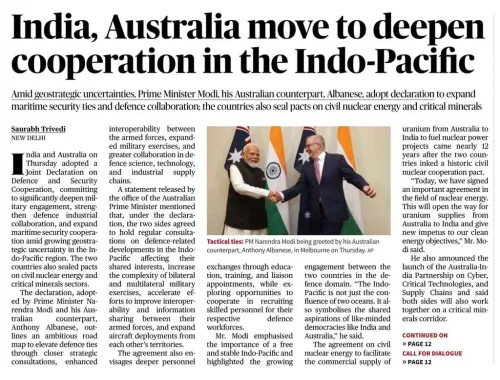
Albanese's reported appreciation is not incidental. Australia sits at the heart of India's critical minerals and clean energy supply chain strategy — a resource-rich partner whose lithium, cobalt, and rare earth reserves are central to the battery and solar value chains India needs to hit its 2030 targets. When the Australian Prime Minister publicly acknowledges India's energy growth, it signals that the bilateral conversation is moving from intent to investment territory.
Analysts who track India-Australia ties have noted that energy — once a peripheral item in bilateral meetings — has become a lead agenda point, with Joint Working Groups on energy cooperation gaining institutional heft in recent years.
Energy as a pillar of India's global standing
Singh's post fits a broader pattern in which the ruling party frames India's infrastructure and energy growth as a diplomatic asset — evidence that domestic policy choices are reshaping India's position in multilateral conversations on climate, trade, and technology. The energy sector, once known primarily for power shortages, is now being projected as a proof point of India's development trajectory.
The next India-Australia Joint Working Group meeting on energy and any fresh renewable or critical minerals agreements will be the real test of whether the diplomatic praise converts into concrete partnerships on the ground.
Point of View
It elevates the energy story from a policy brief to a diplomatic credential. The Australia angle is particularly strategic: as India courts critical mineral partnerships to fuel its renewables pipeline, framing Albanese's appreciation publicly reinforces the narrative that India is not a supplicant but a peer in the clean energy transition. Watch whether this rhetoric accelerates movement on concrete MoUs at the next bilateral working group.
NationPress
27 Sept 2026
Frequently Asked Questions
What did Australian PM Anthony Albanese say about India's energy sector?
According to Union Minister Giriraj Singh's post, Albanese has publicly appreciated the unprecedented expansion of India's energy sector under PM Modi. The exact wording of Albanese's remarks has not been independently confirmed.
What is India's renewable energy target for 2030?
India has set a target of 500 GW non-fossil fuel capacity by 2030 , a commitment announced at the COP26 climate summit in 2021 . India also aims for net-zero emissions by 2070 .
What is the International Solar Alliance and who started it?
The International Solar Alliance was co-founded by India in 2015 to accelerate solar energy deployment across sun-rich nations. It is one of India's flagship initiatives to lead the global clean energy transition.
Why is Australia important for India's energy goals?
Australia holds significant reserves of lithium, cobalt, and rare earths that are critical for batteries and solar panels — essential components of India's push to hit its 500 GW renewable capacity target. The two countries have been deepening cooperation through Joint Working Groups on energy and critical minerals.
What has Giriraj Singh said about India's energy sector?
On 27 September 2026 , Union Textiles Minister Giriraj Singh posted that India's growing energy power has become a subject of global conversation, citing Australian PM Albanese's appreciation as evidence of international recognition of PM Modi's energy leadership.