Giriraj Singh Pays Tribute to Ambedkar, Meets Swachhata Mitras in Raipur
Synopsis
Union Textiles Minister Giriraj Singh visited Raipur on 13 June 2026, garlanding Dr. B.R. Ambedkar's statue and meeting Swachhata Mitras to honour their contribution to the Swachh Bharat Mission, calling cleanliness a vehicle for nation-building through public participation.
Key Takeaways
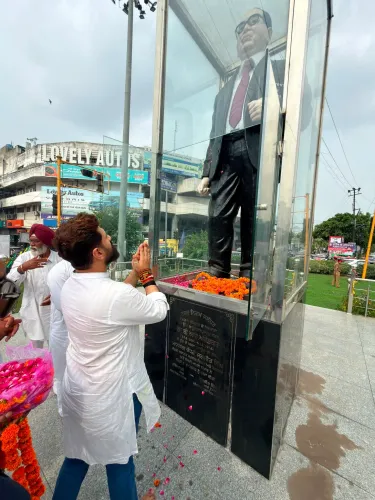
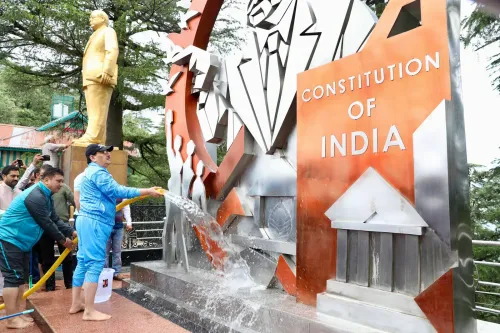
Giriraj Singh visited Raipur on 13 June 2026 and paid floral tribute at the statue of Bharat Ratna Dr.
He met Swachhata Mitras — frontline sanitation workers — and felicitated them for their contribution to the Swachh Bharat Abhiyan .
Singh described cleanliness as 'not merely a campaign, but a powerful means of nation-building through public participation.' The Swachh Bharat Mission was launched on 2 October 2014 ; India was declared open-defecation-free at the village level in 2019 .
The visit links Ambedkar's legacy of sanitation dignity with the Modi government's flagship cleanliness drive.
Focus now shifts to Swachh Bharat Mission-Urban 2.0 progress in Chhattisgarh and the next Swachh Survekshan rankings.
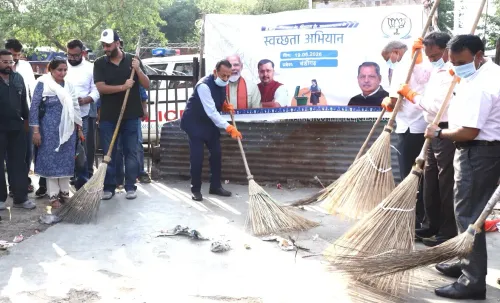
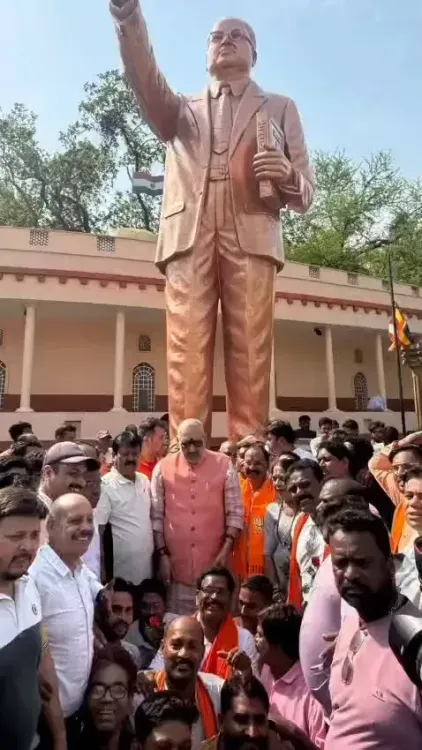
Union Textiles Minister Giriraj Singh visited Raipur on Saturday, 13 June 2026, where he garlanded the statue of Bharat Ratna Dr. B.R. Ambedkar and held a meeting with Swachhata Mitras — frontline sanitation workers who form the backbone of the Swachh Bharat Mission at the ground level.
Context
Posting on X, Singh described the visit in Hindi, writing that he offered floral tributes at the statue of Bharat Ratna Baba Saheb Dr. Bhimrao Ambedkar ji [Bharat Ratna Baba Saheb Dr. Bhimrao Ambedkar] and bowed to him reverentially. He then met with Swachhata Mitras to thank and felicitate them for their dedication, hard work, and 'invaluable contribution to the Swachh Bharat Abhiyan.' The minister added: 'Cleanliness is not merely a campaign, but a powerful means of nation-building through public participation.'
The visit combined two recurring themes in BJP ministerial outreach — paying homage to Dr. B.R. Ambedkar, the principal architect of the Indian Constitution and a towering figure in the struggle for Dalit rights, and highlighting citizen-level participation in the government's flagship sanitation drive.
Policy Backdrop
The Swachh Bharat Mission was launched by Prime Minister Narendra Modi on 2 October 2014 — the birth anniversary of Mahatma Gandhi — with twin objectives: achieving open-defecation-free status across India and improving solid-waste management in urban and rural areas alike. Singh specifically credited Modi's leadership, noting that the mission has 'taken the form of a new awareness and a people's movement across the country.'
India was declared open-defecation-free at the village level in 2019 under Swachh Bharat Mission-Gramin Phase 1. A second phase followed, focused on sustainability and solid-waste management. The urban counterpart, Swachh Bharat Mission-Urban 2.0, continues to target garbage-free cities and scientific waste processing, with annual Swachh Survekshan rankings tracking progress across municipalities.
Stakeholders and Impact
Swachhata Mitras — sanitation workers, waste collectors, and community-level cleanliness volunteers — are central to the mission's last-mile delivery. Their work spans door-to-door waste collection, public-space upkeep, and behaviour-change outreach in neighbourhoods and slums. Raipur, the capital of Chhattisgarh, has been an active participant in Swachh Survekshan cycles, and engagements like Saturday's meeting are part of a broader government effort to acknowledge and motivate this workforce.
The pairing of an Ambedkar tribute with a Swachhata Mitra felicitation carries deliberate social symbolism: Ambedkar spent his life fighting the caste-based stigma historically attached to manual sanitation work, and government messaging increasingly frames sanitation dignity as an extension of his constitutional legacy.
What's Next
Attention will now turn to Swachh Bharat Mission-Urban 2.0 implementation timelines in Chhattisgarh and the results of the next Swachh Survekshan city-ranking cycle, which will offer a measurable indicator of how ground-level efforts by Swachhata Mitras are translating into cleanliness outcomes. Singh's public acknowledgement of their contribution could also feed into wider policy conversations about formalising the role, wages, and welfare of sanitation workers within the mission's framework.
Point of View
Insulating it from criticism of centralised delivery. Acknowledging Swachhata Mitras publicly also nudges the policy conversation toward their welfare and formal recognition — a politically sensitive area given the caste dimensions of sanitation work that Ambedkar himself confronted. As Swachh Survekshan rankings become increasingly competitive, ministerial visibility in state capitals like Raipur signals that the Centre is watching urban local body performance closely.
NationPress
29 Jul 2026
Frequently Asked Questions
Why did Giriraj Singh visit Raipur on 13 June 2026?
Giriraj Singh visited Raipur to garland the statue of Bharat Ratna Dr. B.R. Ambedkar and to meet Swachhata Mitras, felicitating them for their work under the Swachh Bharat Mission.
Who are Swachhata Mitras?
Swachhata Mitras are frontline sanitation workers and community volunteers who carry out door-to-door waste collection, public-space upkeep, and cleanliness outreach as part of the Swachh Bharat Mission.
What is the Swachh Bharat Mission?
The Swachh Bharat Mission is a nationwide sanitation and cleanliness programme launched by Prime Minister Narendra Modi on 2 October 2014, aimed at achieving open-defecation-free status and improving solid-waste management across India.
What is Swachh Bharat Mission-Urban 2.0?
Swachh Bharat Mission-Urban 2.0 is the second phase of the urban cleanliness drive, focusing on garbage-free cities, scientific waste processing, and sustainability, with annual Swachh Survekshan rankings measuring city-level progress.
What is the connection between Dr. Ambedkar and sanitation?
Dr. B.R. Ambedkar spent his life fighting the caste-based stigma historically attached to manual sanitation work; government messaging increasingly frames sanitation dignity and the welfare of sanitation workers as part of his constitutional and social-justice legacy.