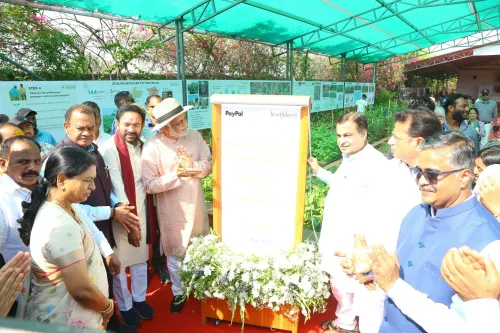
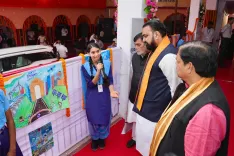
Giriraj Singh Visits Biochar Trial in Nagpur's Gumthala Village
Synopsis
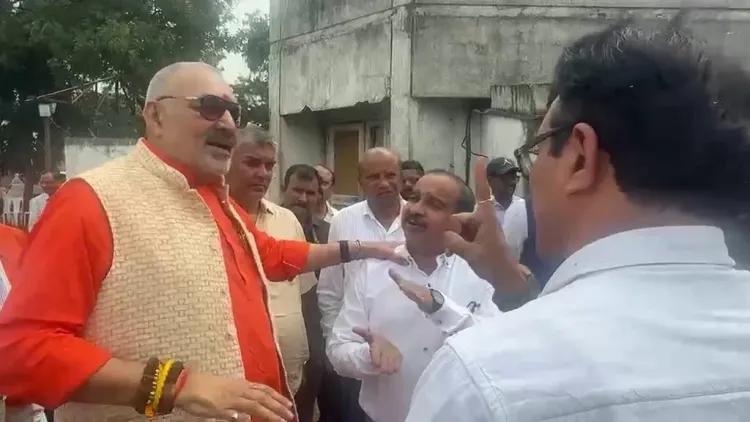
Union Textiles Minister Giriraj Singh observed a machine-driven biochar production trial at Gumthala village, Nagpur, on 26 September 2026, highlighting the technique's potential to raise soil carbon content and make Indian farming more sustainable and resilient.
Key Takeaways
Giriraj Singh visited Gumthala village , Kalmeshwar tehsil, Nagpur district on 26 September 2026 .
He observed machine-assisted biochar production designed to increase carbon content in farmland soil.
Biochar improves soil water retention, microbial activity, and nutrient availability, addressing long-term fertility loss.
India's Soil Health Card Scheme (2015) established the national framework for treating soil as a managed resource.
The Nagpur pilot is being watched for potential integration into national or state-level sustainable agriculture programmes.
Singh's visit highlights growing cross-portfolio ministerial interest in climate-resilient farming technology.
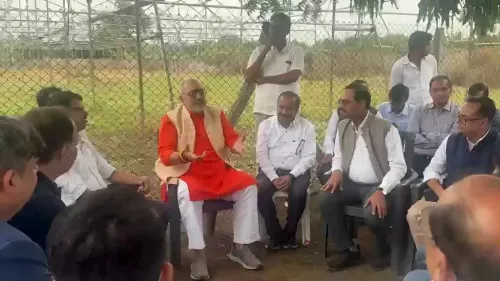
Deep in the black-soil belt of Maharashtra, a village is quietly experimenting with a technique that could rewrite how India thinks about its farm fields. Union Textiles Minister Giriraj Singh visited Gumthala village in the Kalmeshwar tehsil of Nagpur district on Saturday, 26 September 2026, observing a machine-driven biochar production process aimed at boosting soil carbon content — and the minister came away impressed.
In a post on X, Singh described what he witnessed: 'kheton ki mitti mein carbon ki matra badhane ke liye biochar ka istemal kiya ja raha hai' — ('biochar is being used to increase the carbon content in farmland soil'). He called these technological experiments and research efforts pathways toward more sustainable farming and better soil quality.
What Biochar Does, and Why It Matters for Indian Farms
Biochar is a charcoal-like material produced by burning organic matter — crop stubble, wood chips, agricultural waste — in a low-oxygen environment through a process called pyrolysis. When worked into soil, it acts as a long-term carbon sink, improving water retention, microbial activity, and nutrient availability. The science is not new, but machine-assisted production at a village scale represents a step toward practical, scalable deployment.
India's farmlands have been losing organic carbon for decades, a consequence of intensive cultivation, synthetic fertiliser dependence, and stubble burning. Degraded soil translates directly into lower yields, higher input costs, and greater vulnerability to drought — all acute concerns in Maharashtra's rain-fed agricultural districts. Techniques like biochar sit precisely at the intersection of soil restoration and climate resilience that central schemes have repeatedly tried to address.
India's Soil Health Push — From Cards to Carbon
The government launched the Soil Health Card Scheme in 2015, giving millions of farmers a diagnostic picture of their plot's nutrient profile and corrective recommendations. That initiative established the institutional reflex of treating soil as a managed resource rather than a given. Field demonstrations of biochar production — measured, machine-driven, documented — take that logic a step further, moving from diagnosis to active soil-carbon management.
Ministerial visits to on-ground trials serve a dual purpose: they validate the research for local farming communities, and they signal to policymakers which innovations merit integration into formal national programmes. Whether the Gumthala pilot feeds into a broader scheme update, a state-level rollout, or a central advisory on sustainable agriculture is the question that researchers and farming advocates will now be watching closely.
A BJP Cabinet Minister at a Maharashtra Farm Demo
Singh's presence in Nagpur — far from his Lok Sabha constituency of Begusarai, Bihar, and outside his formal portfolio of Textiles — underscores the cross-sectoral urgency that soil health has acquired within the ruling dispensation. Agriculture intersects with rural livelihoods, climate commitments, and food security in ways that pull ministers well beyond their designated briefs.
If biochar moves from village demonstration to standard practice, the carbon locked into India's fields could become a measurable climate dividend. That is still a long road. But it starts, apparently, in Gumthala.
Point of View
A budget line, or a formal state-centre pilot that scales the technology. Until that happens, the visit is a meaningful signal, not yet a policy shift.
NationPress
26 Sept 2026
Frequently Asked Questions
What is biochar and how does it help farmland?
Biochar is a charcoal-like substance produced by burning organic matter in a low-oxygen environment. When added to soil, it increases carbon content, improves water and nutrient retention, and supports beneficial microbial activity, making farmland more fertile and resilient over the long term.
Why did Giriraj Singh visit Nagpur's Gumthala village?
Union Textiles Minister Giriraj Singh visited Gumthala village in Nagpur's Kalmeshwar tehsil on 26 September 2026 to observe a machine-driven biochar production demonstration aimed at improving soil carbon levels in farm fields.
What is India's Soil Health Card Scheme?
Launched in 2015, the Soil Health Card Scheme provides Indian farmers with a detailed assessment of their soil's nutrient profile and recommendations on fertiliser and corrective inputs needed to improve productivity and soil quality.
Can biochar become part of Indian government agriculture programmes?
Researchers and farming advocates are watching whether the Gumthala pilot and similar field demonstrations get integrated into national soil health or sustainable agriculture schemes. No formal policy decision has been announced yet.
How does soil carbon loss affect Indian farming?
Decades of intensive cultivation, synthetic fertiliser use, and stubble burning have depleted organic carbon in Indian farm soils, leading to lower yields, higher input costs, and greater vulnerability to drought — particularly in rain-fed agricultural regions like parts of Maharashtra.