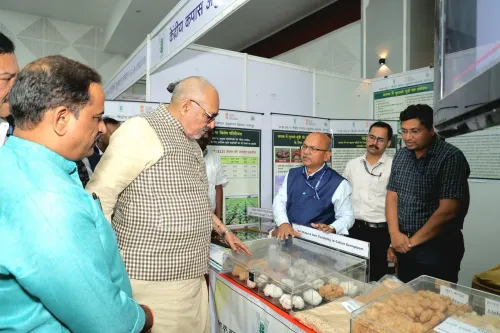
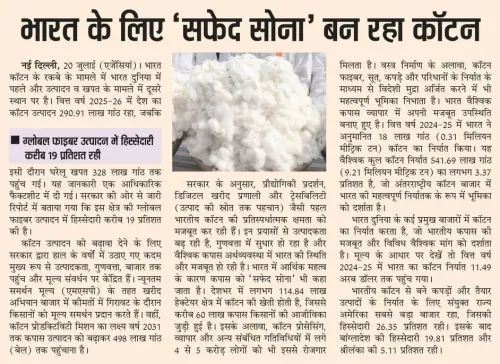
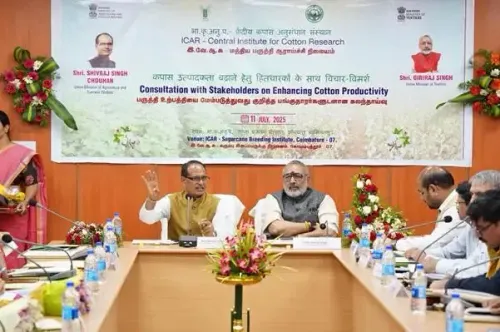
Giriraj Singh visits cotton farms in Chhatrapati Sambhajinagar
Synopsis
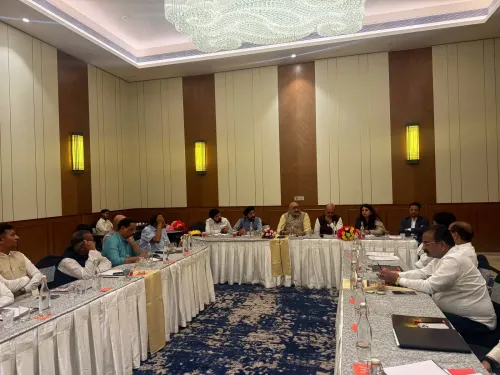
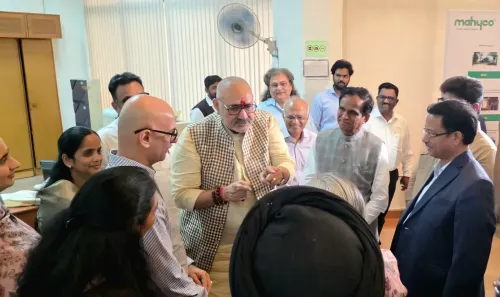
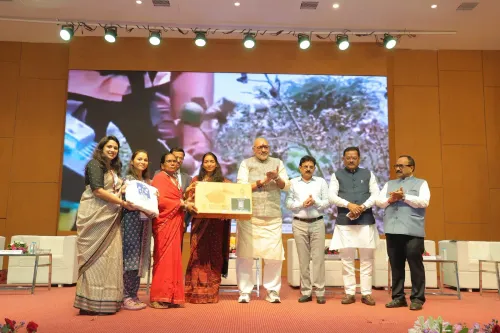
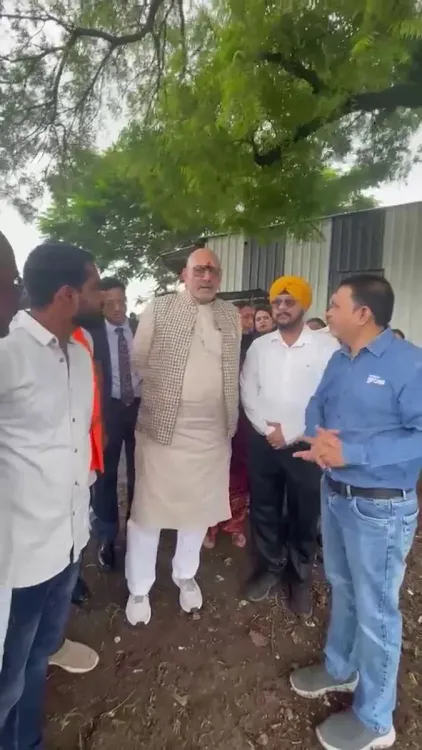
Union Textiles Minister Giriraj Singh visited a close-space cotton plantation in Chhatrapati Sambhajinagar, Maharashtra on August 1, 2026, inspecting modern farming methods and meeting farmers to gather inputs on quality improvement and sector development.
Key Takeaways
Giriraj Singh , Union Textiles Minister, visited a close-space cotton plantation in Chhatrapati Sambhajinagar, Maharashtra on August 1, 2026 .
He reviewed modern agricultural practices being adopted at the plantation and held direct discussions with cotton farmers.
The Minister reaffirmed the government's commitment to protecting farmer interests, improving cotton production quality, and overall sector development.
Chhatrapati Sambhajinagar is a key node in Maharashtra's cotton belt, with the crop supporting India's broader textiles value chain and exports.
India became a major global cotton producer following the introduction of Bt cotton technology in 2002 , though productivity and quality consistency remain ongoing challenges.
Potential next steps include revised MSP announcements for cotton or new farmer training modules under the textiles or agriculture ministries.
In the cotton fields of Chhatrapati Sambhajinagar, Maharashtra, Union Textiles Minister Giriraj Singh got his hands dirty — walking through a close-space cotton plantation on Saturday, August 1, 2026, talking directly to farmers about what is working and what is not.
What the Minister saw on the ground
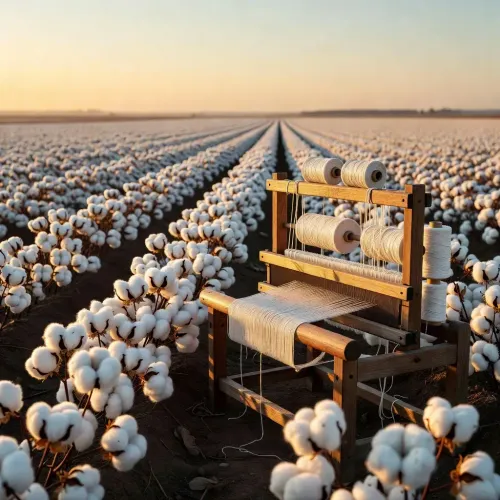
Singh inspected a close-space cotton plantation — a high-density cultivation method designed to maximise yield per acre — and held discussions on the modern agricultural practices being adopted there. He also spoke at length with cotton farmers, gathering their first-hand experiences and suggestions on challenges in the sector.
Posting on X, the Minister wrote: 'कपास किसानों के हितों की रक्षा, उत्पादन की गुणवत्ता में सुधार और कपास क्षेत्र के समग्र विकास के लिए सरकार प्रतिबद्ध है' — 'The government is committed to protecting the interests of cotton farmers, improving production quality, and the overall development of the cotton sector.'
Maharashtra's cotton belt and why this visit matters
Chhatrapati Sambhajinagar — formerly Aurangabad — sits in the heart of Maharashtra's Vidarbha-Marathwada cotton corridor, one of India's most productive and most distressed farming zones. Cotton is a critical cash crop for millions of smallholders here, feeding directly into India's vast textiles manufacturing and export chain.
Since Bt cotton technology was introduced in 2002, India transformed into a top-three global cotton producer. But productivity gains have plateaued in recent years, and quality consistency remains a persistent concern for textile mills and exporters. Ministerial field visits like this one serve a dual purpose: reviewing whether modern methods are actually reaching farmers, and building a ground-level evidence base for policy decisions.
What farmers and the industry will be watching next
Farmer inputs collected during visits of this kind typically feed into two kinds of outcomes: revisions to the Minimum Support Price (MSP) for cotton, and rollout of training modules under the textiles or agriculture ministries. With quality improvement explicitly flagged by the Minister, the textile industry — which depends on consistent fibre standards for export competitiveness — will be watching for any follow-up announcements.
A minister in the fields is a signal. The question is what policy lands next.
Point of View
Whose Textiles Ministry portfolio links directly to cotton's downstream value chain, ground-level engagement in Maharashtra's distressed cotton belt is both politically and administratively strategic. The explicit emphasis on 'quality improvement' suggests the Ministry may be building a case for stricter grading or new extension programmes, which would matter enormously to textile exporters competing on fibre consistency. Whether the field visit translates into concrete, time-bound policy action — or remains a symbolic gesture — will define its real significance.
NationPress
16 Sept 2026
Frequently Asked Questions
Why did Giriraj Singh visit Chhatrapati Sambhajinagar?
Union Textiles Minister Giriraj Singh visited Chhatrapati Sambhajinagar in Maharashtra on August 1, 2026, to inspect a close-space cotton plantation, review modern farming methods, and gather feedback directly from cotton farmers on production quality and sector challenges.
What is close-space cotton plantation?
Close-space cotton plantation is a high-density cultivation technique where cotton plants are grown closer together than in traditional methods, aiming to increase yield per acre and improve overall farm productivity.
What is the government's policy on cotton farmers?
The government has stated its commitment to protecting cotton farmers' interests, improving production quality, and achieving the overall development of the cotton sector, including mechanisms like Minimum Support Price (MSP) and farmer training programmes.
Why is Chhatrapati Sambhajinagar important for cotton?
Chhatrapati Sambhajinagar, formerly known as Aurangabad, is located in Maharashtra's Vidarbha-Marathwada region — one of India's most significant cotton-growing corridors, where the crop is a primary cash crop for millions of smallholder farmers.
What could follow Giriraj Singh's cotton farm visit?
Potential follow-up actions from the visit could include revised MSP announcements for cotton or the rollout of new farmer training and extension modules under the Textiles or Agriculture ministries, based on the inputs gathered from farmers.