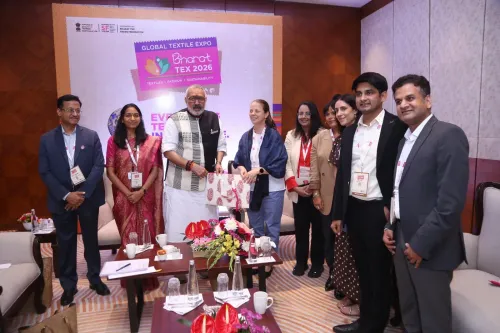
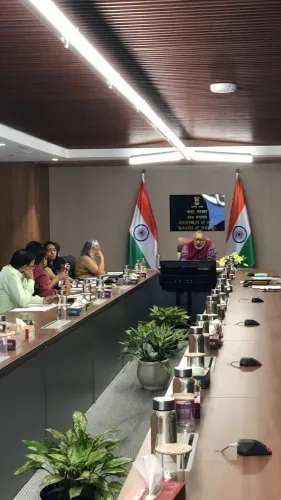
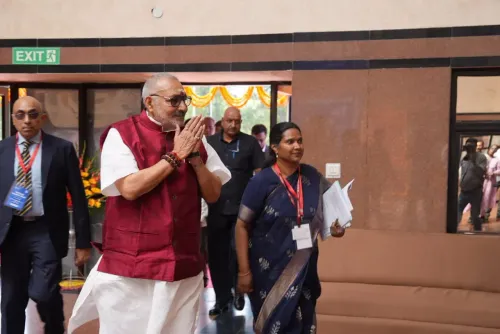
Giriraj Singh Chairs Cotton Sector Meet in Parliament
Synopsis
Union Textiles Minister Giriraj Singh chaired a Parliamentary Consultative Committee meeting on 23 July 2026 at Parliament House, with eight MPs present, to deliberate on raising cotton productivity, improving fibre quality, empowering farmers, and strengthening India's global textile competitiveness.
Key Takeaways
Union Textiles Minister Giriraj Singh chaired the Consultative Committee meeting on cotton at Parliament House on 23 July 2026 .
Eight committee members — including Gaddigoudar Parvatagouda , Subbarayan K , Chamala Kiran Kumar Reddy , and others — attended the session.
Key agenda items included cotton productivity , fibre quality , farmer empowerment, value addition, and global competitiveness of Indian textiles.
The discussions align with existing policy instruments including the Technology Mission on Cotton (2000) and the PLI scheme for textiles (2021).
The Minister reaffirmed the government's resolve to build a 'strong, self-reliant and prosperous cotton value chain' under the Atmanirbhar Bharat framework.
Outcomes of the meeting are expected to inform upcoming ministry planning, budget proposals, or revised scheme guidelines.
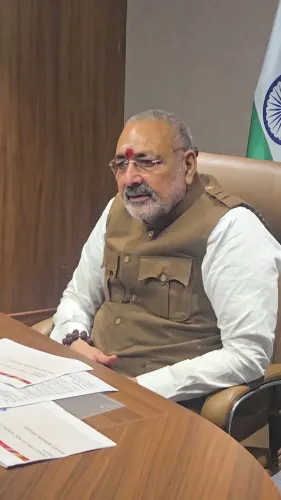
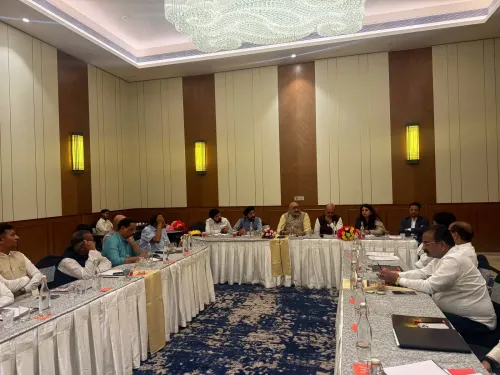
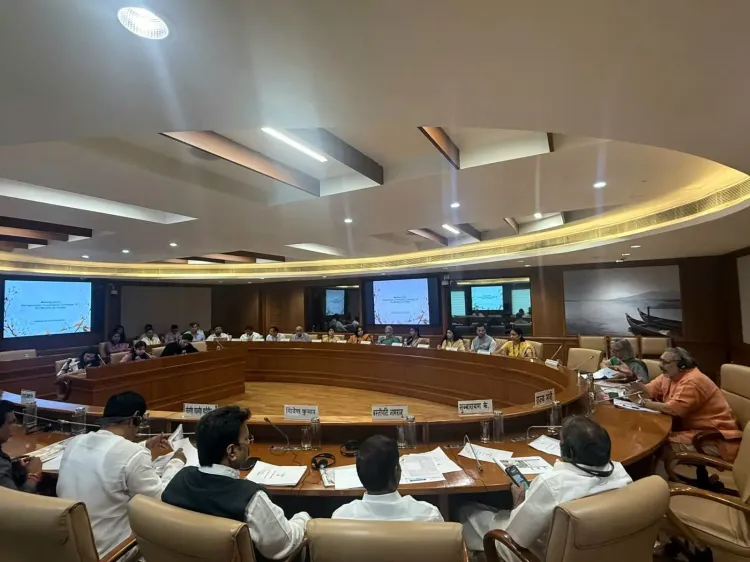
Union Textiles Minister Giriraj Singh on Thursday, 23 July 2026 chaired a Consultative Committee meeting at Parliament House, New Delhi, bringing together Members of Parliament and senior ministry officials to deliberate on the current state and future roadmap of India's cotton sector.
Posting about the meeting on X, the Minister wrote: 'संसद भवन में माननीय सांसदों एवं वरिष्ठ अधिकारियों की उपस्थिति में कपास से जुड़े विभिन्न विषयों पर आयोजित कंसल्टेटिव कमेटी की बैठक की अध्यक्षता की' — 'I chaired the Consultative Committee meeting on various cotton-related subjects in the presence of honourable MPs and senior officials at Parliament House.' He added that the government's resolve to build 'a strong, self-reliant and prosperous cotton value chain remains firm.'
Context
The Consultative Committee attached to the Ministry of Textiles functions as a parliamentary mechanism for multi-party consultation on sector policy. Such meetings allow MPs from across parties to engage directly with ministry leadership on issues affecting their constituencies, many of which are cotton-growing regions. The 23 July 2026 session focused specifically on cotton productivity, fibre quality, farmer empowerment, value addition, and the global competitiveness of Indian textiles.
Eight committee members were present: Gaddigoudar Parvatagouda, Subbarayan K, Chamala Kiran Kumar Reddy, Bastipati Nagaraju, Hasmukhbhai Somabhai Patel, Dhairyasheel Sambhajirao Mane, Samik Bhattacharya, and Shivesh Kumar.
Policy Backdrop
India's cotton sector has long grappled with stagnant yields and inconsistent fibre quality. The Technology Mission on Cotton, launched in 2000, sought to raise production and productivity while reducing import dependence — a goal that remains work-in-progress more than two decades on. The Production Linked Incentive (PLI) scheme for textiles, approved in 2021, extended the policy push further downstream, targeting value addition, modern manufacturing capacity, and export growth.
Both schemes reflect a long-running recognition that India, despite being one of the world's largest cotton producers, has not fully captured the value that an integrated cotton-to-garment chain can generate. The ministry's current emphasis on the 'cotton value chain' — from farm to finished fabric — is consistent with the broader Atmanirbhar Bharat framework aimed at strengthening domestic manufacturing and reducing supply-chain vulnerabilities.
Stakeholders and Impact
Cotton farmers, who number in the millions across states such as Maharashtra, Gujarat, Telangana, Andhra Pradesh, and Karnataka, stand at the centre of any productivity or quality-improvement drive. Higher yields and better-grade fibre translate directly into improved incomes, while downstream value addition creates employment in spinning, weaving, and garmenting. The presence of MPs from multiple parties — including those representing cotton-belt constituencies — signals that the committee is drawing on ground-level perspectives.
The textile industry, which is among India's largest export earners, also has a direct stake in the quality and price of domestic cotton. Improved fibre standards reduce the need for costly imports and help Indian mills compete on global quality benchmarks.
What's Next
Consultative Committee deliberations typically feed into ministry planning cycles, and the themes discussed — productivity, quality, farmer welfare, and export competitiveness — are likely to surface in upcoming budget proposals or revised scheme guidelines. Watchers of the textiles sector will track whether the Ministry of Textiles follows up with concrete announcements on cotton support measures in the next parliamentary session or through administrative orders. Giriraj Singh's stated resolve to build a 'strong, self-reliant and prosperous cotton value chain' positions the ministry for continued policy activity in this space through the remainder of the current parliamentary term.
Point of View
Giriraj Singh is building cross-party consensus ahead of what could be a significant policy push in the next budget cycle. The emphasis on the full 'value chain' — rather than just farm-gate productivity — signals an intent to link cotton reform to India's broader textile export ambitions. Whether the consultative process translates into concrete scheme revisions or new outlays will be the real test of this stated resolve.
NationPress
21 Oct 2026
Frequently Asked Questions
What was discussed at the Consultative Committee meeting on cotton chaired by Giriraj Singh?
The meeting, held on 23 July 2026 at Parliament House, covered cotton productivity, fibre quality improvement, farmer empowerment, value addition, and strengthening the global competitiveness of India's textile industry.
Who is Giriraj Singh and what is his role in India's textile sector?
Giriraj Singh is the Union Minister of Textiles, a senior BJP leader and Lok Sabha MP from Begusarai, Bihar. He oversees national textile policy, including programmes related to cotton farming and the broader textile value chain.
What is the Parliamentary Consultative Committee for the Ministry of Textiles?
It is a parliamentary body that brings together MPs and senior ministry officials to discuss policy issues related to the textiles sector, providing a channel for multi-party input into ministry plans.
What government schemes support India's cotton sector?
Key schemes include the Technology Mission on Cotton, launched in 2000 to improve production and quality, and the Production Linked Incentive scheme for textiles, approved in 2021 to promote value addition and boost exports.
Why does India's cotton value chain matter for textile exports?
India is one of the world's largest cotton producers, but stagnant yields and inconsistent fibre quality limit the competitiveness of its textile exports. An integrated cotton-to-garment value chain can raise farmer incomes and help Indian mills compete globally on quality and price.