What is the focus of the Global Earthquake Science Conference in Gandhinagar?
Synopsis
The Global Earthquake Science Conference in Gandhinagar is a pivotal event, gathering top scientists and policymakers from around the world to tackle seismic risks. With an emphasis on early warning systems and infrastructure resilience, the conference aims to enhance global preparedness against earthquakes. This initiative marks a significant step forward in earthquake research.
Key Takeaways
Global Collaboration: The conference emphasizes the need for international cooperation in earthquake research.
Enhanced Preparedness: Focus on improving infrastructure resilience against seismic events.
Research Sharing: Experts will present findings that could shape future earthquake science.
Historical Context: Discussions will reference past seismic events to inform future strategies.
Regional Focus: The conference is particularly relevant for earthquake-prone regions like Gujarat.
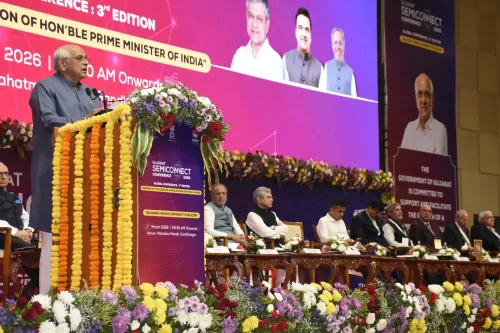
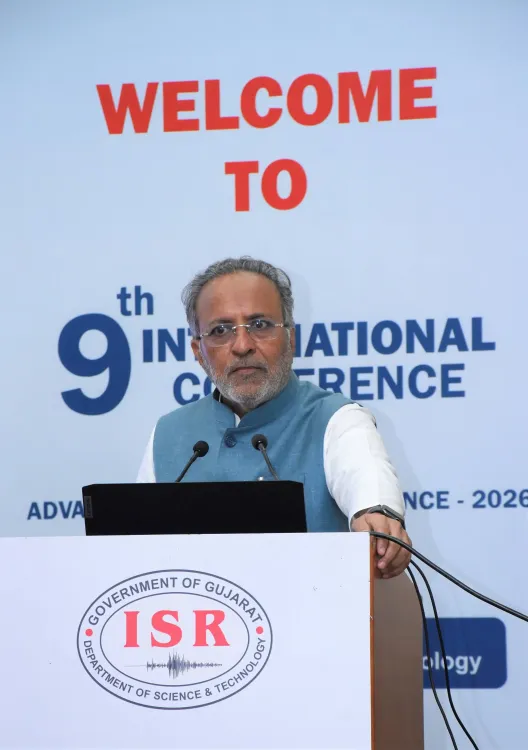
Gandhinagar, Jan 23 (NationPress) A three-day global conference focusing on earthquake science commenced on Friday at the Institute of Seismological Research (ISR) in Gandhinagar. This conference aims to enhance early warning systems and promote research to reduce seismic risks worldwide.
During the inauguration of the ninth triennial event, titled "Advances in Earthquake Science–2026", the Science and Technology Minister of Gujarat, Arjun Modhwadia, emphasized the significant role this conference will play in bolstering preparedness against earthquakes both in India and globally.
He expressed pride in Gujarat serving as the host for this international gathering.
The conference, organized by the ISR under the state's Science and Technology Department, is set to take place from January 23 to 25.
Alongside this primary event, a thematic conference focusing on "Intraplate and Himalayan Seismology: Developments Over the Last 25 Years" is also being held.
Participants include scientists and experts from various countries such as India, Japan, the US, Germany, France, Georgia, Taiwan, Portugal, and Nepal, who will share their research findings and engage in in-depth discussions.
Minister Modhwadia recalled that the ISR was established in 2011 under the leadership of then Chief Minister and current Prime Minister Narendra Modi, making Gujarat the first Indian state to establish a dedicated earthquake research center.
He remarked, "Today, ISR not only guides earthquake research in India but is also recognized globally. Its establishment in Gujarat has allowed the state to host this esteemed international conference," he stated.
Experts participating in the conference will present research papers aimed at improving the earthquake resistance of infrastructure such as bridges, roads, and large buildings, a subject particularly relevant for Gujarat, which is situated in a high seismic zone.
The state comprises four seismological zones, with Kutch being the most vulnerable to earthquakes.
Reflecting on the catastrophic earthquake that struck Kutch on January 26, 2001, Minister Modhwadia mentioned that this tragedy spurred Gujarat to enhance its institutional capabilities to manage seismic disasters.
The Indian Society of Earthquake Science (ISES) Vice-President and Padma Shri awardee V.P. Dimri stated that the conference has united policymakers, youth, scientists, and experts, significantly contributing to the advancement of earthquake science.
Heather DeShon from Southern Methodist University in the US stressed that a united global effort would deepen scientific understanding in this field.
Former member of the National Disaster Management Authority and Padma Shri awardee Harsh Gupta highlighted that the conference underscores Gujarat's commitment to science-based policy, disaster resilience, and preparedness.
He expressed confidence that the discussions over the next three days would be fruitful for the future of earthquake science.
Welcoming attendees, ISR Director General D.D. Jadeja mentioned that new studies and research related to earthquakes in Gujarat, India, and internationally would be deliberated during the conference, contributing to efforts aimed at minimizing future loss of lives and properties.
The conference will feature numerous technical sessions that focus on recent scientific advancements, ongoing research, and future directions in earthquake science, with experts presenting papers and sharing field experiences from across the globe.
Point of View
I believe that the Global Earthquake Science Conference in Gandhinagar represents a crucial effort in addressing seismic challenges. The collaboration among international experts highlights the importance of research and preparedness in mitigating the impacts of earthquakes. It's imperative that India continues to lead in these discussions, ensuring a safer future for all.
NationPress
20 Sept 2026
Frequently Asked Questions
What is the main goal of the earthquake science conference?
The primary aim is to strengthen early warning systems and advance research to mitigate seismic risks on a global scale.
Who inaugurated the conference?
The conference was inaugurated by Gujarat's Science and Technology Minister, Arjun Modhwadia.
How long will the conference last?
The conference will take place over three days, from January 23 to 25.
What is the significance of the ISR?
The Institute of Seismological Research (ISR) is pivotal in guiding earthquake research in India and has become a recognized center globally.
Which countries are participating in the conference?
Participants include experts from India, Japan, the US, Germany, France, Georgia, Taiwan, Portugal, and Nepal.