Gujarat Enhances Digital Connectivity and Earthquake Monitoring Infrastructure
Synopsis
Gujarat is setting a benchmark in digital governance with complete connectivity in gram panchayats and an expanded earthquake monitoring system featuring 110 stations, demonstrating a strong commitment to technology and safety.
Key Takeaways
100% digital connectivity achieved in gram panchayats of Gujarat.
Expansion of earthquake monitoring with 110 seismic stations .
Investment of over Rs 200 crore to support IT initiatives.
Implementation of the Gramin Wi-Fi Project providing free internet access.
ISR plays a crucial role in advancing earthquake research.
Gandhinagar, March 3 (NationPress) Gujarat has successfully established comprehensive digital connectivity across all its gram panchayats while enhancing its earthquake monitoring framework to include 110 seismic stations. This development marks a significant step forward in the state's commitment to technology-driven governance and research initiatives.
In today's digital landscape, science-driven thought, innovation, and technology-oriented administration are pivotal for progress.
The integration of IT infrastructure, research institutes, and e-governance platforms in Gujarat is being prioritized to ensure faster and more transparent public services.
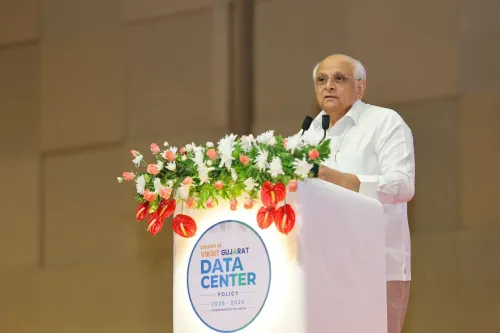
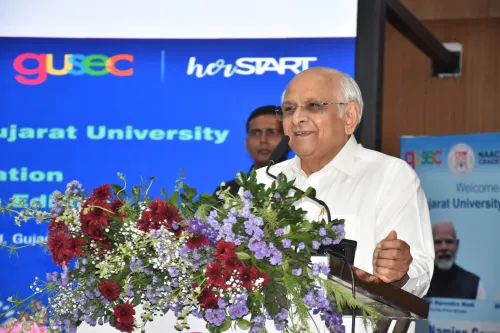
Under the leadership of Chief Minister Bhupendra Patel, the state is advancing towards a holistic digital ecosystem that aligns with Prime Minister Narendra Modi's vision of 'Digital India'.
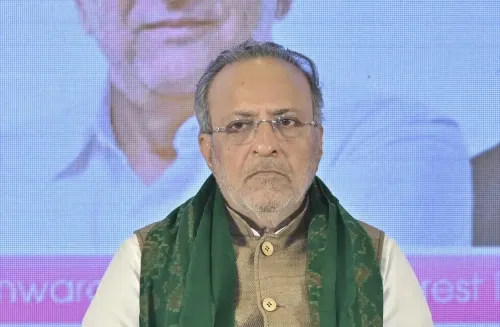
According to Science and Technology Minister Arjun Modhwadia, Gujarat is striving to enhance its global presence in the IT sector through supportive policies and robust infrastructure development.
The state's IT/ITeS policies for 2016-21 and 2022-27 are designed to bolster world-class IT infrastructure, foster innovation, and back emerging technologies.
To date, over Rs 200 crore has been allocated to IT industry units under these policy frameworks.
These provisions support deep technology, artificial intelligence, data centers, and start-ups. In 2025, the state introduced a Global Capability Centres Policy aimed at creating an environment conducive to attracting high-value centers of multinational corporations.
On the infrastructure side, Gujarat Fibre Grid Network Limited has played a crucial role in enhancing connectivity.
Utilizing a special-purpose vehicle model, the state has achieved 100% connectivity in operational gram panchayats, maintaining over 95% network uptime for the past three years.
As part of BharatNet Phase-2, 321 digital services are being offered to villages at speeds of 100 Mbps via the Digital Seva Setu platform.
Approximately 9,000 primary schools, primary health centers, and police stations have been digitally empowered as a result.
To further enhance rural internet access, Gujarat Internet Service Provider Limited has rolled out the Gramin Wi-Fi Project.
Wi-Fi services are now available in over 7,685 gram panchayat offices across 22 districts under BharatNet Phase-2, providing villagers with 60 minutes of free internet each day.
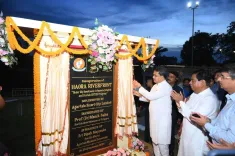
In addition to digital progress, the state has fortified its earthquake research capabilities through the Institute of Seismological Research (ISR) in Gandhinagar.
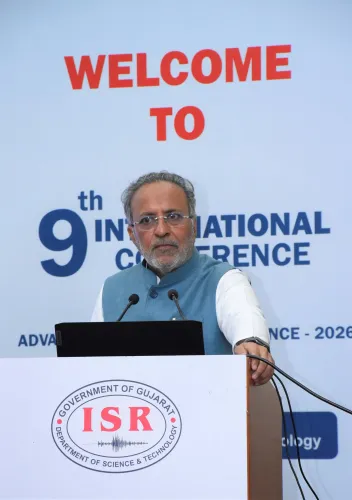
Recognized as a premier institution in earthquake science, ISR recently held a global conference titled “Advances in Earthquake Science – 2026”, focusing on early warning systems and research.
From hosting a single online seismic station in 2001, Gujarat has expanded to operate 110 seismic network stations, allowing for rapid earthquake data reception.
Seismic microzonation studies have been completed for cities including Gandhinagar, Ahmedabad, Anjar, Gandhidham, Dholera, and GIFT City-Gandhinagar.
Under a project sanctioned by the Union Ministry of Earth Sciences, ISR has also finalized microzonation studies for eight major cities across the nation: Amritsar, Agra, Meerut, Lucknow, Varanasi, Kanpur, Patna, and Dhanbad.
Officials note that this dual focus on digital infrastructure and scientific research aims to enhance governance systems while improving public safety and service delivery throughout the state.
Frequently Asked Questions
What is the significance of Gujarat's digital connectivity?
Gujarat's full digital connectivity allows for faster and more transparent public services, enhancing the efficiency of governance.
How many seismic stations does Gujarat operate?
Gujarat operates 110 seismic stations, significantly improving its earthquake monitoring capabilities.
What initiatives support rural internet access in Gujarat?
The Gramin Wi-Fi Project provides Wi-Fi facilities in over 7,685 gram panchayat offices, offering villagers daily free internet access.
What are the goals of Gujarat's IT policies?
The IT policies aim to strengthen world-class infrastructure, promote innovation, and support emerging technologies.
How does ISR contribute to earthquake research?
The Institute of Seismological Research conducts vital studies and hosts conferences to advance understanding of earthquake science.