Goa CM Sawant Hails GMC Doctor's Global Science Ranking
Synopsis
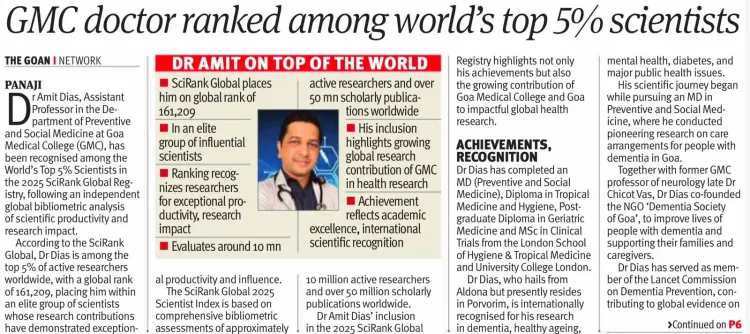
Goa Chief Minister Pramod Sawant has publicly congratulated Dr. Amit Dias of Goa Medical College on his recognition among the world's top five per cent scientists in the 2025 Global Scientist Index, citing his work on dementia care, healthy ageing, and his role on the Lancet Commission on Dementia Prevention.
Key Takeaways
CM Pramod Sawant congratulated Dr.
Amit Dias on June 7, 2026 via X for his global science ranking.
Dias is an Assistant Professor at Goa Medical College, Bambolim , specialising in dementia care, healthy ageing, and public health.
He has been recognised as a member of the Lancet Commission on Dementia Prevention , first convened in 2017 .
Dias co-founded the Dementia Society of Goa to translate research into community-level impact for Goan families.
The recognition is seen as a point of pride for Goa Medical College and the state's public-health research profile.
The achievement aligns with India's National Programme for Health Care of the Elderly , launched in 2010-11 .
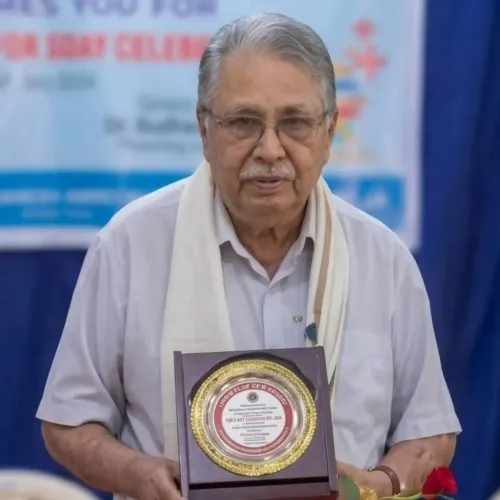
Goa Chief Minister Pramod Sawant on Sunday, June 7, 2026, congratulated Dr. Amit Dias, Assistant Professor at Goa Medical College, on being recognised among the world's top five per cent scientists in the 2025 Global Scientist Index. The Chief Minister described the recognition as a matter of pride for the institution and for Goa as a whole.
Context
In his post on X, CM Sawant highlighted Dr. Dias's career focus on dementia care, healthy ageing, and public health. He noted that this body of work had earned Dr. Dias a place on the Lancet Commission on Dementia Prevention, an international expert panel that has synthesised global evidence on dementia risk reduction and care since 2017. Sawant wrote: 'His co-founding of the Dementia Society of Goa is a rare commitment to translating research into real impact for Goan families.'
The Chief Minister concluded with a wish for Dr. Dias's continued success, framing the recognition as institutional and state-wide pride, not merely a personal achievement.
Policy Backdrop
Goa Medical College, the state's premier government teaching hospital located in Bambolim, has long served as the primary hub for medical research in the small coastal state. Dr. Dias's work on dementia and ageing sits within a broader national policy context: the central government launched the National Programme for Health Care of the Elderly in 2010-11 to address the growing burden of age-related illness across India.
The Lancet Commission on Dementia Prevention published its landmark first report in 2017 and has since been updated with new evidence on modifiable risk factors. Inclusion of researchers from smaller Indian states and institutions in such global bodies reflects a widening of the commission's geographic and epidemiological scope.
Stakeholders and Impact
Dr. Dias's co-founding of the Dementia Society of Goa represents an effort to bridge academic research and community-level care — a gap that has historically been wide in smaller Indian states with limited specialist infrastructure. Families caring for elderly relatives with dementia in Goa stand to benefit from locally grounded research and awareness programmes that such an organisation can anchor.
For Goa Medical College, the recognition adds to the institution's research profile at a time when Indian states are increasingly measured on their public-health research output. Global indices that rank individual scientists also draw attention to the institutions and regions that support them, potentially influencing future research funding and collaboration.
What's Next
The Lancet Commission on Dementia Prevention is expected to release further updates synthesising new evidence, and Dr. Dias's participation positions Goa to contribute to and benefit from those findings. Observers will watch whether CM Sawant's public recognition of this work translates into state-level investment in dementia-care services or dedicated research funding at Goa Medical College. As India's elderly population continues to grow, state governments that back locally relevant public-health research early may be better placed to manage the coming surge in non-communicable disease burden.
Point of View
Sawant associates his administration with credible international validation rather than domestic ceremony alone. The mention of the Dementia Society of Goa subtly underscores a community-impact narrative, which is useful political capital in a small state where personal and institutional reputations are closely intertwined. Whether this recognition is followed by concrete state funding for dementia research or elderly-care infrastructure will determine whether the gesture is substantive or symbolic.
NationPress
15 Sept 2026
Frequently Asked Questions
Who is Dr. Amit Dias from Goa Medical College?
Dr. Amit Dias is an Assistant Professor at Goa Medical College in Bambolim, Goa, known for his research in dementia care, healthy ageing, and public health. He co-founded the Dementia Society of Goa and is a member of the Lancet Commission on Dementia Prevention.
What is the Global Scientist Index?
The Global Scientist Index is a ranking that identifies researchers based on their scientific output and impact. Being placed in the top five per cent indicates significant contribution to one's field relative to scientists worldwide.
What is the Lancet Commission on Dementia Prevention?
The Lancet Commission on Dementia Prevention is an international expert panel convened by The Lancet journal since 2017 to synthesise evidence on how dementia can be prevented, managed, and treated, drawing on researchers from across the globe.
What is the Dementia Society of Goa?
The Dementia Society of Goa is an organisation co-founded by Dr. Amit Dias aimed at bringing dementia research and awareness directly to Goan communities, supporting families caring for elderly relatives affected by the condition.
Why did Goa CM Pramod Sawant congratulate Dr. Amit Dias?
CM Pramod Sawant congratulated Dr. Dias on June 7, 2026, after the doctor was recognised among the world's top five per cent scientists in the 2025 Global Scientist Index, calling it a matter of pride for Goa Medical College and for Goa.