Goa CM Sawant Backs Marigold Farming Under Swayampurna Push

Synopsis
Goa Chief Minister Pramod Sawant has announced state backing for marigold cultivation, promising quality saplings and assistance to farmers as part of the Swayampurna Goa campaign to build agricultural self-sufficiency in India's smallest state.
Key Takeaways
Goa CM Pramod Sawant announced on 7 July 2026 that the state government is encouraging farmers to take up marigold cultivation.
The government will provide quality saplings and other necessary assistance to participating farmers.
The initiative is framed under the Swayampurna Goa campaign, which targets self-sufficiency across key sectors.
Marigold is a high-demand flower in India, used widely in religious and cultural events, offering reliable market potential for Goan farmers.
The move aims to diversify Goa's agriculture away from its traditional reliance on tourism and mining-linked economic activity.
The initiative aligns with the national Atmanirbhar Bharat framework promoting state-level self-reliance post-2020.
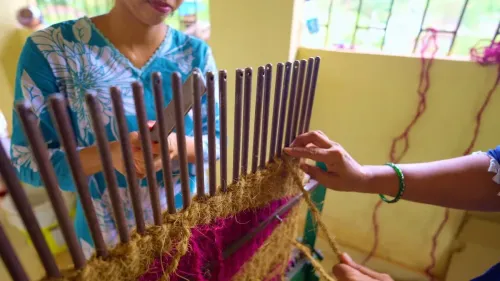
Goa Chief Minister Pramod Sawant on Tuesday, 7 July 2026, announced that the Government of Goa is actively encouraging farmers to take up marigold cultivation, pledging continued state support through quality saplings and other necessary assistance as part of the broader Swayampurna Goa mission.
Context
CM Sawant stated the government's intent clearly: 'The Government of Goa has encouraged farmers to take up marigold cultivation and will continue to support them with quality saplings and other necessary assistance, with the goal of making Goa Swayampurna in this sector.' The announcement signals a continued policy push toward agricultural self-reliance in India's smallest state by area.
Marigold is among the highest-demand flowers in India, used extensively in religious ceremonies, cultural events, and decorative applications. By promoting its cultivation locally, the state aims to reduce dependence on flower supplies sourced from other regions.
Policy Backdrop
The Swayampurna Goa scheme is a state-level self-sufficiency campaign launched under Sawant's administration to drive local production across sectors, including agriculture and floriculture. It aligns with the broader national Atmanirbhar Bharat framework that gained momentum post-2020, encouraging states to reduce import dependence and build resilient local supply chains.
Goa's economy has historically been anchored in tourism and mining, leaving agriculture as a relatively underdeveloped sector. Successive state governments have sought to diversify farmer incomes through high-value crops, and floriculture — particularly marigold — represents a targeted effort to raise rural earnings while meeting domestic demand.
The provision of quality saplings by the government is a direct input subsidy mechanism, lowering the barrier to entry for farmers considering the shift to floriculture from conventional crops.
Stakeholders and Impact
The primary beneficiaries are Goan farmers, particularly smallholders who can transition to marigold as a commercially viable, relatively low-cost crop with a reliable domestic market. Marigold cultivation also offers shorter harvest cycles compared to many traditional crops, potentially improving cash flow for farming households.
Downstream, local flower traders, religious and event supply chains, and rural employment in Goa stand to benefit if cultivation scales meaningfully. The state's commitment to 'other necessary assistance' beyond saplings suggests potential linkages to market access, training, or further subsidy support, though specific details were not outlined in the announcement.
What's Next
Attention will now turn to the operational rollout — specifically the scale and timeline of sapling distribution, whether market linkage programmes are established, and the uptake rate among farmers in the coming agricultural seasons. Any follow-up announcements on procurement guarantees or subsidies will be key indicators of how seriously the government intends to pursue marigold as a pillar of Swayampurna Goa.
If adoption gains traction, Goa could progressively reduce its reliance on flower imports from states like Karnataka and Maharashtra, strengthening local agricultural incomes while advancing the state's self-reliance goals.
Point of View
Low-barrier crop, offer direct input support, and frame it within a self-reliance narrative that resonates both locally and nationally. Floriculture is a smart political choice: it yields visible, photogenic results and benefits smallholders quickly, unlike infrastructure projects with long gestation periods. The announcement also fits into the BJP's broader Atmanirbhar Bharat messaging, allowing the state government to align itself with a popular national economic theme. The real test, however, lies in implementation — whether sapling distribution is backed by market linkages and procurement support that make cultivation economically sustainable for farmers beyond the first season.
NationPress
7 Jul 2026
Frequently Asked Questions
What is the Swayampurna Goa scheme?
Swayampurna Goa is a state government campaign aimed at making Goa self-sufficient across key sectors, including agriculture and floriculture, by promoting local production and reducing dependence on supplies from other states.
Why is Goa promoting marigold cultivation?
Marigold is a high-demand flower used in religious and cultural events across India. By growing it locally, Goa aims to reduce flower imports from other states, raise farmer incomes, and advance its Swayampurna Goa self-reliance goals.
What support will Goa farmers get for marigold farming?
The Goa government has committed to providing quality saplings and other necessary assistance to farmers who take up marigold cultivation, as announced by Chief Minister Pramod Sawant on 7 July 2026.
Who benefits from Goa's marigold farming initiative?
Goan farmers, particularly smallholders, are the primary beneficiaries. Downstream stakeholders including local flower traders and religious and cultural event supply chains in Goa also stand to gain if cultivation scales up.
How does Goa's marigold push connect to Atmanirbhar Bharat?
The initiative aligns with the national Atmanirbhar Bharat framework that encourages states to build self-reliant local supply chains, especially in agriculture, reducing dependence on inter-state trade for essential commodities.