Goa CM Sawant extends Rath Yatra greetings with Sanskrit verse
Synopsis
Goa Chief Minister Pramod Sawant marked Jagannath Rath Yatra on 16 July 2026 by sharing a Sanskrit verse from the Jagannathastakam on X, extending greetings to devotees across the country on one of Hinduism's most significant annual festivals.
Key Takeaways
Goa CM Pramod Sawant posted Rath Yatra greetings on 16 July 2026 via X.
The post features a verse from the Jagannathastakam , a classical Sanskrit hymn to Lord Jagannath.
The Jagannath Rath Yatra is held annually at the 12th-century Jagannath Temple in Puri, Odisha , one of the four Char Dham sites.
The festival draws millions of pilgrims each year and holds pan-India religious significance.
BJP leaders across states routinely issue public greetings during major Hindu festivals as part of cultural outreach.
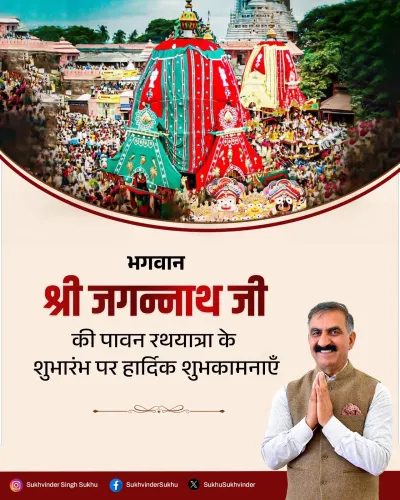
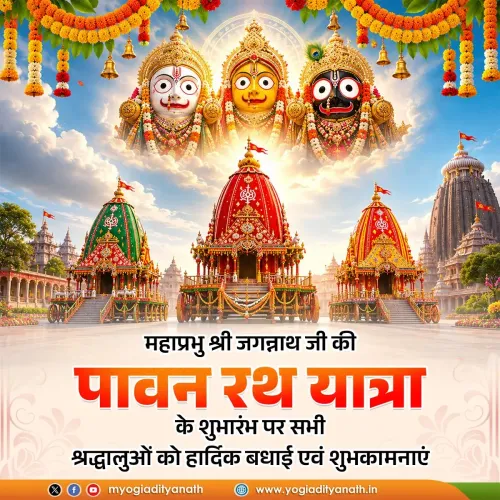
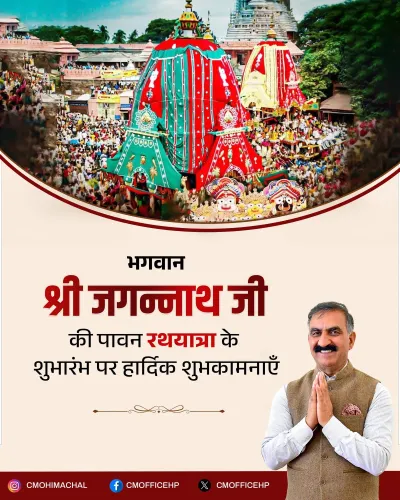
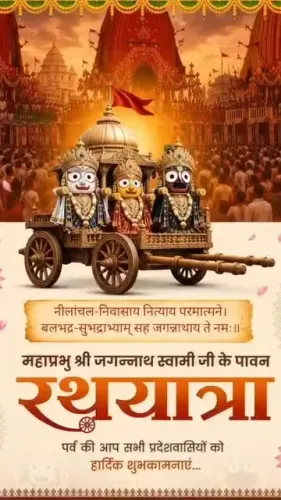
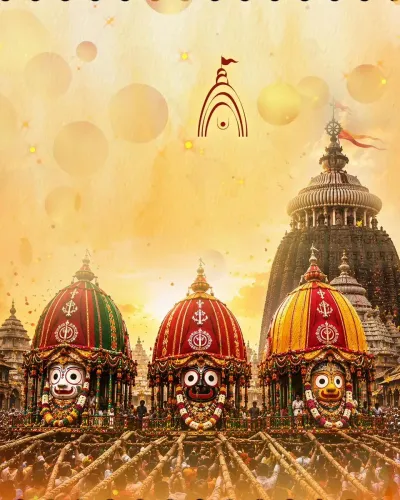
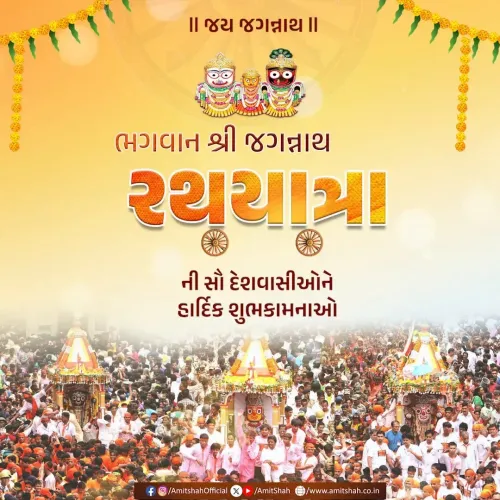
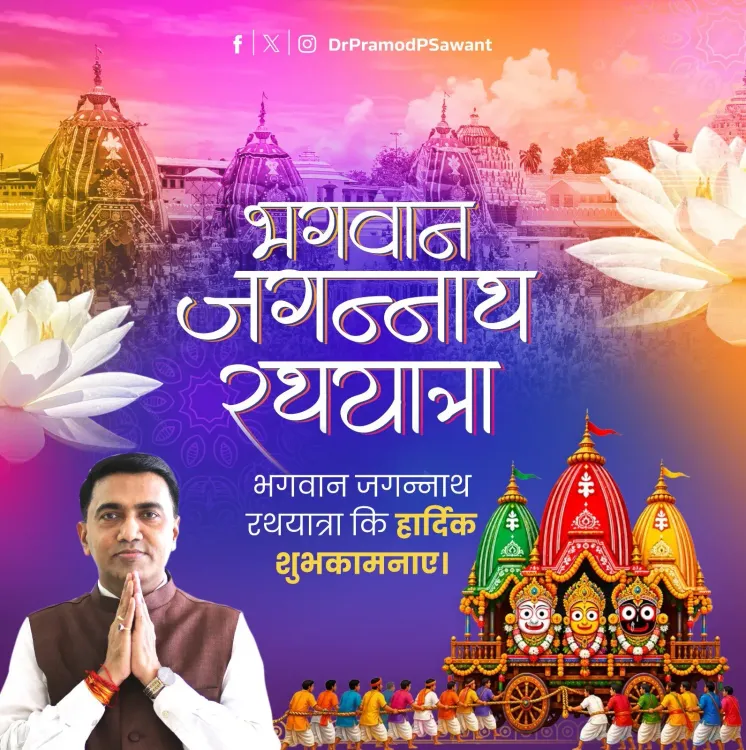
Goa Chief Minister Pramod Sawant on Thursday, 16 July 2026, extended warm wishes on the occasion of Jagannath Rath Yatra, sharing a classical Sanskrit shloka on X alongside an image to mark the festival.
The post opens with a verse from the Jagannathastakam: 'Rathaarudho gachchan pathi militabhudevapatalaihi...' — translated broadly as: 'May Lord Jagannath, the ocean of compassion, the friend of all worlds, who rides his chariot on the path lined by assembled Brahmins offering prayers at every step, and who is accompanied by Lakshmi (Sindhusuta), be ever visible to my eyes.' Sawant concluded with a greeting in Hindi: 'Bhagwan Jagannath Rath Yatra ki hardik shubhkamnaen' — 'Heartfelt greetings on the occasion of Lord Jagannath's Rath Yatra.'
Context
The Jagannath Rath Yatra is one of India's oldest and largest Hindu chariot festivals, held annually at the 12th-century Jagannath Temple in Puri, Odisha. The festival draws millions of pilgrims from across the country and the world each year, marking the journey of Lord Jagannath, his brother Balabhadra, and sister Subhadra in grand wooden chariots through the streets of Puri.
Puri's Jagannath Temple is one of Hinduism's four sacred Char Dham pilgrimage sites, making the Rath Yatra a moment of pan-India religious significance that transcends regional boundaries.
Policy Backdrop
Public greetings from state chief ministers and central leaders on the occasion of Rath Yatra have been a long-standing feature of Indian political communication. BJP leaders across states routinely mark major Hindu festivals with devotional posts, reflecting the party's sustained emphasis on visible engagement with religious and cultural traditions.
Sawant's use of a Sanskrit verse rather than a simple greeting is notable, signalling a degree of textual engagement with classical Hindu literature beyond the standard festive message. Such cultural messaging is consistent with the BJP's broader outreach to Hindu devotees across linguistic and regional lines.
Stakeholders and Impact
The message is directed at Hindu devotees and pilgrims, a constituency of significant electoral and cultural weight for the BJP in states including Goa, Odisha, and beyond. Rath Yatra greetings from leaders of non-Odisha states underscore the festival's national rather than purely regional character.
For Goa, where a sizeable Hindu population observes Jagannath traditions, such messaging reinforces Sawant's identity as a culturally engaged leader, even as the festival's primary celebrations unfold in Puri.
What's Next
Attention will turn to whether central ministers or the Prime Minister participate in Puri's main Rath Yatra procession in person, and whether state governments — including Goa — announce any cultural tourism or community events linked to the festival. The Rath Yatra season also typically prompts state-level celebrations at local Jagannath temples, which may see official participation from the Goa government in the days ahead.
Point of View
Not merely calendar acknowledgement. The post fits a well-established pattern of BJP chief ministers using social media to reinforce cultural identity with a national Hindu constituency, even when the festival's epicentre lies in another state. As Odisha grows in political salience for the BJP, leaders from other states publicly associating themselves with Puri's Rath Yatra carries both cultural and strategic weight. The message is unlikely to generate policy debate but contributes to the steady drumbeat of devotional communication that the party sustains across the electoral cycle.
NationPress
16 Jul 2026
Frequently Asked Questions
What is Jagannath Rath Yatra and when is it celebrated?
Jagannath Rath Yatra is an annual Hindu chariot festival held at the Jagannath Temple in Puri, Odisha, typically in June or July. It marks Lord Jagannath's ceremonial procession through the streets of Puri in large wooden chariots, drawing millions of pilgrims each year.
What did Goa CM Pramod Sawant post on Rath Yatra 2026?
Goa CM Pramod Sawant shared a Sanskrit verse from the Jagannathastakam on X on 16 July 2026, along with an image and a Hindi greeting that translates to 'Heartfelt greetings on the occasion of Lord Jagannath's Rath Yatra.'
What is the Jagannathastakam shloka that Sawant posted?
The verse begins 'Rathaarudho gachchan pathi militabhudevapatalaihi' and describes Lord Jagannath riding his chariot, receiving prayers, and accompanied by Lakshmi (Sindhusuta). It is a classical Sanskrit hymn in praise of Lord Jagannath.
Why do BJP leaders post Rath Yatra greetings?
BJP leaders across states routinely mark major Hindu festivals with public messages as part of the party's broader emphasis on visible cultural and religious engagement. Such greetings are directed at Hindu devotees and form part of regular political communication.
Is Puri Jagannath Temple a Char Dham site?
Yes, the Jagannath Temple in Puri, Odisha is one of Hinduism's four Char Dham pilgrimage sites, making it one of the most sacred temples in the country and the Rath Yatra a festival of national religious significance.