RBI gets govt nod for field trials of ₹10 and ₹20 polymer currency notes
Synopsis
India is set to trial polymer banknotes for the first time in the ₹10 and ₹20 denominations, with the RBI getting government clearance to issue one billion pieces of each. The move is a controlled experiment — paper currency stays, digital payments are unaffected for now — but the outcome could reshape how India manages its vast, wear-prone lower-denomination currency stock.
Key Takeaways
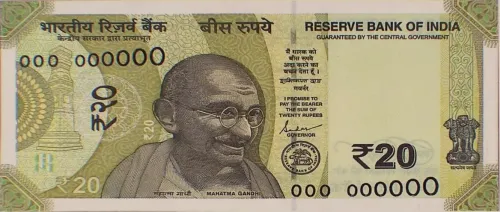
The Finance Ministry has approved the RBI 's proposal to conduct field trials of polymer currency notes in ₹10 and ₹20 denominations.
The RBI will issue one billion pieces each of ₹10 and ₹20 polymer notes for the trials.
A wider rollout will only be considered if the field trials are successful, according to the government.
Paper-based banknotes will not be phased out; polymer notes will circulate alongside existing currency.
Polymer notes offer greater durability, lower replacement costs, and advanced anti-counterfeiting features, according to the RBI .
Minister of State for Finance Pankaj Chaudhary confirmed the approval in a written reply in the Lok Sabha on 27 July .
The Finance Ministry informed Parliament on Monday, 27 July that the government has approved the Reserve Bank of India (RBI)'s proposal to conduct field trials of polymer currency notes in the ₹10 and ₹20 denominations. The approval was confirmed by Minister of State for Finance Pankaj Chaudhary in a written reply to a question in the Lok Sabha, marking a significant step toward modernising India's physical currency infrastructure.
Scale of the Field Trials
The RBI will issue one billion pieces each of ₹10 and ₹20 polymer currency notes as part of the trial programme. The trials are designed to evaluate how these notes perform under Indian climatic and circulation conditions before any decision on a wider rollout is taken. A broader introduction will be considered only if the field trials are deemed successful, according to the government's response in Parliament.
Paper Currency Not Being Phased Out
The government was categorical that the trials do not signal the end of paper-based banknotes. Chaudhary stated in his written reply: 'There is no proposal under consideration to replace paper substrate-based banknotes with polymer substrate-based banknotes.' Polymer notes, if approved after trials, will circulate alongside existing paper currency — not in place of it.
Why Polymer Notes: The RBI's Case
The central bank has argued that polymer banknotes offer meaningful advantages over conventional paper currency, particularly for lower denominations. Notes in the ₹10 and ₹20 range experience the highest rates of wear and tear, requiring frequent reprinting and destruction at considerable cost. According to the RBI, polymer notes have a demonstrably longer lifespan, which reduces long-term replacement costs and minimises waste.
Citing international experience, the RBI noted that polymer substrates also enable advanced anti-counterfeiting features — including transparent see-through windows and specialised security threads — that are more difficult to replicate than those on paper notes. Several countries with high cash-circulation economies have already adopted polymer currency at scale.
Impact on Digital Payments: Too Early to Say
The RBI clarified that it is premature to assess whether polymer notes will have any bearing on digital payment adoption. Any such evaluation, the central bank said, can only be undertaken after the notes enter regular circulation. The RBI's stated position is that physical currency and digital payment systems are complementary modes that are expected to coexist, rather than compete.
What Happens Next
The field trials will serve as the critical decision point for India's polymer currency ambitions. If results are favourable, the RBI could propose a phased expansion to other denominations or a larger production run. For now, the ₹10 and ₹20 notes represent a controlled, data-driven experiment — one that will shape the future direction of currency policy in one of the world's largest cash-dependent economies.
Point of View
Not a currency revolution. The ₹10 and ₹20 denominations are the most abused notes in circulation — high-frequency, low-value, and chronically short-lived — making them the logical starting point. But the real question mainstream coverage is glossing over is cost: polymer notes are significantly more expensive to produce upfront, and the RBI's durability argument only holds if Indian field conditions — heat, humidity, rural handling — match the international benchmarks it is citing. The trial design and its measurement criteria will matter as much as the outcome.
NationPress
27 Jul 2026
Frequently Asked Questions
What are polymer currency notes and why is India trialling them?
Polymer currency notes are banknotes made from a plastic substrate rather than traditional paper. India is trialling them in the ₹10 and ₹20 denominations because these notes wear out quickly in circulation, driving up reprinting and destruction costs. The RBI argues polymer notes last longer and carry stronger anti-counterfeiting features.
How many polymer notes will be issued in the field trials?
The RBI will issue one billion pieces each of ₹10 and ₹20 polymer currency notes as part of the field trials. The scale is designed to generate enough real-world data to evaluate performance across diverse Indian conditions before any wider rollout is considered.
Will paper currency notes be discontinued in India?
No. The government has explicitly stated there is no proposal to replace paper-based banknotes with polymer ones. If the trials succeed, polymer notes will circulate alongside existing paper currency, not in place of it.
Will polymer notes affect digital payments in India?
The RBI says it is too early to assess any impact on digital payment adoption, as this can only be evaluated after the notes enter regular circulation. The central bank's position is that physical currency and digital payments are complementary systems expected to coexist.
Who confirmed the government's approval for the polymer note trials?
Minister of State for Finance Pankaj Chaudhary confirmed the approval in a written reply to a question in the Lok Sabha on 27 July, stating that the government had approved the RBI's proposal for field trials of polymer currency notes.