Delimitation row: Govt rebuts Rahul Gandhi on gerrymandering
Synopsis
As the Delimitation Bill heads to the Lok Sabha, the Centre has hit back at Rahul Gandhi's gerrymandering charge. Government sources accused him of misreading Assam's map and said a two-and-a-half-year process with public hearings leaves no room to illegally redraw seats.
Key Takeaways
Government sources rejected Rahul Gandhi's allegation that the Centre could gerrymander seats during delimitation .
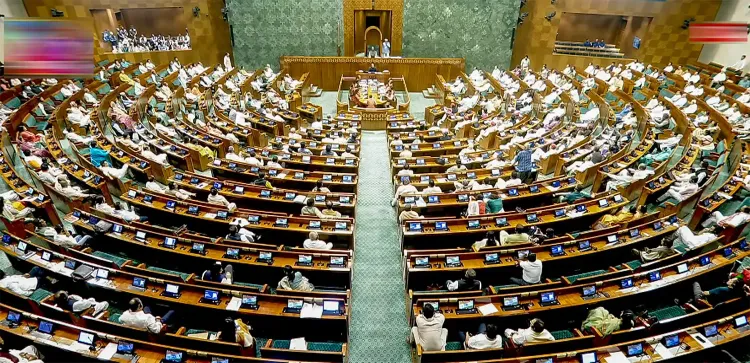
The Delimitation Bill is set to be tabled in the Lok Sabha on Monday .
Sources said the exercise will involve consultations and intensive public hearings, and will take about two-and-a-half years .
Gandhi was accused of misrepresenting Assam's geographical map; sources cited terrain and connectivity as factors in drawing boundaries.
Sources said Jammu and Kashmir faces similar accessibility considerations.
Government sources on 29 November 2026 rejected Congress leader Rahul Gandhi's allegation that the Centre could use the upcoming delimitation exercise to gerrymander constituency boundaries. They said the process will be elaborate and transparent, and that it will be bound by constitutional provisions and established legal procedures. The rebuttal from New Delhi comes as the Delimitation Bill is set to be tabled in the Lok Sabha on Monday.
Key Developments
Sources questioned the intent behind Gandhi's criticism. They said there was no possibility of illegally manipulating constituency boundaries under the proposed exercise.
According to sources, the process will involve extensive consultations, adherence to prescribed rules and regulations, and intensive public hearings before any final decision is taken. The full exercise is expected to take around two-and-a-half years to complete.
“How can such a detailed and meticulous process be used to illegally alter constituencies?” sources asked, dismissing the Congress leader's charge.
The Assam Map Dispute
Government sources also accused Gandhi of misrepresenting the geographical map of Assam to support his claim of alleged gerrymandering. They argued that the state's difficult terrain and accessibility challenges played an important role in how constituency boundaries were drawn.
In parts of Assam, sources said, places that appear close on a map can require people to take long, circuitous routes to reach each other. Boundaries therefore need to reflect ground realities such as accessibility and connectivity, not just geographical distance. Sources said the same applies to Jammu and Kashmir.
They accused Gandhi of giving an inaccurate picture of the exercise. In their view, he misled people by overlooking these practical considerations.
The Constitutional Mandate
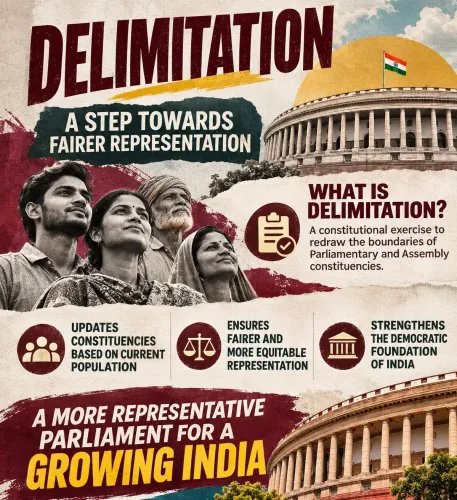
Sources described delimitation as a constitutional requirement and an important democratic exercise meant to ensure equitable representation. They said every citizen's vote must carry equal value, and that the government has a constitutional mandate to carry out delimitation from time to time.
Notably, delimitation has long been politically sensitive in India. Any redrawing of seats can shift the balance of representation between regions and communities. This is why the transparency of the process sits at the centre of the current dispute.
Political Stakes Ahead
The government's response comes amid rising political tensions over the proposed legislation. Gandhi has questioned the Centre's intentions and alleged that delimitation could be used to influence electoral representation.
Government sources maintain that the exercise will stay within the constitutional framework, with transparency and public participation at every crucial stage.
The debate is likely to intensify once the Bill is introduced in the Lok Sabha on Monday. Opposition parties are expected to press for safeguards, and the government is expected to defend the process as fair and rule-bound.
Point of View
Hearings and a long timeline. But long processes are not automatically neutral ones, and the opposition's fear is about who designs the criteria, not how many hearings are held. The Assam argument cuts both ways. Terrain-based boundaries are legitimate, but they also give planners discretion that is hard for voters to audit. If the Centre wants to end the gerrymandering debate, it should publish clear, measurable boundary criteria before the exercise begins, rather than relying on anonymous sources to vouch for its fairness.
NationPress
29 Nov 2026
Frequently Asked Questions
What did government sources say about Rahul Gandhi's delimitation allegations?
Government sources rejected Rahul Gandhi's claim that the Centre could gerrymander constituencies. They said delimitation will be transparent and governed by constitutional provisions and legal procedures.
When will the Delimitation Bill be tabled?
The Delimitation Bill is set to be tabled in the Lok Sabha on Monday. Political tensions over the legislation have been rising ahead of its introduction.
How long will the delimitation exercise take?
According to government sources, the exercise is expected to take around two-and-a-half years. It will include extensive consultations and intensive public hearings.
Why was Assam mentioned in the delimitation row?
Government sources accused Rahul Gandhi of misrepresenting Assam's map to support his gerrymandering claim. They said difficult terrain and connectivity challenges in the state influence how constituency boundaries are drawn.
Why is delimitation carried out?
Delimitation is a constitutional requirement meant to ensure equitable representation, so that every citizen's vote carries equal value. Government sources said the Centre has a constitutional mandate to undertake it from time to time.