Asim Munir's province split plan could echo 1971, expert warns
Synopsis
An expert warns that Asim Munir's plan to split Pakistan's four provinces into up to 15 units could gut civilian parties, centralise army control and inflame Balochistan. Restelli says it risks repeating the mistake that cost Pakistan half its territory in 1971. Splitting Punjab alone could cost up to PKR 56.2 billion a year.
Key Takeaways
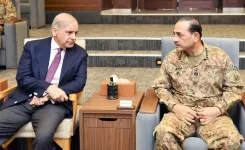
Analyst Sergio Restelli , writing in The Times of Israel , says Pakistan's army chief Field Marshal Asim Munir may be reshaping the country's political geography.
The proposal would divide Pakistan's four provinces into 12 to 15 smaller units.
Restelli says the plan could weaken the PML-N in Punjab and the PPP in Sindh, and leave no civilian institution strong enough to challenge the army.
Balochistan is flagged as the biggest risk, where an imposed split could strengthen separatist forces.
Splitting Punjab into three provinces alone could cost PKR 46.9 billion to 56.2 billion a year, according to an October estimate by the Policy Research Institute of Market Economy.
Pakistan's army chief, Field Marshal Asim Munir, may be using administrative reform as cover to redraw the country's political map, according to a commentary by Italian geopolitical expert Sergio Restelli in The Times of Israel. Restelli argues that a proposal to split Pakistan's four provinces into as many as 12 to 15 smaller units could dismantle the political structures that limit the military's power. He warns it could also weaken the foundations holding the country together.
Restelli drew a direct line to 1971, when Pakistan lost its eastern wing. He argued that the country's rulers have repeatedly confused controlling territory with governing people.
“Pakistan has already lost one half of its territory because its rulers failed to distinguish between controlling a country and governing its people. The tragedy would be for its military leadership to repeat that mistake while claiming to be saving the nation,” Restelli wrote.
What the Proposal Involves
The plan would break Pakistan's four provinces into 12 to 15 smaller administrative units. It is being presented as a governance reform. According to Restelli, however, it could fundamentally alter Pakistan's federal structure.
“For Munir, weakening these centres could achieve what decades of military interference have failed to accomplish permanently. It could create a political system in which no civilian institution possesses sufficient territorial, financial or electoral strength to challenge the army,” he stated.
Impact on Pakistan's Political Parties
Restelli noted that a break-up of the provinces could erode the influence of established dynastic parties. He named two of them:
- The Sharif family's Pakistan Muslim League-Nawaz, whose base is in Punjab.
- The Bhutto-Zardari family's Pakistan Peoples Party, whose base is in Sindh.
He added that the plan would also multiply the number of provincial governments that depend on the federal establishment.
“Pakistan would remain a federation on paper while becoming increasingly centralised in practice,” he wrote.
Balochistan Seen as the Biggest Risk
The commentary identifies Balochistan as the most dangerous flashpoint. The province has seen decades of separatist violence and political alienation. Dividing it without political consent, Restelli argues, could be read as another attempt to dilute regional identity and weaken demands for autonomy.
“In Balochistan, where distrust of Islamabad is already deeply entrenched, imposing a new political geography without broad consent could strengthen precisely those forces the military seeks to contain,” Restelli stated.
The Cost of More Provinces
The commentary also raises the financial burden of the plan. It cites an October estimate by the Islamabad-based Policy Research Institute of Market Economy, which found that splitting Punjab into three provinces alone could cost between 46.9 billion and 56.2 billion Pakistani rupees a year.
“Pakistan could end up with more governments, more politicians, more bureaucrats and greater expenditure without any corresponding improvement in public services,” the commentary said.
This comes as Pakistan's civil-military balance draws growing international attention. The province plan is likely to face scrutiny from Pakistan's major parties and from regional stakeholders in the months ahead.
Point of View
And Restelli's warning lands squarely on that habit. For India, a more centralised, army-dominated Pakistan with an inflamed Balochistan is not a weaker neighbour but a less predictable one. The real question mainstream coverage skips is whether Pakistan's civilian parties, long dependent on the establishment, still have the leverage to resist.
NationPress
29 Nov 2026
Frequently Asked Questions
What is Asim Munir's plan for Pakistan's provinces?
According to analyst Sergio Restelli, the proposal would divide Pakistan's four provinces into as many as 12 to 15 smaller administrative units. It is presented as a governance reform, but Restelli argues it could centralise power under the military.
Why is the plan being compared to 1971?
Restelli argues that Pakistan lost half its territory in 1971 because its rulers failed to distinguish between controlling a country and governing its people. He warns the military could repeat that mistake by imposing a new political geography without consent.
Why is Balochistan seen as the biggest risk?
Balochistan has endured decades of separatist violence and political alienation. Restelli warns that dividing it without broad consent could strengthen the very forces the military seeks to contain.
How much would splitting Punjab cost?
An October estimate by the Policy Research Institute of Market Economy puts the cost of dividing Punjab into three provinces at between 46.9 billion and 56.2 billion Pakistani rupees a year.
Which political parties could be affected?
Restelli says the plan could weaken the Sharif family's PML-N in Punjab and the Bhutto-Zardari family's Pakistan Peoples Party in Sindh. It would also increase the number of provincial governments dependent on the federal establishment.