Nepal power exports earn NPR 20.5 billion despite August floods
Synopsis
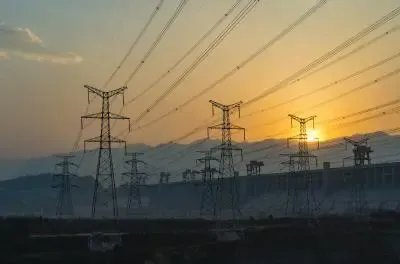
Floods knocked out a dozen hydropower projects and halted supply to Bangladesh for two months, yet Nepal still earned NPR 20.48 billion from power exports in four months. The resilience underscores how central electricity has become to Nepal's economy and to its deepening energy partnership with India under the 10,000 MW deal.
Key Takeaways
Nepal exported over 2.38 billion units of electricity worth NPR 20.48 billion from mid-July to mid-November in FY 2026-27 .
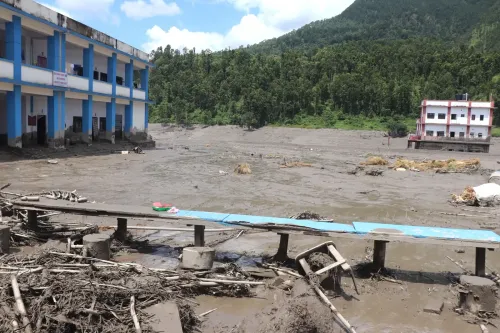
The 26 August floods damaged a dozen hydropower projects along the Bhotekoshi and Trishuli corridors.
Electricity exports to Bangladesh were suspended completely for two months .
India agreed in January 2024 to buy up to 10,000 MW from Nepal over 10 years .
Trade with India is settled in Indian rupees ; trade with Bangladesh is settled in US dollars .
Nepal still imports power from India in winter, when hydropower output falls sharply.
Nepal earned around NPR 20.5 billion from electricity exports to India and Bangladesh in the first four months of fiscal year 2026-27, even though the 26 August floods damaged a dozen hydropower projects. The Nepal Electricity Authority (NEA) said in a press statement that it exported more than 2.38 billion units of electricity worth NPR 20.48 billion between mid-July and mid-November. Nepal's fiscal year begins in mid-July.
The NEA is currently the only agency authorised to carry out cross-border electricity trade in Nepal. According to the authority, all exports during the period were made after domestic demand had been met.
Flood Damage Hits Export Supply
The deadly floods of 26 August badly damaged a dozen hydropower projects along the Bhotekoshi and Trishuli river corridors. Several of these projects supplied electricity to the Indian and Bangladeshi markets, so the damage cut into export volumes to both countries.
The impact was most severe for Bangladesh. Electricity exports to Bangladesh were suspended completely for two months, according to the NEA.
NEA Managing Director Dirghayu Kumar Shrestha said exports were affected this year after floods in the Trishuli river in August and the Kaligandaki river in September damaged generation and transmission infrastructure. Some hydropower projects were forced to suspend operations as a result.
“Despite damage to several projects that had received export approval, we managed to export a substantial volume of electricity left over after meeting domestic demand,” Shrestha said.
India-Nepal Power Trade Framework
Electricity has become one of Nepal's key export items in recent years. The country generates surplus energy in the monsoon season from its largely run-of-river hydropower projects. India is the largest market for these exports, and bilateral power trade is expected to grow further.
Under a long-term power trade agreement signed in January 2024, India agreed to buy up to 10,000 MW of electricity from Nepal over the next 10 years. A joint vision document unveiled during Nepali Prime Minister Balendra Shah's recent visit to India said the two countries will explore further expanding electricity trade based on mutual benefit and market demand.
How Nepal Sells Its Surplus Power
The NEA sells surplus electricity at competitive rates in the Day-Ahead and Real-Time Markets of the Indian Energy Exchange (IEX). Under bilateral medium-term power sales agreements, Nepal also exports electricity to the Indian states of Haryana and Bihar every year from June to October.
Exports to Bangladesh run under a tripartite agreement among the relevant authorities of Nepal, India and Bangladesh. They take place during the six-month monsoon window, from 15 June to 15 November each year. Trade with India is settled in Indian rupees, while transactions with Bangladesh are conducted in US dollars.
The Winter Import Gap
Nepal still depends on India in the dry season, even though it exports power in the monsoon months. In winter, river water levels drop and its hydropower projects generate far less than their installed capacity, so Nepal has to import electricity from India to meet domestic demand.
With the monsoon export window to Bangladesh now closed and winter approaching, attention will turn to how quickly flood-damaged projects are restored. Their recovery will shape Nepal's export capacity next season under the expanding India-Nepal power partnership.
Point of View
But it also exposes a structural weakness. A power sector built mostly on run-of-river projects is a monsoon-only exporter and a winter-time importer, and it is highly exposed to the extreme weather that has now hit two river basins in two months. The 10,000 MW deal with India is a big opportunity, but it will only pay off if Kathmandu invests in storage-type projects and climate-resilient transmission. Without that, every flood season risks turning Nepal's export story into a supply crisis.
NationPress
29 Nov 2026
Frequently Asked Questions
How much did Nepal earn from electricity exports in FY 2026-27 so far?
Nepal earned NPR 20.48 billion by exporting more than 2.38 billion units of electricity between mid-July and mid-November. That covers the first four months of fiscal year 2026-27.
How did the August 2026 floods affect Nepal's power exports?
The 26 August floods damaged a dozen hydropower projects along the Bhotekoshi and Trishuli river corridors, which reduced exports. Supply to Bangladesh was suspended completely for two months.
What is the India-Nepal long-term power trade agreement?
It is a deal signed in January 2024 under which India agreed to purchase up to 10,000 MW of electricity from Nepal over 10 years. A joint vision document from Prime Minister Balendra Shah's recent India visit said both countries will explore expanding this trade further.
Which Indian states buy electricity from Nepal?
Haryana and Bihar buy electricity from Nepal every year from June to October under bilateral medium-term agreements. The NEA also sells surplus power on the Indian Energy Exchange.
Why does Nepal import electricity from India in winter?
Nepal's mostly run-of-river hydropower projects generate far less than their installed capacity when river levels fall in winter. As a result, it imports power from India to meet domestic demand.