Goyal: Every sports kit on every field should be Made in India
Synopsis
Commerce Minister Piyush Goyal has called for every piece of sports equipment, clothing, and footwear used on Indian fields — by Indian and foreign players alike — to be Made in India, extending the Make in India and Atmanirbhar Bharat framework explicitly into the sports goods sector.
Key Takeaways
Union Commerce Minister Piyush Goyal on 5 November 2026 called for all sports gear, clothing, and footwear used in India to be Made in India .
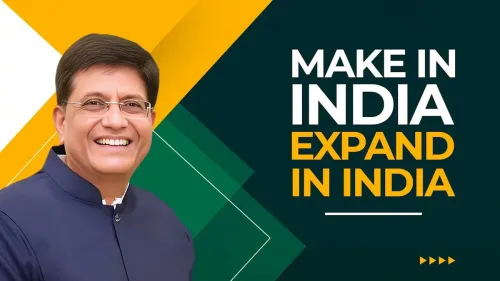
The statement extends the Make in India initiative — launched September 2014 — explicitly into the sports goods and sportswear sector.
Goyal framed the vision as dual: producing world-class athletes and world-class sports equipment simultaneously.
India already has established sports goods manufacturing clusters, most notably in Jalandhar, Punjab , with a global export track record in cricket equipment.
No specific new scheme was announced; concrete follow-through is expected in the next Union Budget or Foreign Trade Policy review.
The push aligns with the broader Atmanirbhar Bharat doctrine of linking domestic production capability with national performance.
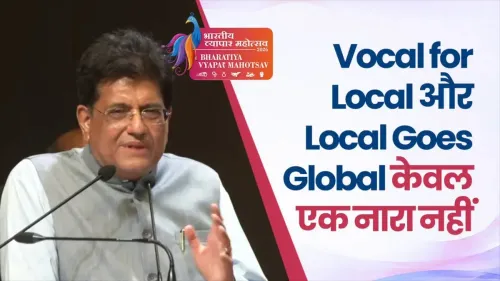
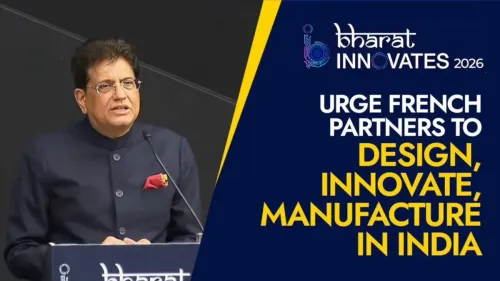
India's playing fields should not just produce world-class athletes — they should be equipped with world-class gear stamped 'Made in India'. Union Commerce and Industry Minister Piyush Goyal made that aspiration explicit on Thursday, 5 November 2026, calling for every piece of sports equipment, clothing, and footwear used by Indian and foreign players alike to be domestically manufactured.
Posting on X, Goyal said: 'जब कोई भारतीय या विदेशी खिलाड़ी किसी मैदान पर उतरे, तो उसके sports gear भी Made in India हों और उसके कपड़े-जूते भी Made in India हों' — 'When any Indian or foreign player steps onto a field, their sports gear should be Made in India, and their clothing and shoes should also be Made in India. We want India to produce world-class players as well as world-class sports equipment.'
Make in India meets the sports field
The statement plants the Make in India flag firmly in a sector that has rarely headlined the initiative. Launched in September 2014, the campaign was built to slash import dependence and build domestic manufacturing muscle across industries — from heavy engineering to textiles to electronics. Sports goods, however, have mostly stayed on the periphery of that conversation. Goyal's remarks signal an intent to change that.
The logic mirrors what the government has already done in leather goods, technical textiles, and light engineering: identify a niche where India is a net importer, build domestic supply chains, and use the home market — including elite sporting events — as proof of capability. If Indian athletes at international venues are visibly using Indian-made gear, the export pitch writes itself.
The 'Atmanirbhar' athlete — linking performance with production
There is a deliberate rhetorical symmetry in Goyal's framing. He does not separate the athlete from the equipment manufacturer — he wants India to excel at both simultaneously. That dual ambition sits squarely within the Atmanirbhar Bharat doctrine, which argues that self-reliance in production and self-confidence in performance are two sides of the same national project.
India's sports goods manufacturing clusters — most notably in Jalandhar, Punjab, which supplies a significant share of global cricket equipment and inflatable balls — already have an export pedigree. The question has always been whether domestic quality standards and brand credibility can be pushed up the value chain to compete with European and East Asian premium gear in categories like athletics footwear, racket sports, and high-performance apparel.
What industry and athletes will watch next
Goyal's post is a statement of intent, not a scheme announcement. The concrete follow-through — incentives, quality certification frameworks, procurement mandates for national sports federations, or export promotion measures under the Foreign Trade Policy — will determine whether this vision translates into supply-chain reality. The next Union Budget and any upcoming Foreign Trade Policy review are the natural moments for that machinery to move.
For domestic sports goods manufacturers, a clear government push could mean easier access to production-linked incentive structures. For Indian athletes, it raises a sharper question: can homegrown equipment match the performance benchmarks they need to compete at the highest levels? That gap, if the government is serious, is now officially on the agenda.
Point of View
He is also making a soft-power argument: that India should own the entire ecosystem of sport, not just its athletes. The timing, with India's global sporting ambitions growing alongside its economic weight, makes the framing politically durable. Whether it stays rhetoric or becomes regulation will be the real test of this government's industrial seriousness in this niche.
NationPress
6 Nov 2026
Frequently Asked Questions
What did Piyush Goyal say about sports equipment in India?
Goyal called for all sports gear, clothing, and footwear used on Indian fields — by both Indian and foreign players — to be Made in India, linking the ambition to the broader Make in India and Atmanirbhar Bharat framework.
What is the Make in India initiative?
Make in India is a national manufacturing promotion campaign launched by the Government of India in September 2014 to boost domestic production, reduce import dependence, and build export capability across multiple sectors.
Where is India's sports goods manufacturing concentrated?
India's most prominent sports goods manufacturing hub is Jalandhar, Punjab , which has a long-established export presence in cricket equipment and inflatable balls.
Will there be a new scheme for Made in India sports equipment?
No specific new scheme was announced in Goyal's post. Industry and athletes will watch the next Union Budget and Foreign Trade Policy review for concrete incentives, quality standards, or procurement mandates.
How does Atmanirbhar Bharat connect to Indian sports?
Atmanirbhar Bharat, or self-reliant India, extends beyond heavy industry — Goyal's framing applies it to sports by arguing that India should excel both in athletic performance and in manufacturing the equipment that powers that performance.