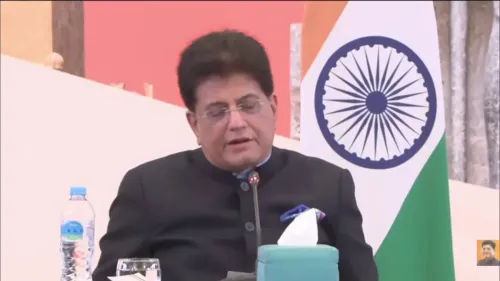
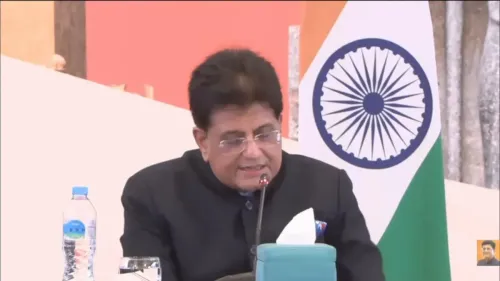
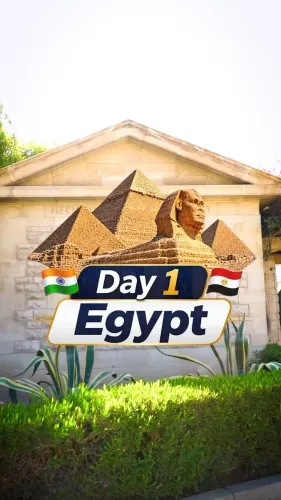
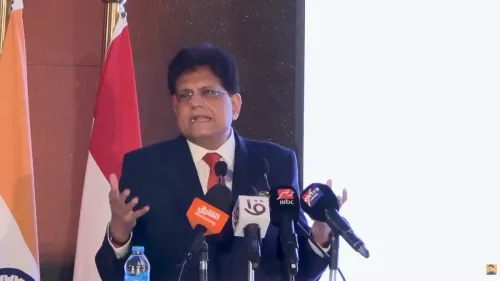
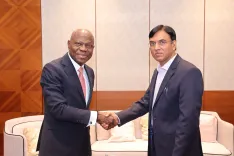
Goyal Flags India-Egypt Ties as 'Built to Last'
Synopsis
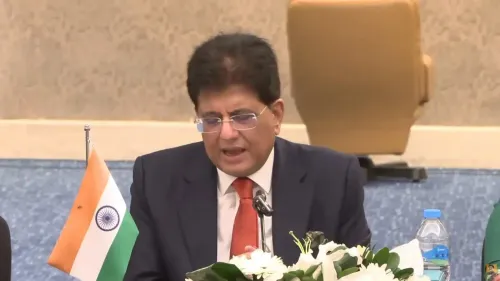
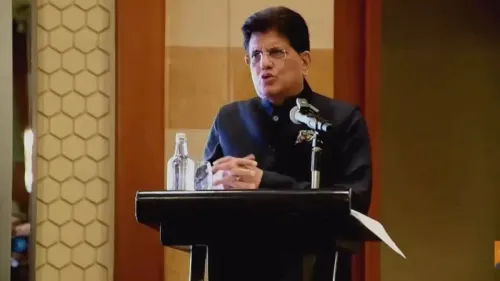
Commerce Minister Piyush Goyal declared the India-Egypt partnership 'built to last' on November 16, 2026, reinforcing India's strategic push to deepen trade ties with Egypt as a gateway to Africa and the Arab world.
Key Takeaways
Union Commerce and Industry Minister Piyush Goyal publicly declared the India-Egypt partnership 'built to last' on November 16, 2026 .
India and Egypt have maintained diplomatic relations since 1947 , with formal trade consultations dating to the 1990s .
Egypt serves as a strategic gateway for Indian pharmaceuticals, engineering goods, and agricultural exports into Africa and the Arab world.
The statement aligns with India's broader Global South outreach strategy to diversify trade destinations.
The next key milestone is the India-Egypt Joint Trade Committee meeting, where revised trade targets are expected to be set.
Union Commerce and Industry Minister Piyush Goyal signalled a confident new chapter in India-Egypt bilateral relations on Monday, November 16, 2026, declaring the partnership 'built to last' — language that carries unmistakable weight when it comes from the minister who steers India's trade and industrial diplomacy.
A Partnership Stretching Back to 1947
India and Egypt are not new to each other. The two nations established formal diplomatic relations in 1947 — the same year India gained independence — making Egypt one of India's oldest partners on the African continent. That foundation has been reinforced through regular Foreign Office consultations since the 1990s, yet the relationship has frequently punched below its potential on the economic front.
What makes Goyal's framing notable is the word 'built' — implying active, structural construction rather than passive continuity. For a minister who oversees export promotion, bilateral trade agreements, and industrial corridors, that is a deliberate choice of emphasis.
Egypt as India's Gateway to Africa and the Arab World
India's interest in Egypt is strategic as much as commercial. Egypt sits at the crossroads of North Africa and the Middle East, commanding the Suez Canal — one of the world's most critical maritime chokepoints — and offering Indian exporters a beachhead into two of the fastest-growing consumer markets on the planet.
Indian pharmaceuticals, engineering goods, and agricultural exports have identified Egypt as a priority destination. For Egyptian importers, India represents a cost-competitive supplier with the scale to meet large volumes. The fit, in theory, is near-perfect. The challenge has always been translating that fit into durable institutional architecture.
India's broader Global South outreach — accelerated through its G20 Presidency and sustained diplomatic engagement with African nations — gives this bilateral moment additional context. Egypt is not just a bilateral partner; it is a node in India's wider network-building ambition across the developing world.
What Traders and Policymakers Will Watch Next
The next concrete milestone to track is the India-Egypt Joint Trade Committee meeting, where revised bilateral trade targets and sector-specific cooperation frameworks are typically hammered out. Goyal's public declaration of durability is the kind of political signal that tends to precede — or accompany — such institutional moves.
For Indian exporters eyeing Egyptian distribution networks, and for Egyptian businesses seeking reliable supply chains, the minister's words amount to a green light: the corridor is open, and it is being reinforced.
Partnerships declared 'built to last' have a habit of being tested. The question now is what structural agreements follow the slogan.
Point of View
Giving any India-Egypt framework outsized strategic leverage. The language of permanence — 'built to last' — signals that New Delhi wants a structural relationship, not a transactional one. Watch whether this rhetoric translates into a revised Joint Trade Committee mandate or a sector-specific cooperation agreement in the months ahead.
NationPress
16 Nov 2026
Frequently Asked Questions
What did Piyush Goyal say about India-Egypt relations?
Commerce Minister Piyush Goyal declared the India-Egypt partnership 'built to last' on November 16, 2026, signalling India's intent to deepen and institutionalise its bilateral ties with Egypt.
Why is Egypt important to India's trade strategy?
Egypt offers India a strategic gateway into Africa and the Arab world, with Indian pharmaceuticals, engineering goods, and agricultural exports viewing it as a priority export destination. Egypt also controls the Suez Canal, a critical maritime corridor.
How old are India-Egypt diplomatic relations?
India and Egypt established formal diplomatic relations in 1947, the same year India gained independence, making Egypt one of India's oldest partners on the African continent.
What is the India-Egypt Joint Trade Committee?
The India-Egypt Joint Trade Committee is the primary institutional mechanism through which the two countries negotiate bilateral trade targets, sector cooperation, and economic frameworks.
How does the India-Egypt partnership fit into India's Global South strategy?
India has pursued deeper economic engagement with African and Middle Eastern partners as part of its Global South outreach, with Egypt functioning as a key node in that network given its geographic position and market access potential.