Pralhad Joshi Meets Singapore MOS on CSP, Bharat Innovates 2027
Synopsis
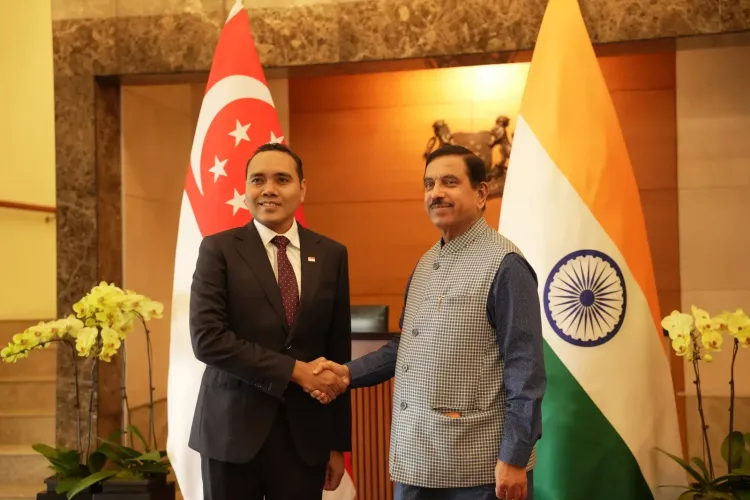
Union Minister Pralhad Joshi met Singapore MOS Zhulkarnain Abdul Rahim at MFA Singapore on 16 November 2026, advancing the India–Singapore Comprehensive Strategic Partnership across clean energy, digital connectivity, maritime security and the proposed Bharat Innovates 2027 initiative ahead of Singapore's ASEAN Chairmanship.
Key Takeaways
Union Minister Pralhad Joshi met Singapore Minister of State Zhulkarnain Abdul Rahim at MFA Singapore on 16 November 2026 .
Talks focused on advancing the India–Singapore Comprehensive Strategic Partnership in education, advanced manufacturing, digital connectivity and clean energy.
The proposed Bharat Innovates initiative , a bilateral innovation event in Singapore, was discussed for 2027 .
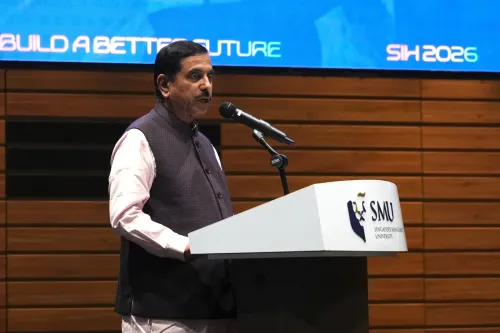
Both sides reviewed the Singapore India Hackathon 2026 (#SIH2026) as a live technology collaboration platform.
Discussions on maritime security, counterterrorism and regional issues were held ahead of Singapore's ASEAN Chairmanship in 2027 .
India's Act East Policy positions Singapore as its primary ASEAN gateway; the CSP was elevated during PM Modi's 2015 Singapore visit .
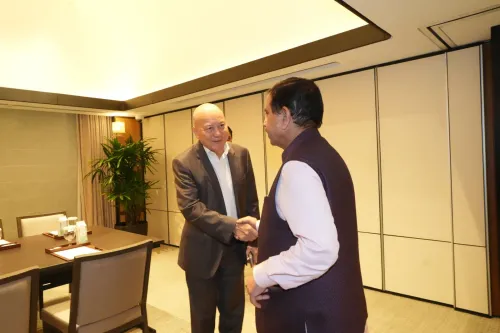
With Singapore's ASEAN Chairmanship in 2027 on the horizon, Union Minister Pralhad Joshi sat down with H.E. Mr. Zhulkarnain Abdul Rahim, Singapore's Minister of State for Foreign Affairs and Home Affairs, at the Ministry of Foreign Affairs, Singapore, on Monday, 16 November 2026 — a meeting that ranged from clean energy and digital connectivity to maritime security and cross-border innovation.
From Trade Ties to a Comprehensive Strategic Vision
The India–Singapore relationship has travelled a long road since the two countries signed their Comprehensive Economic Cooperation Agreement in 2005. A decade later, during Prime Minister Narendra Modi's 2015 Singapore visit, the partnership was elevated to a Comprehensive Strategic Partnership (CSP) — a framework covering trade, defence, technology and connectivity. Monday's engagement in Singapore was squarely aimed at adding new muscle to that architecture.
Discussions, Joshi noted, 'focused on advancing the India–Singapore Comprehensive Strategic Partnership through greater cooperation in education, research and innovation, advanced manufacturing, digital connectivity and clean energy.' Each of those pillars reflects a deliberate expansion beyond the original trade-first logic of the CECA era into domains that define twenty-first century strategic competition.
Bharat Innovates 2027 and the Hackathon Signal
One of the more concrete items on the table was the proposed Bharat Innovates initiative, floated as a bilateral innovation event to be held in Singapore in 2027. While the initiative's final shape has not been officially confirmed, its inclusion in a ministerial exchange signals political will on both sides to institutionalise the innovation corridor between the two countries.
That ambition is already visible on the ground through the Singapore India Hackathon 2026 (#SIH2026), a recurring technology collaboration event that has built a live pipeline of talent and ideas between the two nations. Tech startups and research institutions on both sides stand to gain from the momentum these platforms generate — if the follow-through materialises.
Maritime Security and the ASEAN Clock
Beyond the innovation agenda, Joshi and Zhulkarnain 'exchanged perspectives on deepening cooperation in maritime security, counterterrorism and regional issues' — particularly significant given Singapore's upcoming role as ASEAN Chair in 2027. High-level bilateral engagements routinely precede regional chairmanships, allowing partner nations to align positions before the multilateral calendar heats up.
India's Act East Policy, relaunched with fresh urgency after 2014, has consistently treated Singapore as its primary ASEAN gateway. That framing has never been more relevant: with the Indo-Pacific security environment shifting rapidly, coordinating on maritime chokepoints and counterterrorism frameworks with Singapore — a city-state that sits astride some of the world's busiest sea lanes — is not diplomatic courtesy. It is strategic arithmetic.
Institutional Partnerships as the Next Frontier
Joshi also flagged 'opportunities for stronger institutional partnerships' — a phrase that, in the context of education, research and advanced manufacturing, points toward university linkages, joint R&D facilities and possibly bilateral skilling programmes. India's large STEM talent pool and Singapore's world-class research infrastructure are a natural fit, and formalising that fit through institutional channels would give the CSP a durable scaffolding beyond any single government's tenure.
The Singapore India Hackathon 2026 and the proposed Bharat Innovates 2027 event will now be the clearest early indicators of whether Monday's diplomatic energy converts into tangible outcomes.
Point of View
India is securing an influential interlocutor at the very moment Southeast Asia's multilateral agenda is being shaped. The inclusion of the Bharat Innovates initiative signals that New Delhi wants innovation diplomacy — not just trade or defence — to anchor the next chapter of the CSP. For Minister Joshi, a domestic-portfolio minister engaging on foreign policy terrain, the visit also underscores how India's bilateral architecture increasingly mobilises sectoral ministers, extending diplomatic bandwidth well beyond the foreign ministry. The Act East Policy is visibly maturing from a rhetorical posture into a dense web of institutional and sectoral engagements.
NationPress
16 Nov 2026
Frequently Asked Questions
What is the India–Singapore Comprehensive Strategic Partnership?
The India–Singapore Comprehensive Strategic Partnership is a bilateral framework elevated in 2015 during PM Modi's visit to Singapore, covering trade, defence, technology and connectivity — built on the Comprehensive Economic Cooperation Agreement signed in 2005.
What is the Bharat Innovates initiative?
Bharat Innovates is a proposed India–Singapore bilateral innovation event discussed at the ministerial level, currently proposed for Singapore in 2027. Its final format has not been officially confirmed.
What is the Singapore India Hackathon 2026?
The Singapore India Hackathon 2026 (#SIH2026) is a recurring bilateral technology collaboration event that brings together talent and ideas from both countries, serving as a live innovation pipeline between India and Singapore.
Why does Singapore's ASEAN Chairmanship in 2027 matter for India?
Singapore will chair ASEAN in 2027, giving it significant influence over the bloc's agenda. India's engagement with Singapore ahead of that chairmanship allows New Delhi to align positions on maritime security, counterterrorism and regional connectivity before multilateral negotiations intensify.
What is India's Act East Policy and how does Singapore fit in?
India's Act East Policy, relaunched after 2014, is a strategic framework to deepen India's engagement with Southeast and East Asia. Singapore is consistently treated as India's primary ASEAN gateway, making it central to the policy's execution.