Pralhad Joshi woos Singapore investors, flags clean energy opportunity
Synopsis
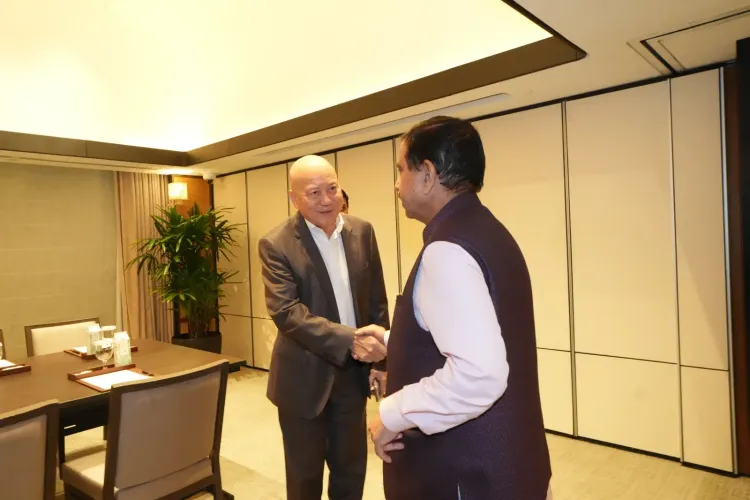
Union Minister Pralhad Joshi met Singapore Business Federation leaders on 16 November 2026, welcomed SBF's first Indian office in Bengaluru, and pitched India's clean energy ecosystem and Make in India initiative as top investment destinations for Singaporean capital.
Key Takeaways
Union Minister Pralhad Joshi met Singapore Business Federation (SBF) officials, including Mr.
Tan Cheng Guan and Shri Prasoon Mukherjee , on 16 November 2026 .
The SBF opened its first-ever office in India , located in Bengaluru , marking a significant step in bilateral business engagement.
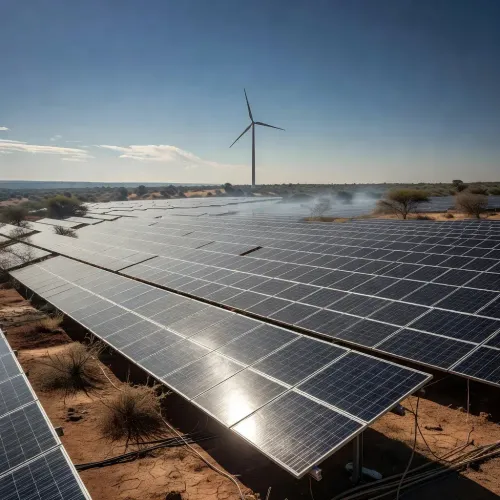
Minister Joshi spotlighted India's rapidly expanding clean energy ecosystem and the #MakeInIndia initiative as key investment draws.
Singapore is one of India's largest sources of FDI, with ties anchored by the bilateral Comprehensive Economic Cooperation Agreement signed in 2005 .
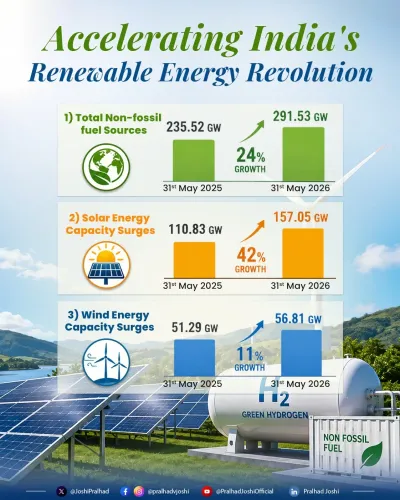
India targets 500 GW of non-fossil fuel capacity by 2030 , making international capital mobilisation a priority at the ministerial level.
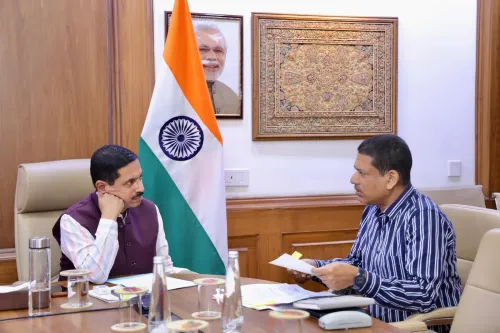
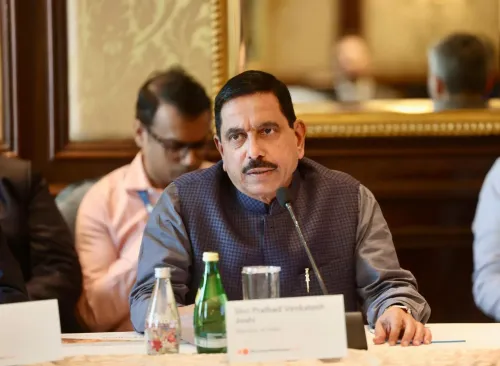
India's clean energy ambitions just got a fresh pitch on the global investment circuit. Union Consumer Affairs and New and Renewable Energy Minister Pralhad Joshi met officials of the Singapore Business Federation (SBF) on Monday, 16 November 2026, engaging with Mr. Tan Cheng Guan and Shri Prasoon Mukherjee, Chairman of the India Business Council, to map out how Singapore capital can plug into India's expanding economy.
SBF plants its flag in Bengaluru
The meeting carried a concrete milestone: the Singapore Business Federation's first-ever office in India, opened in Bengaluru. That choice is deliberate. India's technology and startup capital has increasingly positioned itself as a gateway for advanced manufacturing and clean energy investment — signalling that FDI promotion is no longer exclusively routed through Delhi or Mumbai. For Singapore businesses scouting opportunities in South Asia, a Bengaluru base places them at the intersection of deep tech talent and green-energy infrastructure buildout.
Clean energy and Make in India take centre stage
Minister Joshi highlighted India's 'rapidly expanding clean energy ecosystem' as a primary draw for Singaporean investors. The timing is sharp: India is racing toward its target of 500 GW of non-fossil fuel capacity by 2030, and international capital is increasingly essential to bridging the gap. Joshi also underscored the #MakeInIndia initiative — launched in September 2014 — as a structured entry point for foreign manufacturers and investors seeking to build in, not just sell to, India.
Singapore is already one of India's largest sources of foreign direct investment, with bilateral ties formalised through the India-Singapore Comprehensive Economic Cooperation Agreement signed in 2005. The two economies have grown progressively closer in services, technology and financial flows — and the pivot toward renewables represents the next chapter of that relationship.
India's growth story, framed for a global audience
Joshi invoked the 'visionary leadership' of Prime Minister Narendra Modi as a central theme of India's investment narrative — a standard framing in outreach to foreign business chambers, but one that carries policy weight given Modi's consistent prioritisation of FDI-friendly reforms since 2014. For Singaporean federations deciding where to anchor their South Asia strategy, ministerial-level engagement of this kind signals that doors at the top remain open.
The SBF Bengaluru office and this high-level interaction now set a clear clock ticking: watch for follow-up investment commitments and the agenda of the next formal India-Singapore bilateral economic consultations.
Point of View
Who holds both the renewable energy and consumer affairs portfolios, this meeting serves a dual purpose: reinforcing India's credibility as a clean-energy investment destination while cementing Karnataka's status as a premier FDI hub ahead of potential state-level elections. The consistent invocation of the Make in India framework signals continuity in India's foreign investment pitch, but the clean energy pivot marks a genuine evolution — from manufacturing attraction to green-transition partnership.
NationPress
16 Nov 2026
Frequently Asked Questions
What is the Singapore Business Federation and why does its India office matter?
The Singapore Business Federation (SBF) is Singapore's apex business chamber, representing its local business community and facilitating international trade links. Its first office in India, opened in Bengaluru, signals a strategic step toward closer bilateral investment engagement, particularly in clean energy and technology sectors.
Why did the SBF choose Bengaluru for its first India office?
Bengaluru is India's leading technology and startup hub and is increasingly positioned as a centre for clean energy and advanced manufacturing investment, making it a natural base for Singapore businesses scouting South Asian opportunities beyond Delhi and Mumbai.
What is India's clean energy target that Minister Joshi highlighted?
India has set a target of achieving 500 GW of non-fossil fuel electricity capacity by 2030, and the government is actively seeking foreign investment — including from Singapore — to help reach this goal.
What is the Make in India initiative?
Make in India is a national programme launched in September 2014 by Prime Minister Narendra Modi to encourage foreign direct investment, domestic manufacturing and innovation across multiple sectors of the Indian economy.
What is the basis of India-Singapore economic ties?
India and Singapore signed a Comprehensive Economic Cooperation Agreement in 2005, formalising deep trade and investment links. Singapore consistently ranks among India's largest sources of foreign direct investment, spanning services, technology and increasingly renewable energy.