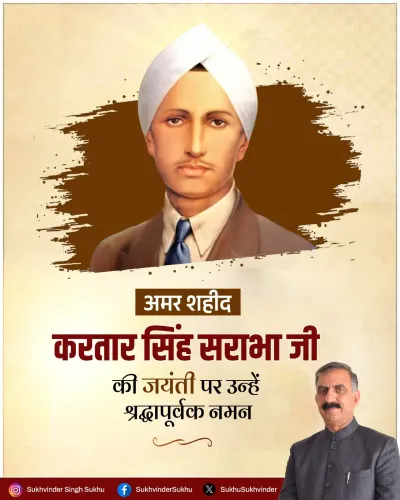
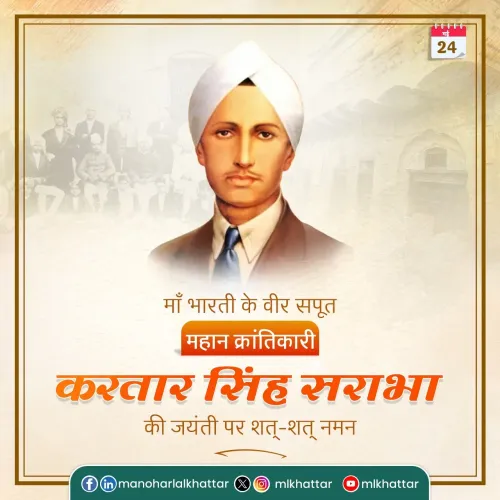
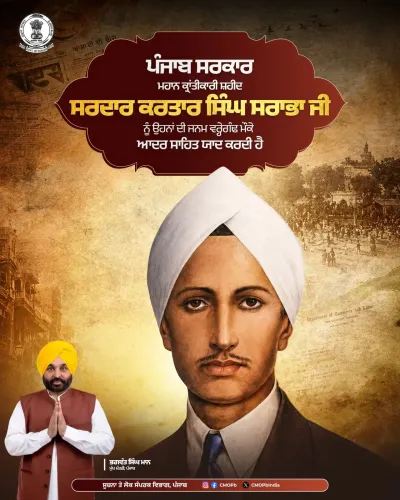
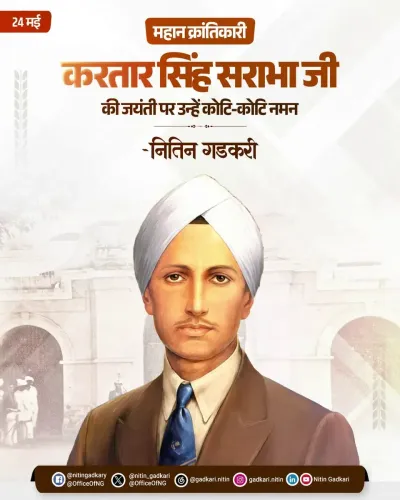
Shekhawat pays tribute to Kartar Singh Sarabha on death anniversary
Synopsis
Union Culture and Tourism Minister Gajendra Singh Shekhawat marked the death anniversary of Ghadar Party revolutionary Kartar Singh Sarabha, hanged by British authorities in Lahore in 1915 at age nineteen, with a tribute post on X on November 16, 2026.
Key Takeaways
Gajendra Singh Shekhawat , Union Culture and Tourism Minister, paid tribute to Kartar Singh Sarabha on his death anniversary, November 16, 2026 .
Sarabha was a Ghadar Party revolutionary hanged by British authorities in Lahore on November 16, 1915 , aged nineteen .
He had joined the Ghadar movement while studying in the United States and returned to India to lead an armed uprising against colonial rule.
Bhagat Singh reportedly carried Sarabha's photograph as personal inspiration, illustrating his lasting influence on subsequent freedom fighters.
The Ministry of Culture has historically supported memorials and educational outreach tied to Ghadar movement figures.
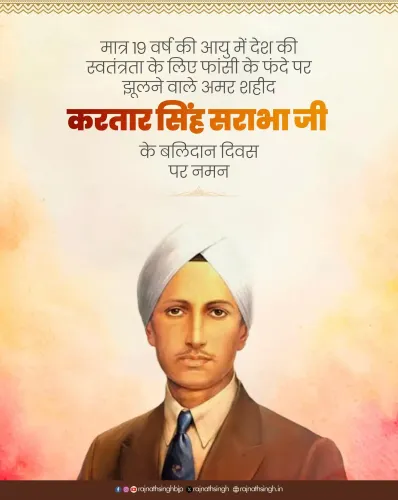
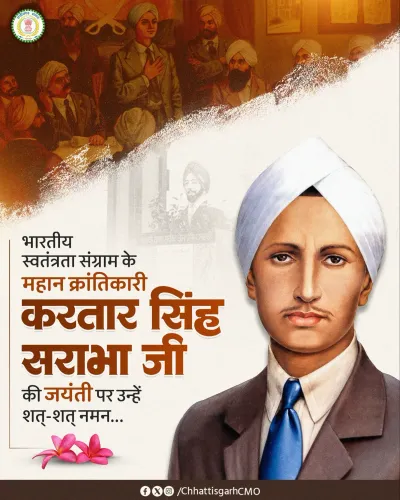
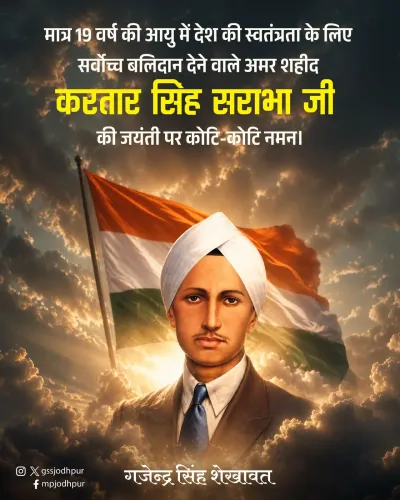
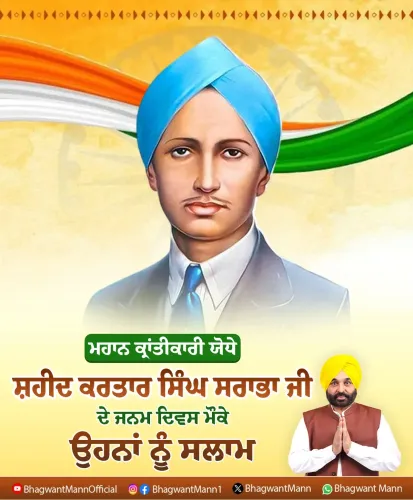
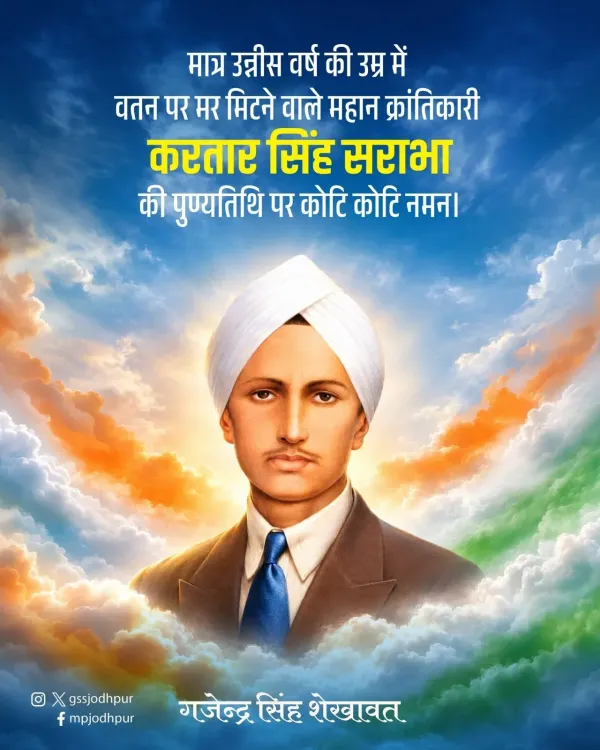
At just nineteen years old, Kartar Singh Sarabha walked to the gallows in Lahore rather than submit to British rule — a sacrifice that Union Culture and Tourism Minister Gajendra Singh Shekhawat honoured on Monday, November 16, 2026, with a heartfelt post on X marking the revolutionary's death anniversary.
Shekhawat wrote, 'मात्र उन्नीस वर्ष की उम्र में वतन पर मर मिटने वाले महान क्रांतिकारी करतार सिंह सराभा की पुण्यतिथि पर कोटि कोटि नमन' — 'Countless salutes to the great revolutionary Kartar Singh Sarabha, who gave his life for the motherland at the mere age of nineteen.' The tribute comes each year as political leaders across the spectrum pause to recall a name that burned brightest for the briefest moment in India's freedom struggle.
Who was Kartar Singh Sarabha — and why nineteen matters
Kartar Singh Sarabha was born in the village of Sarabha in Ludhiana district, Punjab. He joined the Ghadar Party — the San Francisco-based revolutionary organisation founded in 1913 to overthrow British colonial rule — while still a teenager studying in the United States. He returned to India to lead an armed uprising and was arrested by British authorities.
The colonial government hanged him in Lahore Central Jail on November 16, 1915, making him one of the youngest revolutionaries executed during the independence movement. Bhagat Singh, himself only a child at the time, is said to have kept Sarabha's photograph with him as a source of inspiration — a detail that underscores just how deep Sarabha's imprint ran through the next generation of freedom fighters.
The Ghadar movement's place in India's commemorative calendar
Indian ministers and political leaders routinely mark the death anniversaries of independence-era revolutionaries, and the Ghadar movement has received growing official attention in recent years. The Ministry of Culture has historically backed memorials, museum galleries, and educational outreach devoted to figures from early 20th-century anti-colonial efforts — including those who operated outside the mainstream nationalist movement led from Bombay and Calcutta.
Shekhawat's ministerial portfolio places him directly at the intersection of cultural memory and state commemoration, lending institutional weight to what might otherwise read as a routine social-media tribute. His acknowledgement on the 111th death anniversary of Sarabha keeps a Punjab-born revolutionary visible in a national conversation about who shaped the idea of a free India.
Point of View
Armed-resistance strand of the freedom movement. Figures like Sarabha — young, Punjab-rooted, armed-struggle oriented — carry particular resonance in a state where the Ghadar legacy remains a living political reference point. As Culture Minister, Shekhawat's public remembrances carry institutional heft, signalling that such commemorations may translate into ministry-backed programmes, museum investments, or archival releases. The pattern reflects a wider trend of using the anniversaries of lesser-celebrated revolutionaries to claim a broader, more inclusive national narrative.
NationPress
16 Nov 2026
Frequently Asked Questions
Who was Kartar Singh Sarabha?
Kartar Singh Sarabha was a young Indian revolutionary and member of the Ghadar Party who was hanged by British colonial authorities in Lahore on November 16, 1915, at the age of nineteen for leading anti-colonial activities.
What was the Ghadar Party?
The Ghadar Party was an Indian revolutionary organisation founded in San Francisco in 1913, primarily by Punjabi immigrants, with the goal of overthrowing British rule in India through armed uprising.
Why is Kartar Singh Sarabha important to India's freedom struggle?
Sarabha is remembered as one of the youngest and most committed anti-colonial revolutionaries. Bhagat Singh reportedly carried his photograph as a personal inspiration, cementing Sarabha's influence on the next generation of freedom fighters.
What did Gajendra Singh Shekhawat say about Kartar Singh Sarabha?
On November 16, 2026, Shekhawat posted a Hindi tribute on X offering 'countless salutes' to Sarabha, calling him a great revolutionary who gave his life for the motherland at the age of nineteen.
What is Gajendra Singh Shekhawat's role in the Indian government?
Gajendra Singh Shekhawat is India's Union Minister of Culture and Tourism, a senior BJP leader, and a Lok Sabha MP from Jodhpur, Rajasthan.