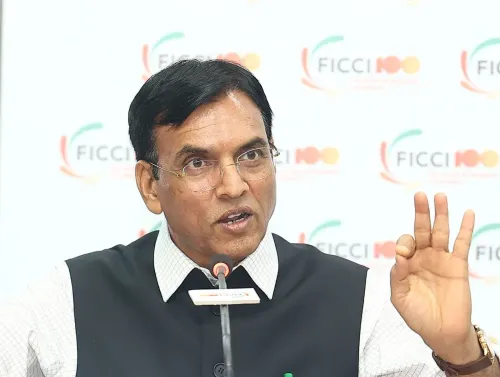
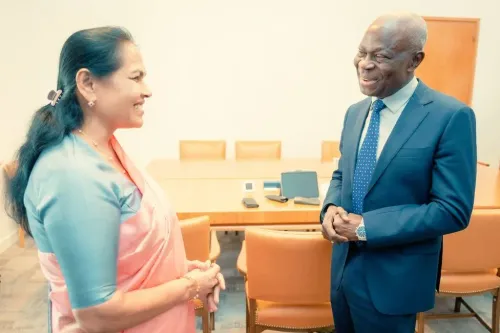
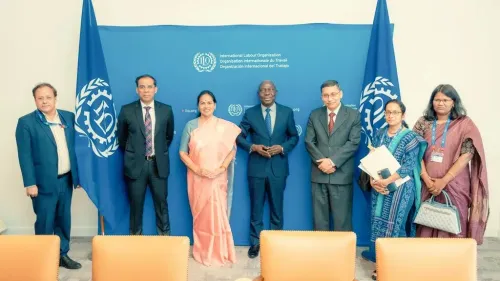
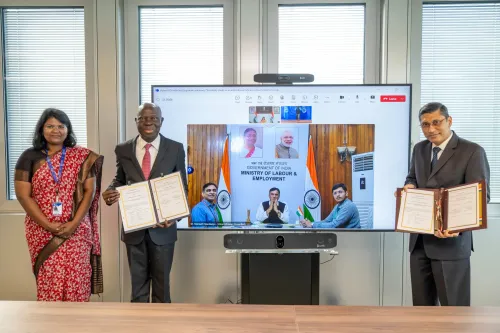
Mandaviya congratulates Houngbo on ILO re-election, pledges deeper India ties
Synopsis
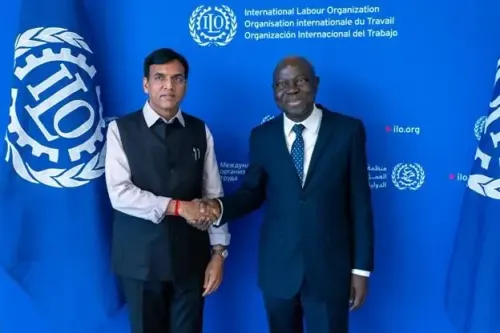
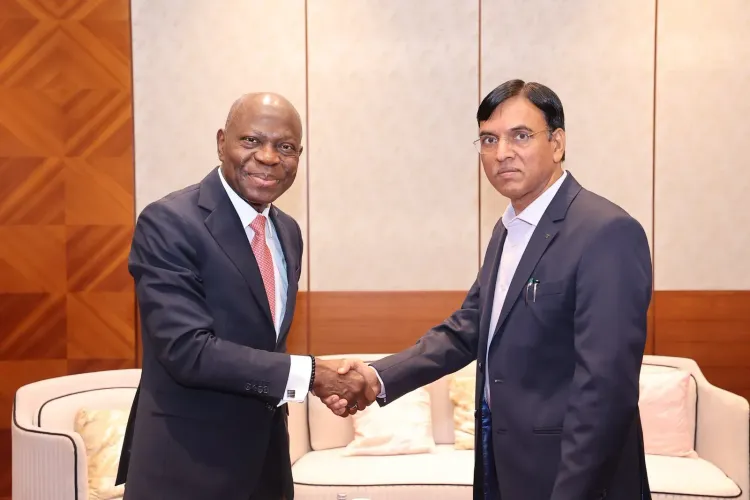
Union Labour Minister Mansukh Mandaviya congratulated Gilbert F. Houngbo on his re-election as ILO Director-General on November 16, 2026, reaffirming India's commitment to social justice and decent work as co-chair of the Global Coalition for Social Justice.
Key Takeaways
Mansukh Mandaviya congratulated H.E.
Houngbo on his re-election as Director-General of the ILO on November 16, 2026 .
Houngbo , from Togo , is the 11th ILO Director-General ; he was first elected in March 2022 and took office in October 2023 .
India has been an ILO founding member since 1919 and plays an active role in its governance and standard-setting.
India serves as a Co-Chair of the Global Coalition for Social Justice , an ILO-led initiative targeting decent work and inequality.
Mandaviya flagged social justice, decent work, universal social protection and inclusive growth as pillars of the India-ILO agenda going forward.
A renewed mandate at the helm of the world's oldest multilateral labour body has drawn a swift diplomatic signal from New Delhi. Union Labour and Sports Minister Mansukh Mandaviya on Monday, November 16, 2026, congratulated H.E. Gilbert F. Houngbo on his re-election as Director-General of the International Labour Organization (ILO), and used the moment to reaffirm India's ambitions on the global social-justice stage.
Mandaviya's post welcomed the development warmly: 'India looks forward to further strengthening its partnership with the ILO to advance social justice, decent work, universal social protection and inclusive growth, particularly through our shared commitment as Co-Chairs of the Global Coalition for Social Justice.'
Who is Gilbert F. Houngbo — and why his re-election matters
Gilbert F. Houngbo, a diplomat from Togo, became the 11th Director-General of the ILO when he was first elected in March 2022 and assumed office in October 2023. His re-election signals institutional continuity at the ILO — the UN specialized agency founded in 1919 that sets international labour standards and frames the global conversation on workers' rights and decent work. For member states like India, a stable DG also means predictable engagement on shared programme priorities through the rest of the decade.
India at the ILO — a founding bond, an active present
India's connection to the ILO is not new or ceremonial. India has been a founding member since 1919, making it one of the organization's original architects. Over a century later, that founding relationship has evolved into active governance participation, contributions to conventions, and — most recently — a Co-Chair role in the Global Coalition for Social Justice, the ILO-led initiative mobilizing action on inequality, decent work, and social protection deficits worldwide.
That co-chair position is the sharpest edge of Mandaviya's message. It frames India not merely as a participant in multilateral labour diplomacy, but as one of the drivers setting its agenda. The minister's explicit mention of 'inclusive growth' alongside social protection also maps the ILO engagement onto India's domestic policy vocabulary — signalling that what gets negotiated in Geneva has a direct echo in New Delhi's labour-reform narrative.
The Global Coalition for Social Justice — India's multilateral calling card
The Global Coalition for Social Justice was launched under ILO auspices to galvanize coordinated international action on the most stubborn labour and inequality challenges of the era. India's participation as a co-chair positions the country as a bridge between the Global South's development imperatives and the developed world's social-protection norms — a role India has consistently sought in forums from the G20 to UN agencies.
Mandaviya's congratulatory post, then, is more than diplomatic courtesy. It is a public staking of India's continuing investment in this coalition's work under a re-elected leadership that knows the terrain. The next International Labour Conference and concrete deliverables from the coalition during India's co-chair period will be the real test of that investment.
Point of View
ILO, UN agencies — to project domestic social-protection and labour-reform priorities internationally. Houngbo's re-election gives India a known interlocutor for the remainder of the decade, reducing negotiating friction on convention ratifications and social-floor commitments. The real policy test, however, will be whether the coalition co-chair role translates into tangible standard-setting outcomes or remains a prestige signalling exercise.
NationPress
16 Nov 2026
Frequently Asked Questions
Who is Gilbert F. Houngbo and why was he re-elected?
Gilbert F. Houngbo is the 11th Director-General of the ILO , originally from Togo . He was first elected in March 2022 and assumed office in October 2023 . His re-election extends his leadership of the UN's global labour standards body.
What is India's role in the Global Coalition for Social Justice?
India serves as a Co-Chair of the Global Coalition for Social Justice , an ILO-led initiative that mobilizes international action on decent work, inequality, and social protection gaps.
Is India a member of the ILO?
Yes. India has been a founding member of the ILO since 1919 and has participated in its governance, conventions, and programmes for over a century.
What did Mansukh Mandaviya say about the ILO?
Union Labour and Sports Minister Mansukh Mandaviya said India looks forward to strengthening its ILO partnership to advance 'social justice, decent work, universal social protection and inclusive growth,' citing India's co-chair role in the Global Coalition for Social Justice .
What is the International Labour Organization (ILO)?
The ILO is a UN specialized agency founded in 1919 that sets international labour standards, promotes decent work, and works to advance social justice for workers worldwide.