India's 14 lakh STEM graduates a key edge in tech and manufacturing: Piyush Goyal
Synopsis
India turns out 14 lakh STEM graduates every year — a number that reportedly leaves foreign ministers 'astonished,' according to Commerce Minister Piyush Goyal. Speaking at NID Gandhinagar, he made the case that this talent base, combined with cheap data and 1,700-plus Global Capability Centres, is shifting India's economic story from cost arbitrage to genuine innovation leadership.
Key Takeaways
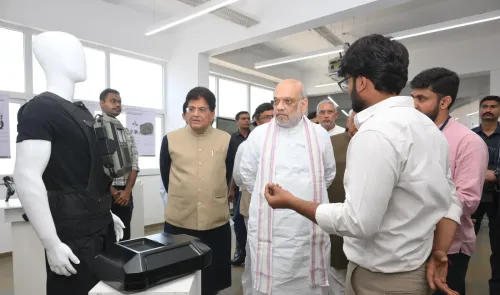
Commerce Minister Piyush Goyal spoke at the inauguration of the Innovation and Incubation Centre at NID Gandhinagar on 17 May 2025 .
India produces around 14 lakh STEM graduates annually, which Goyal called the country's 'greatest strength.' Between 1,700 and 1,800 major global companies are already running innovation operations in India through Global Capability Centres .
Goyal described India as the world's fastest-growing major economy with the third-largest startup ecosystem .
He urged students to target sectors including semiconductors, AI, quantum computing, deep tech and space .
Incubation centres were urged to extend support to Tier-2 and Tier-3 cities and build for global markets.
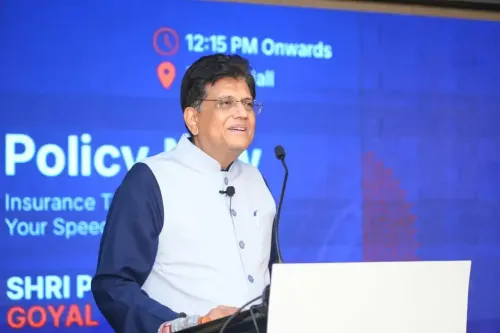
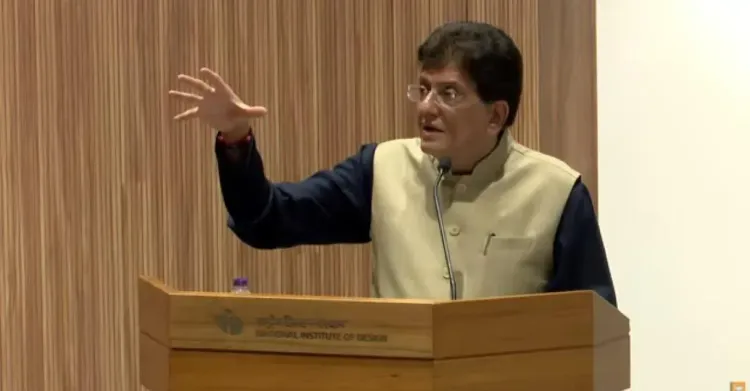
Union Commerce and Industry Minister Piyush Goyal on Sunday, 17 May said India's annual production of around 14 lakh STEM graduates had emerged as one of the nation's most decisive competitive advantages in technology, manufacturing and innovation. Speaking at the inauguration of the Innovation and Incubation Centre at the National Institute of Design (NID) in Gandhinagar, Goyal argued that this talent pipeline was already reshaping India's standing in global industry.
The STEM Talent Argument
'Around 14 lakh STEM graduates — in science, technology, mathematics and engineering — are produced every year in India. When I tell foreign ministers this, they are astonished. This huge youth force is India's greatest strength,' Goyal said. He noted that India's expanding pool of scientists, engineers and technology professionals was drawing global investment and reinforcing the country's position in emerging industries.
Goyal described India as 'the world's fastest-growing major economy with the third-largest startup ecosystem and expanding manufacturing capabilities.' He added that the country's digital infrastructure had been a force multiplier: 'Hardly any country has expanded 5G to every corner so quickly or provides digital connectivity and data so cheaply.'
Beyond Metro Cities: Innovation Going Grassroots
The minister stressed that innovation was no longer confined to large urban centres. He said young people from Tier-2 and Tier-3 cities were increasingly founding startups and building businesses with global reach. 'People from small towns are now working internationally with their innovations, building global businesses and creating unicorns,' he said.
Goyal attributed this shift to affordable internet access, which he said had democratised opportunity across the country. He noted that many young innovators today needed only laptops, digital access and mentoring to refine and scale their ideas — lowering the barrier to entrepreneurship significantly.
Global Capability Centres and International Trust
Goyal cited the presence of between 1,700 and 1,800 major global companies already operating innovation and design functions in India through Global Capability Centres (GCCs). He attributed this to India's skilled workforce, low-cost digital connectivity and integrated infrastructure. 'The whole world today sees India as the most trusted partner,' he said, adding that global firms were deepening their India footprint in design and innovation.
The Future Economy: Skills Over Cheap Labour
Looking ahead, Goyal argued that the future economy would be driven by automation, artificial intelligence, skilled manpower, creative design and innovation — not cheap labour. He urged students to focus on high-growth sectors including semiconductors, artificial intelligence, machine learning, quantum computing, deep technology and space.
Calling for tighter academia-industry collaboration, Goyal said educational institutions should help students move creative ideas through to commercialisation and entrepreneurship. He also pushed incubation centres to actively support innovation beyond metros and help young Indians build products for global — not just domestic — markets.
As India seeks to position itself as a preferred destination for high-value manufacturing and R&D, the government's emphasis on STEM talent and digital infrastructure signals a deliberate pivot from cost-arbitrage to capability-led growth.
Point of View
But the quality-versus-quantity question remains unresolved. India's STEM output is vast; its employability rates in core engineering roles are not uniformly strong, with industry bodies repeatedly flagging skill gaps at the graduate level. The GCC count of 1,700-plus is real and growing, but most GCCs still concentrate in Bengaluru, Hyderabad and Pune — not the Tier-2 cities Goyal invoked. The aspiration is sound; the structural plumbing — curriculum reform, industry-linked incubation, IP protection for deep-tech startups — needs to keep pace with the rhetoric if India is to convert headcount into genuine innovation leadership.
NationPress
19 Sept 2026
Frequently Asked Questions
What did Piyush Goyal say about India's STEM graduates?
Commerce Minister Piyush Goyal said India produces around 14 lakh STEM graduates every year, calling them the country's greatest strength. He made the remarks at the inauguration of the Innovation and Incubation Centre at NID Gandhinagar on 17 May 2025.
How many global companies are innovating in India through GCCs?
According to Goyal, between 1,700 and 1,800 major global companies are already running innovation and design operations in India through Global Capability Centres. He attributed this to India's skilled workforce, affordable digital connectivity and integrated infrastructure.
Why does Goyal say India is the world's most trusted partner?
Goyal argued that India's combination of STEM talent, low-cost data, a large startup ecosystem and expanding manufacturing capabilities had built international confidence in the country as a destination for technology and innovation investment.
Which sectors did Goyal urge students to focus on?
The minister urged students to target semiconductors, artificial intelligence, machine learning, quantum computing, deep technology and space — sectors he identified as central to the future economy.
What role did Goyal assign to incubation centres?
Goyal called on incubation centres to support innovation in Tier-2 and Tier-3 cities and help young Indians develop products for global markets, not just the domestic market. He also stressed closer academia-industry collaboration to take ideas from concept to commercialisation.