Piyush Goyal cites Modi, Amit Shah as 'design thinking' role models at NID Gandhinagar
Synopsis
At NID Gandhinagar’s new Innovation and Incubation Centre, Commerce Minister Piyush Goyal named Modi and Amit Shah as India’s foremost ‘design thinking’ role models—framing structured governance as an innovation discipline and positioning Gujarat’s industrial mix as a national template for the Viksit Bharat @2047 vision.
Key Takeaways
Piyush Goyal inaugurated the Innovation and Incubation Centre at NID Gandhinagar on Sunday, 17 May .
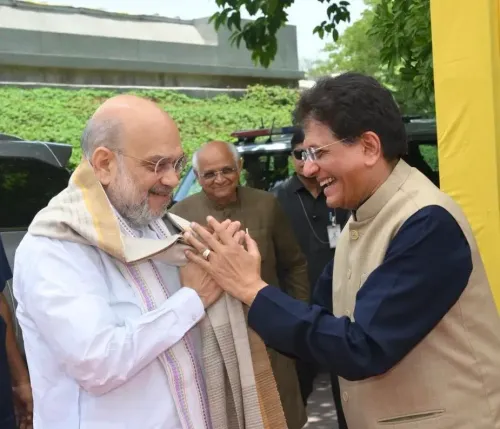
He named PM Modi and Home Minister Amit Shah as role models of ‘design thinking’ in governance.
Goyal cited India’s ancient heritage—including the Iron Pillar of Delhi and Sushruta’s surgical traditions—as proof of historical innovation depth.
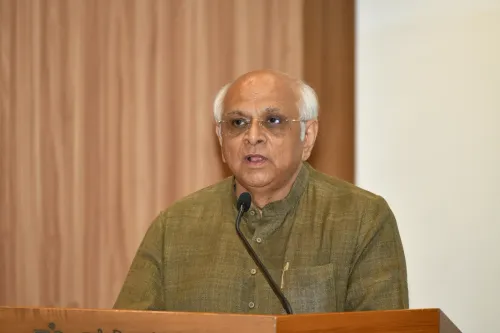
He described Gujarat as an ‘entrepreneurial powerhouse,’ citing sectors from semiconductors to diamonds under CM Bhupendra Patel .
The minister said India’s future economy must pivot from low-cost labour to AI, automation, skilled manpower and technology-driven manufacturing .
The new centre is positioned as a key enabler of the Viksit Bharat @2047 development roadmap.
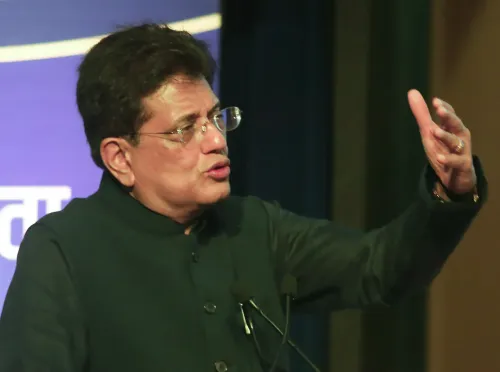
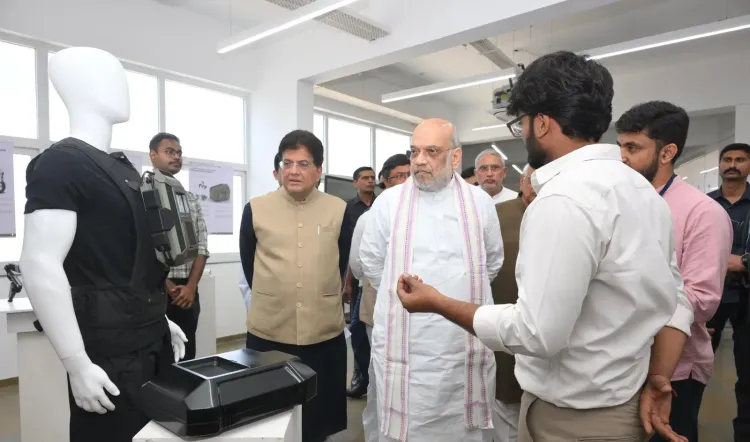
Union Commerce and Industry Minister Piyush Goyal on Sunday held up Prime Minister Narendra Modi and Home Minister Amit Shah as exemplars of ‘design thinking’ in governance, arguing that structured planning, innovation and entrepreneurship were the bedrock of India’s development strategy. Goyal was speaking at the inauguration of the Innovation and Incubation Centre at the National Institute of Design (NID) in Gandhinagar.
What Goyal Said at NID
“If there are role models for this, then Prime Minister Narendra Modi and Home Minister Amit Shah are those role models,” Goyal said, characterising their governing style as one of ‘meticulous planning, detailing and executing programmes in a structured way.’
He argued that design extended well beyond aesthetics or products, calling it ‘an entire way of thinking’ that should permeate governance and industry alike. The minister also underscored that no nation had achieved developed-economy status on the strength of natural resources or population alone, insisting that ‘innovation, design thinking and entrepreneurship’ were the true engines of prosperity.
India’s Historical Innovation Legacy
Goyal drew on India’s ancient heritage to make his case, citing Vastu-based architectural principles, mathematics, the surgical traditions of Sushruta, and the rust-resistant Iron Pillar of Delhi as evidence of deep-rooted innovation capabilities. “There is the Iron Pillar in Delhi from Emperor Ashoka’s time, which never rusts. That means how much research and innovation we had in metallurgy,” he said.
The minister contended that decades of colonial rule had eroded that culture of innovation, but maintained that India was now actively reclaiming those strengths. “We have to define the destiny of Bharat in the 21st century. Design, innovation and research are the roadmap towards a developed and prosperous country,” he added.
Gujarat as an Entrepreneurial Model
Goyal described Gujarat as an ‘entrepreneurial powerhouse’ under Chief Minister Bhupendra Patel, pointing to a blend of modern sectors—semiconductors, electronics, defence and aerospace—alongside traditional industries such as gems, jewellery, diamonds and textiles. “Entrepreneurship exists in Gujarati DNA itself,” he said. “Gujarati brothers and sisters will always find opportunities in new ways.”
Role of the New Innovation Centre
The newly inaugurated Innovation and Incubation Centre at NID is intended to foster collaboration among students, faculty and industry, encouraging what Goyal called ‘out-of-the-box thinking.’ He stressed that the real measure of innovation was not technological sophistication but its tangible impact: “Innovation should create jobs, improve productivity and strengthen the economy.”
Looking ahead, Goyal said India’s future economy would hinge increasingly on artificial intelligence, automation, skilled manpower, creative design and technology-driven manufacturing, rather than on low-cost labour alone. The inauguration aligns with the government’s broader Viksit Bharat @2047 roadmap, which places design and innovation at the centre of long-term national development.
Point of View
But it sidesteps the structural question: India’s R&D spending as a share of GDP has remained well below global benchmarks for decades. The Viksit Bharat @2047 goal is ambitious, yet the gap between aspiration and measurable innovation output—patents filed, startups scaled, manufacturing value-added—remains wide. The new NID centre is a welcome institutional step, but one incubation centre cannot substitute for the systemic reforms in education funding, IP protection and industry-academia linkages that a genuine design-led economy demands.
NationPress
5 Oct 2026
Frequently Asked Questions
What did Piyush Goyal say about Modi and Amit Shah at NID Gandhinagar?
Goyal described Prime Minister Narendra Modi and Home Minister Amit Shah as role models of ‘design thinking’ in governance, citing their approach of meticulous planning and structured programme execution. He made the remarks at the inauguration of the Innovation and Incubation Centre at NID Gandhinagar on Sunday.
What is the Innovation and Incubation Centre at NID Gandhinagar?
It is a newly inaugurated facility at the National Institute of Design in Gandhinagar aimed at fostering collaboration among students, faculty and industry. The centre is designed to promote out-of-the-box thinking and problem-solving, and is positioned as part of India’s Viksit Bharat @2047 innovation roadmap.
What historical examples did Goyal cite to support India’s innovation legacy?
Goyal referenced Vastu-based architecture, ancient mathematics, the surgical science of Sushruta, and the rust-resistant Iron Pillar of Delhi as evidence of India’s deep historical tradition of design and innovation. He argued that colonial rule had weakened this culture, which India is now reclaiming.
How did Goyal describe Gujarat’s economic model?
Goyal called Gujarat an ‘entrepreneurial powerhouse’ under Chief Minister Bhupendra Patel, pointing to a combination of modern industries—semiconductors, electronics, defence and aerospace—alongside traditional sectors like gems, jewellery, diamonds and textiles as a model for national development.
What sectors did Goyal say will drive India’s future economy?
Goyal said India’s economy would increasingly depend on artificial intelligence, automation, skilled manpower, creative design and technology-driven manufacturing, rather than low-cost labour alone. He linked this shift directly to the government’s Viksit Bharat @2047 development vision.