Goyal, Jaishankar call on EU Council President after India-EU FTA
Synopsis
Commerce Minister Piyush Goyal and EAM S. Jaishankar called on European Council President António Costa on 15 July 2026, recognising the concluded India-EU Free Trade Agreement as a landmark that elevates the Strategic Partnership and opens new avenues for trade, investment, and innovation.
Key Takeaways
Union Commerce Minister Piyush Goyal and EAM S.
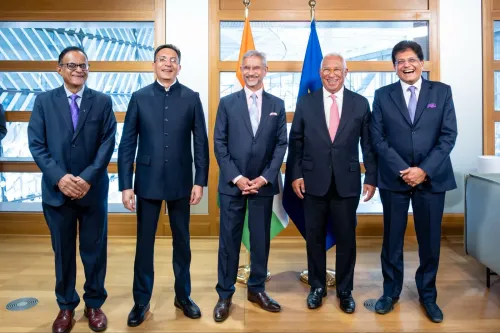
Jaishankar met European Council President António Costa on 15 July 2026 .
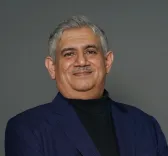
The delegation also included MeitY MoS Jitin Prasada and Principal Scientific Adviser Prof.
Sood , reflecting a multi-sectoral agenda.
Both sides recognised the India-EU Free Trade Agreement as a 'landmark achievement' elevating the Strategic Partnership.
India-EU FTA negotiations were originally launched in 2007 , suspended in 2013 , and relaunched at the 2022 India-EU Summit .
The EU is India's second-largest goods trading partner and largest combined services partner.
Next steps include FTA ratification timelines and follow-up on the India-EU Trade and Technology Council .
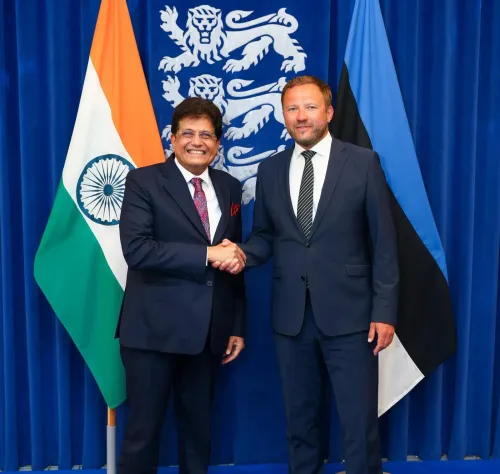
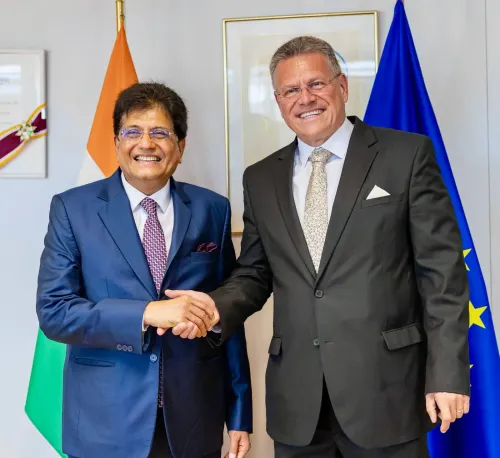
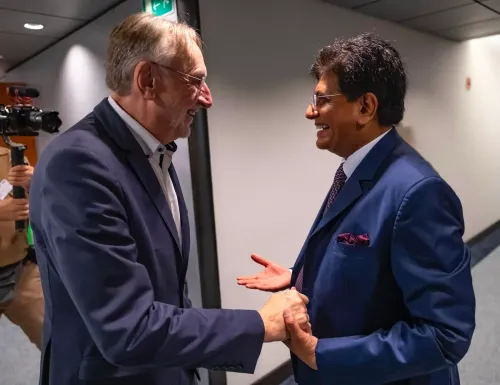
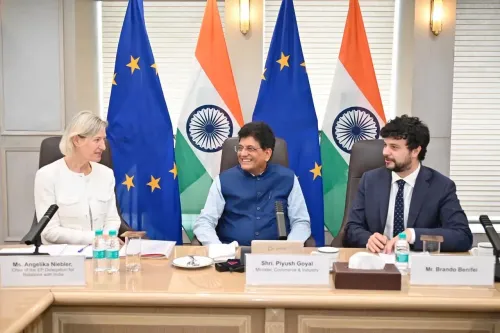
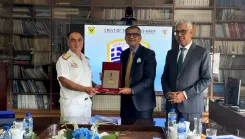
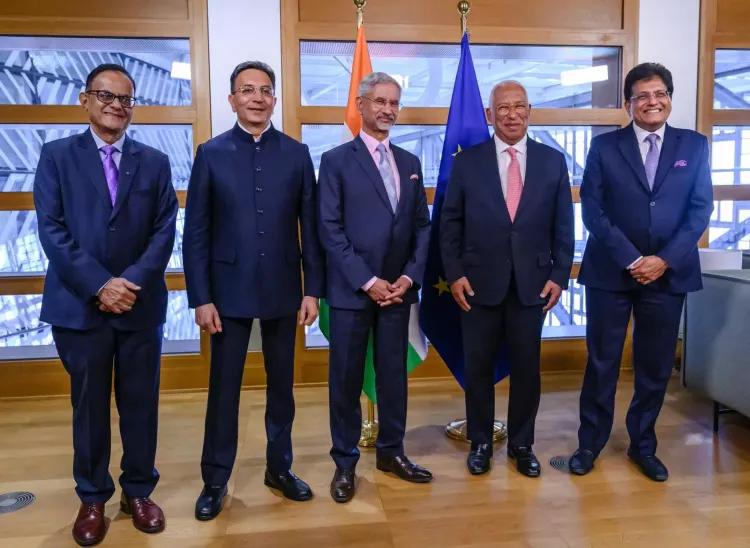
Union Commerce and Industry Minister Piyush Goyal met European Council President António Costa on Wednesday, 15 July 2026, alongside External Affairs Minister S. Jaishankar, MeitY Minister of State Jitin Prasada, and Principal Scientific Adviser Prof. Ajay K. Sood, marking a high-level engagement between India and the European Union following the conclusion of their long-awaited Free Trade Agreement.
Context
Minister Goyal described the meeting as an occasion to recognise 'the successful conclusion of the India-EU Free Trade Agreement as a landmark achievement that takes our Strategic Partnership to a new level, opening new opportunities for trade, investment, and innovation.' The multi-ministerial delegation signals the breadth of the bilateral agenda, spanning commerce, technology, and science policy. Goyal also noted that he 'deeply values President Costa's positive outlook for India and his steadfast support for further strengthening India-EU cooperation as trusted democratic partners committed to shared growth and prosperity.'
Policy Backdrop
The India-EU Broad-based Trade and Investment Agreement negotiations were first launched in 2007 but stalled in 2013 after nine rounds, leaving a significant gap in the two sides' economic architecture. Talks were formally relaunched at the India-EU Summit in June 2022, with both sides committing to a modern, balanced agreement. The conclusion of the FTA, if confirmed through official channels, would represent one of the most consequential trade deals India has signed, given that the EU is India's second-largest trading partner in goods and its largest combined partner in services.
António Costa, a Portuguese politician who served as Prime Minister of Portugal from 2015 to 2024, assumed the presidency of the European Council in December 2024. His tenure has been marked by an emphasis on deepening the EU's strategic partnerships with democratic nations in the Indo-Pacific. The India-EU Strategic Partnership, established in 2004, has been progressively upgraded through regular summits and sectoral dialogues.
Stakeholders and Impact
Indian exporters in sectors such as textiles, pharmaceuticals, engineering goods, and information technology stand to gain preferential access to the EU's single market of over 440 million consumers if the FTA enters into force. European investors and technology firms, in turn, are expected to benefit from a more structured framework for deploying capital and intellectual property in one of the world's fastest-growing economies. The presence of Prof. Ajay K. Sood, Principal Scientific Adviser to the Government of India, underscores that innovation and research collaboration — including in areas such as semiconductors, clean energy, and artificial intelligence — are central to the upgraded partnership.
The inclusion of MeitY MoS Jitin Prasada points to digital trade and technology governance as a distinct pillar of the agenda, reflecting both sides' interest in aligning on data flows, cybersecurity standards, and emerging technologies within a democratic framework.
What's Next
Attention will now turn to the implementation mechanism for the India-EU FTA, including the timeline for ratification by EU member states and the Indian Parliament, as well as the institutional structures that will oversee dispute resolution and review. A joint statement or communiqué from the broader India-EU Summit, when convened, is expected to provide a definitive roadmap. The meeting in Brussels also sets the stage for follow-up engagements on the India-EU Trade and Technology Council, which was established to synchronise regulatory approaches in critical and emerging technologies. As India continues to pursue economic diversification through FTAs with Western partners — a strategy accelerated since 2022 — the EU agreement, if finalised, would be its most significant trade pact with a developed-economy bloc.
Point of View
Technology, and science — signals that New Delhi is treating the India-EU relationship as a comprehensive strategic asset rather than a purely transactional trade engagement. The concluded FTA, if it proceeds to ratification, would be India's most significant trade agreement with a developed-economy bloc and a validation of the post-2022 strategy of locking in Western market access. President Costa's visible enthusiasm for India also reflects Brussels' broader effort to diversify supply chains and deepen ties with large democratic economies in the Indo-Pacific. The timing, coming as geopolitical realignments reshape global trade architecture, gives the agreement significance well beyond its tariff schedules.
NationPress
13 Oct 2026
Frequently Asked Questions
What is the India-EU Free Trade Agreement?
The India-EU Free Trade Agreement is a comprehensive trade pact between India and the European Union aimed at reducing tariffs and non-tariff barriers to boost bilateral trade in goods, services, and investment. Negotiations were first launched in 2007, suspended in 2013, and relaunched in June 2022.
Who is António Costa and why did Indian ministers meet him?
António Costa is the President of the European Council, a role he assumed in December 2024 after serving as Prime Minister of Portugal from 2015 to 2024. Indian ministers met him on 15 July 2026 to discuss the concluded India-EU FTA and broader strategic cooperation.
Why is the India-EU FTA significant for India?
The EU is India's second-largest trading partner in goods and largest in combined services, making the FTA potentially the most consequential trade deal India has signed with a developed-economy bloc, offering Indian exporters preferential access to a market of over 440 million consumers.
What role does Piyush Goyal play in India-EU trade talks?
As Union Minister of Commerce and Industry, Piyush Goyal is the nodal minister for India's trade negotiations, including the India-EU FTA, and leads the Indian side in commerce-related bilateral engagements.
What happens next after the India-EU FTA conclusion?
The agreement will need to go through ratification by EU member states and the Indian Parliament. Implementation mechanisms, dispute resolution structures, and timelines are expected to be detailed at the next India-EU Summit and through the India-EU Trade and Technology Council.