Goyal Meets Germany's G20 Sherpa in Berlin to Deepen Economic Ties
Synopsis
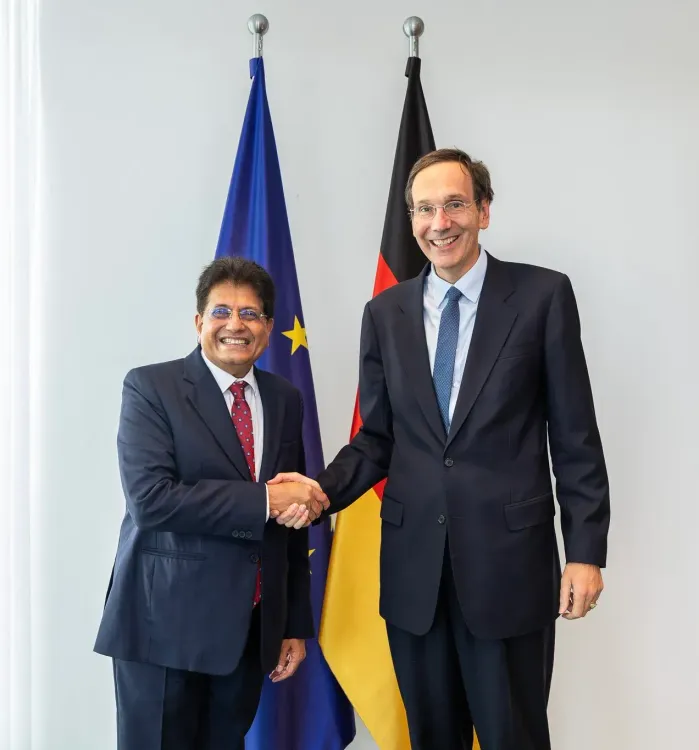
Commerce Minister Piyush Goyal met Germany's Federal Chancellor economic advisor and G20 Sherpa Levin Holle in Berlin on October 23, 2026, to advance the India-Germany economic partnership and coordinate on shared multilateral priorities.
Key Takeaways
Piyush Goyal held talks in Berlin on October 23, 2026 with Levin Holle , Economic and Financial Policy Advisor to Germany's Federal Chancellor.
Holle also serves as Germany's G7 and G20 Sherpa , giving the meeting direct relevance to multilateral economic governance.
Discussions focused on advancing the bilateral economic partnership and expanding cooperation on 'shared global economic priorities and multilateral platforms'.
India and Germany have maintained a formal strategic partnership since 2000 , spanning trade, investment, and technology.
Germany backed India's G20 presidency priorities in 2023 , including multilateral development bank reform and global economic governance.
The meeting signals active Indian diplomatic engagement ahead of the next India-Germany Intergovernmental Consultations and ongoing EU-India trade talks.
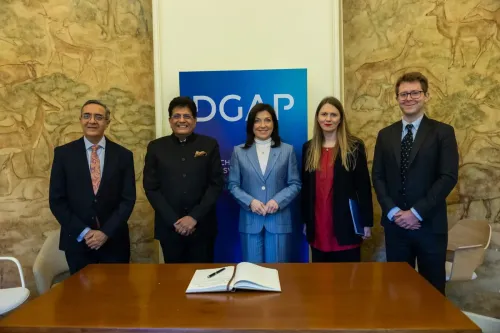
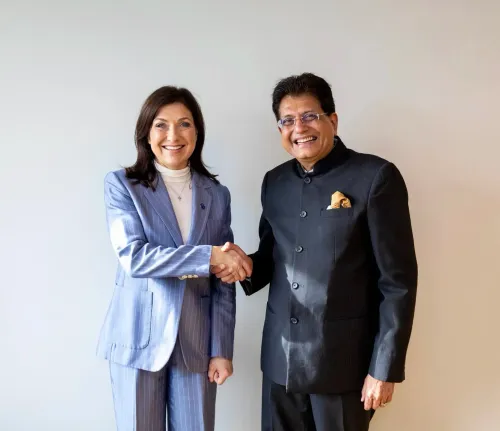
In the heart of Berlin, Union Commerce and Industry Minister Piyush Goyal sat down on Friday, October 23, 2026, with Levin Holle — Economic and Financial Policy Advisor to Germany's Federal Chancellor and Berlin's own G7 and G20 Sherpa — for a conversation that placed India-Germany economic ambitions squarely on the agenda.
What Goyal and Holle Put on the Table
The minister described the exchange as 'meaningful', with discussions centred on taking forward the bilateral economic partnership and expanding cooperation on 'shared global economic priorities and multilateral platforms'. That phrase carries real weight: both nations are anchor members of the G20, and Holle's dual role as G7 Sherpa gives him direct influence over the very multilateral architecture India wants a stronger seat at.
No specific outcomes were announced, but the choice of interlocutor signals intent. A Sherpa-level conversation is about framing the agenda, not signing the documents — it is where the deal-making groundwork is laid.
Why Germany Is India's Most Strategic European Bet
The two countries have been formal strategic partners since 2000, with a dense web of intergovernmental consultations covering trade, investment, and technology. Germany is not just Europe's largest economy; it is one of India's most consequential technology and manufacturing partners on the continent. German firms carry deep exposure to Indian supply chains, and Indian IT and pharma players have a significant footprint in German industry.
The relationship reached a coordination high-water mark during India's G20 presidency in 2023, when Berlin aligned with New Delhi on priorities including multilateral development bank reform and global economic governance. That diplomatic capital is precisely what Goyal appears to be reinvesting in Berlin this week.
The EU-India Backdrop That Makes This Visit Timely
The broader context is impossible to ignore. EU-India trade and investment agreement negotiations have moved in fits and starts for years. Germany, as Europe's economic locomotive, carries decisive influence over the direction Brussels takes. A senior minister landing in Berlin for Sherpa-level talks — not a ceremonial visit — underlines that India is working the levers that matter.
For Indian exporters eyeing European market access and German investors scouting India's manufacturing expansion, the signal is consistent: the economic dialogue is active, structured, and moving up the value chain. The next India-Germany Intergovernmental Consultations will be the real test of whether today's conversation translates into outcomes.
Berlin has been briefed. The clock is now ticking.
Point of View
New Delhi is working above the ministerial transactional layer — signalling it wants Germany as a structural ally in shaping multilateral economic norms, not just a bilateral trade relationship. This fits a broader Modi-government pattern of embedding bilateral economic diplomacy within multilateral frameworks, using India's G20 momentum as persistent leverage. The real metric to watch is whether these conversations accelerate the stalled EU-India trade agreement, where German backing in Brussels could prove decisive.
NationPress
23 Oct 2026
Frequently Asked Questions
Why did Piyush Goyal visit Berlin in October 2026?
Goyal visited Berlin to meet Levin Holle, Economic and Financial Policy Advisor to Germany's Federal Chancellor and G20 Sherpa, to advance the India-Germany economic partnership and discuss cooperation on multilateral platforms including the G20.
Who is Levin Holle and why is the meeting significant?
Levin Holle is the Economic and Financial Policy Advisor to Germany's Federal Chancellor and Berlin's G7 and G20 Sherpa. His dual role means a meeting with him directly touches both bilateral economic strategy and global multilateral agenda-setting.
What is the state of the India-Germany strategic partnership?
India and Germany established a formal strategic partnership in 2000. Since then, the relationship has grown through regular intergovernmental consultations on trade, investment, technology, and coordination in forums like the G20.
What outcomes are expected from Goyal's Berlin talks?
No specific outcomes were announced from this meeting. The next India-Germany Intergovernmental Consultations and progress on EU-India trade and investment agreement negotiations are the key milestones to watch.
How does Germany fit into India's European trade strategy?
Germany is India's most important European economic partner and a key influencer in EU policy. German alignment on trade priorities can significantly shape the direction of EU-India free trade agreement negotiations currently underway.