Goyal meets McCain Foods CEO, eyes India as food processing export hub

Synopsis
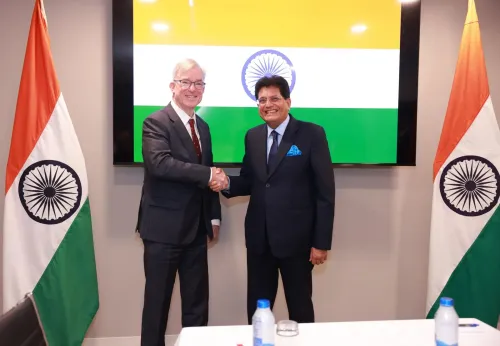
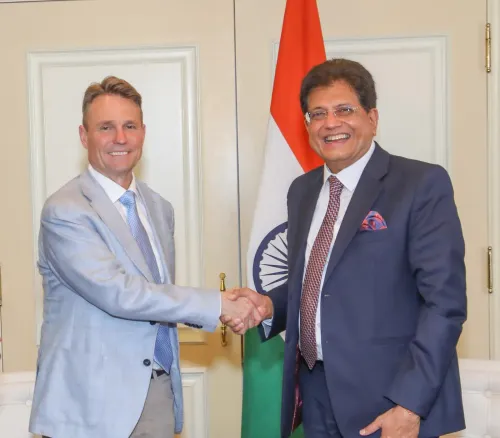
Commerce Minister Piyush Goyal met McCain Foods President and CEO Max Koeune on May 27, 2026, exploring expanded collaboration in food processing, cold-chain infrastructure, and sustainable agriculture, with an explicit goal of positioning India as a global food processing export hub.
Key Takeaways
Union Commerce Minister Piyush Goyal held talks with Max Koeune , President and CEO of McCain Foods , on May 27, 2026 .
McCain Foods sources potatoes from thousands of Indian farmers through assured procurement, supporting rural incomes.
Discussions covered food processing capacity, cold-chain infrastructure, sustainable agriculture, and innovation.
The minister articulated a goal of making India an export hub for the global food processing sector.
The meeting aligns with the PLI Scheme for Food Processing (2021) and the Mission for Integrated Development of Horticulture (2014).
No formal investment figure or joint-venture announcement was made public at this stage.
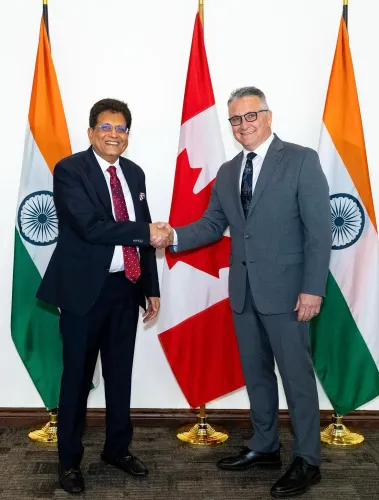
Union Commerce and Industry Minister Piyush Goyal met Max Koeune, President and Chief Executive Officer of McCain Foods, on Wednesday, May 27, 2026, discussing ways to deepen the Canadian food giant's partnership with India across food processing, cold-chain infrastructure, and sustainable agriculture.
Context
Goyal described the meeting as marked by 'good conversations and shared optimism,' noting that McCain Foods has a longstanding presence in India that 'empowers thousands of farmers through assured potato sourcing, supports local producers, and delights consumers with iconic favourites like McCain Smiles.' The minister's post underscored both the company's existing footprint and the ambition to scale it further.
The discussions covered four broad areas: food processing capacity, cold-chain infrastructure, sustainable agriculture practices, and innovation — all aimed at building 'globally competitive supply chains that benefit farmers, producers, and consumers alike.'
Policy Backdrop
The meeting fits squarely within India's broader push to attract foreign direct investment into agro-processing. The Production Linked Incentive (PLI) Scheme for Food Processing Industries, launched in 2021, was designed to expand processing capacity and draw in global players with competitive incentives. Complementing it, the Mission for Integrated Development of Horticulture (MIDH), operational since 2014, has channelled funds into cold-chain and post-harvest infrastructure — precisely the areas flagged in Tuesday's discussions.
Successive governments have linked cold-chain development and value addition in potatoes and vegetables to both domestic food security and global market ambitions, making McCain's potato-sourcing model a natural fit for policy priorities.
Stakeholders and Impact
McCain Foods has operated in India for over a decade, with manufacturing and sourcing operations that directly interface with the country's potato-farming belt. Assured procurement arrangements of the kind McCain runs are widely regarded as a mechanism to stabilise farm incomes and reduce the price volatility that affects smallholder growers.
Beyond farmers, food processors and cold-chain logistics operators stand to benefit if the collaboration expands. Minister Goyal also explicitly flagged the goal of 'positioning India as an export hub for the global food processing sector,' signalling that any deepened partnership would be oriented toward overseas markets, not just domestic consumption.
What's Next
The ministry has not announced a formal investment figure or timeline, and the exact outcomes of the meeting remain to be disclosed. Observers will watch for follow-up announcements on new McCain investments, joint ventures in food-processing parks, or references to these discussions in upcoming India-Canada trade and investment dialogues. With bilateral trade conversations between the two countries in a state of flux, a high-profile corporate engagement of this kind could carry diplomatic as well as economic weight.
If the partnership advances, it could serve as a template for other global food multinationals weighing India as a base for export-oriented processing operations.
Point of View
The minister is threading a domestic political narrative — rural income support — through a foreign investment pitch. The timing is notable given the sensitive state of India-Canada diplomatic relations; a high-visibility corporate engagement provides a channel for economic goodwill even when official ties are strained. If concrete investment announcements follow, the interaction will be cited as evidence that the PLI and cold-chain policy architecture is translating into real capital commitments.
NationPress
10 Oct 2026
Frequently Asked Questions
What did Piyush Goyal discuss with McCain Foods CEO Max Koeune?
Minister Goyal and Max Koeune discussed deepening collaboration in food processing, cold-chain infrastructure, sustainable agriculture, and innovation, with a focus on building export-oriented supply chains and positioning India as a global food processing hub.
What is McCain Foods' presence in India?
McCain Foods has operated in India for over a decade, running manufacturing and potato-sourcing operations that support thousands of farmers through assured procurement and supply products such as McCain Smiles to Indian consumers.
How does this meeting relate to India's food processing policy?
The discussions align with the PLI Scheme for Food Processing Industries (2021) and the Mission for Integrated Development of Horticulture (2014), both of which aim to expand processing capacity and cold-chain infrastructure to reduce post-harvest losses and boost exports.
Will McCain Foods increase investment in India?
No formal investment figure or timeline has been announced. The minister's post indicated exploratory talks; any concrete commitments are expected to be disclosed through follow-up official announcements.
Why does India want to become a food processing export hub?
India aims to reduce post-harvest losses, raise farmer incomes, and capture greater value in global food supply chains. Partnerships with multinationals like McCain Foods are seen as a way to bring technology, cold-chain logistics, and assured market access to domestic producers.