Goyal meets space startups, backs innovation push
Synopsis
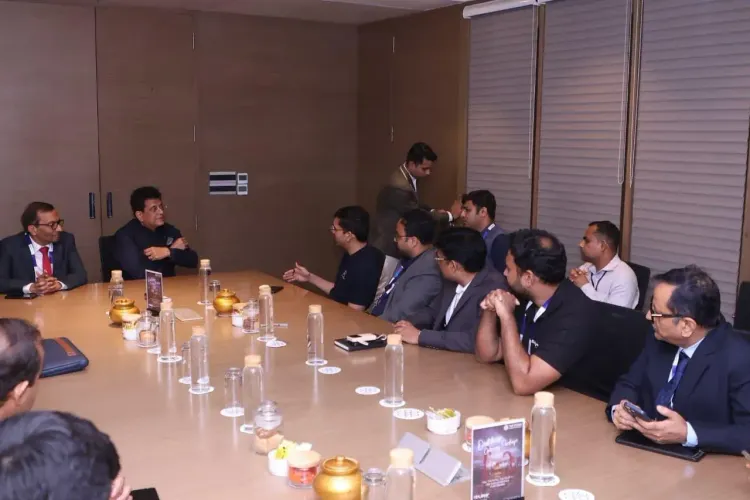
Commerce Minister Piyush Goyal met space sector startups alongside INSPACe Chairman Pawan Kumar Goenka on 10 June 2026, underscoring the Modi government's push to build a private-sector-led space innovation ecosystem and expand India's share of the global space economy.
Key Takeaways
Commerce Minister Piyush Goyal held a meeting with space sector startups on 10 June 2026 alongside INSPACe Chairman Pawan Kumar Goenka .
INSPACe , set up in 2020 and operationalised in 2021 , serves as the single-window agency for private participation in India's space sector.
The Union Cabinet approved landmark space sector reforms in June 2020 , ending ISRO 's near-monopoly and opening the sector to private players.
The government permits 100 per cent FDI in satellite manufacturing and launch services, reinforcing its liberalisation agenda.
The meeting focused on harnessing emerging technologies for innovation, competitiveness, and growth in India's space economy.
Upcoming milestones to watch include the Space Policy 2024 framework rollout and potential new funding mechanisms ahead of the next Union Budget .
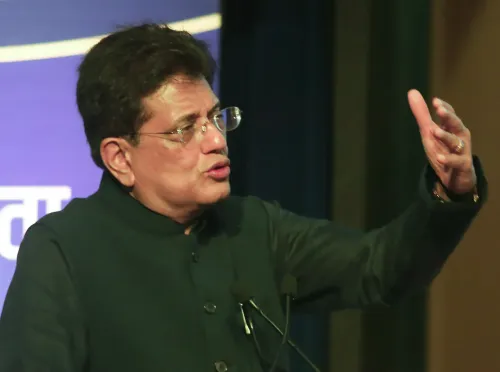
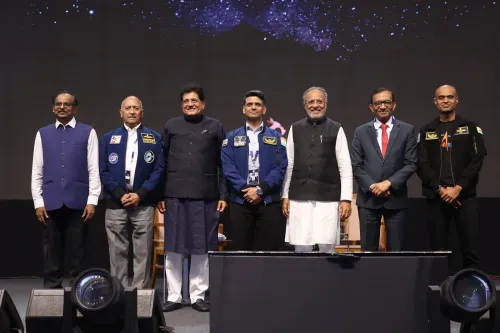
Union Commerce and Industry Minister Piyush Goyal met with space sector startups on Wednesday, 10 June 2026, alongside Pawan Kumar Goenka, Chairman of INSPACe (Indian National Space Promotion and Authorisation Centre), to discuss emerging opportunities and the role of private enterprise in India's rapidly expanding space economy.
Context
At the meeting, Goyal said he 'heard their perspectives on the evolving opportunities in India's space sector and the ways to harness emerging technologies to drive innovation, competitiveness and growth.' He also 'emphasised that with India's rapidly expanding space sector, there is immense potential for startups to scale new heights and play a pivotal role in the nation's space journey.'
The minister highlighted that the Modi Government 'continues to foster a thriving ecosystem for innovation and entrepreneurship, empowering startups to achieve remarkable milestones.' The meeting signals continued high-level political attention to the private space sector at a time when the industry is maturing rapidly.
Policy Backdrop
India's space sector liberalisation traces back to June 2020, when the Union Cabinet approved sweeping reforms that ended ISRO's near-monopoly and opened satellite manufacturing, launch-vehicle development, and related services to private companies. INSPACe was formally operationalised in 2021 as a single-window agency under the Department of Space to provide clearances, technical support, and infrastructure sharing to non-government entities.
Goenka, who has chaired INSPACe since 2022 and previously served as Managing Director of Mahindra and Mahindra, has been a central figure in shaping the policy architecture for private participation. The government has also permitted 100 per cent FDI in satellite manufacturing and launch services, aligning the space sector with broader liberalisation drives seen in defence and semiconductors.
Stakeholders and Impact
Space startups stand to gain directly from sustained ministerial engagement, as access to policy-makers can accelerate regulatory clearances, public-private partnerships, and potential funding mechanisms. The meeting reflects a pattern in which the government treats strategic emerging sectors — space, defence, semiconductors — as arenas for nurturing indigenous innovation rather than relying solely on state-owned institutions.
Private aerospace entrepreneurs have increasingly sought a seat at the table as India positions itself to capture a larger share of the global space economy, which analysts project will grow significantly through the decade. The involvement of the Commerce Ministry, alongside the Department of Space, signals that trade competitiveness and export potential are now explicit considerations in space policy.
What's Next
Observers will watch for concrete outcomes from this engagement, including any announcements tied to the proposed Space Policy 2024 framework, new funding windows, or technology-transfer agreements between INSPACe and private firms ahead of the next Union Budget. The government's ability to translate high-level consultations into actionable support — grants, infrastructure access, and streamlined approvals — will determine whether India's space startup ecosystem can achieve the scale Goyal envisions.
Point of View
The meeting positions the Commerce Ministry as a co-owner of the space economy narrative alongside the Department of Space, which is significant given trade competitiveness is now an explicit goal. The parallel with how the government has handled defence and semiconductor startups suggests a template: high-visibility consultations followed by policy instruments timed to budget cycles. Whether this translates into new funding or faster clearances will be the real test of intent.
NationPress
26 Oct 2026
Frequently Asked Questions
What is INSPACe and what does it do?
INSPACe, the Indian National Space Promotion and Authorisation Centre, is a government body set up in 2020 under the Department of Space to act as a single-window agency for private companies seeking to enter India's space sector. It provides regulatory clearances, technical support, and access to shared infrastructure.
Why did Piyush Goyal meet space startups in June 2026?
Goyal met space sector startups alongside INSPACe Chairman Pawan Kumar Goenka to hear their perspectives on opportunities in India's space economy and to reinforce the government's commitment to fostering innovation, competitiveness, and entrepreneurship in the sector.
When did India open its space sector to private companies?
The Union Cabinet approved major space sector reforms in June 2020, ending ISRO's near-monopoly. INSPACe was subsequently operationalised in 2021 to support and regulate private players.
What is the Space Policy 2024 and why does it matter?
The Space Policy 2024 is a proposed framework aimed at further defining the rules and incentives for private participation in India's space sector. Its rollout is closely watched by startups and investors as it could unlock new funding mechanisms and clearer regulatory pathways.
Who is Pawan Kumar Goenka and what is his role in India's space sector?
Pawan Kumar Goenka has chaired INSPACe since 2022 and is a former Managing Director of Mahindra and Mahindra. He plays a central role in shaping policy for private-sector participation in India's space activities.