Goyal Meets Traders Welfare Board Chief on Digital Push, EoDB
Synopsis
Union Commerce and Industry Minister Piyush Goyal met National Traders Welfare Board Chairman Sunil Singhi on 3 June 2026 to discuss strengthening trader interests, expanding digital opportunities and accelerating Ease of Doing Business, linking the agenda to Atmanirbhar Bharat and Viksit Bharat goals.
Key Takeaways
Piyush Goyal met National Traders Welfare Board Chairman Sunil Singhi on 3 June 2026.
Discussion focused on trader welfare, digital opportunities and Ease of Doing Business.
Goyal described India's trading class as the 'backbone' of the economy.
The minister tied trader empowerment to Atmanirbhar Bharat and Viksit Bharat goals.
Ease of Doing Business reforms have been a stated priority since 2014; Atmanirbhar Bharat was launched in May 2020.
Specific decisions from the meeting were not disclosed in the post.
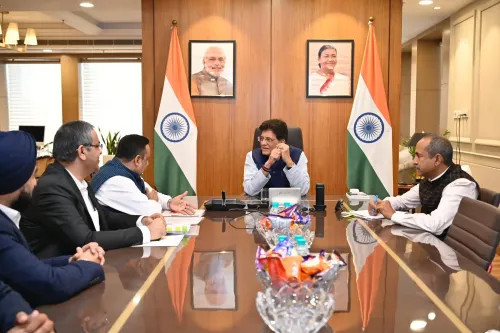
Union Commerce and Industry Minister Piyush Goyal on Wednesday, 3 June 2026, held detailed consultations with Sunil Singhi, Chairman of the National Traders Welfare Board, on strengthening protections for India's trading community, expanding digital opportunities and accelerating Ease of Doing Business reforms. Goyal disclosed the meeting through a post on X later in the evening, framing traders as the 'backbone' of the Indian economy and tying their empowerment to the government's twin goals of Atmanirbhar Bharat and Viksit Bharat.
Context
In his post, the minister wrote that 'Bharat ka vyapari varg hamari arthvyavastha ki reedh hai' ('India's trading class is the backbone of our economy') and credited Prime Minister Narendra Modi's leadership for what he described as a rapidly transforming commercial landscape. He said the discussion with Singhi covered three broad themes: further safeguarding the interests of traders, widening their access to digital tools and markets, and giving fresh momentum to regulatory simplification.
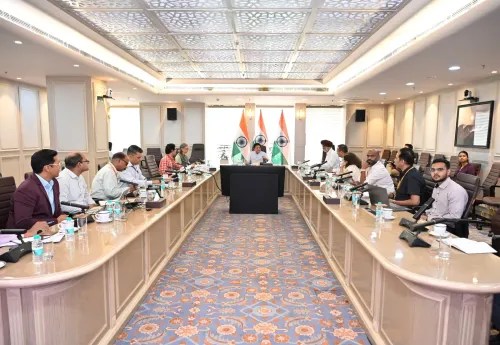
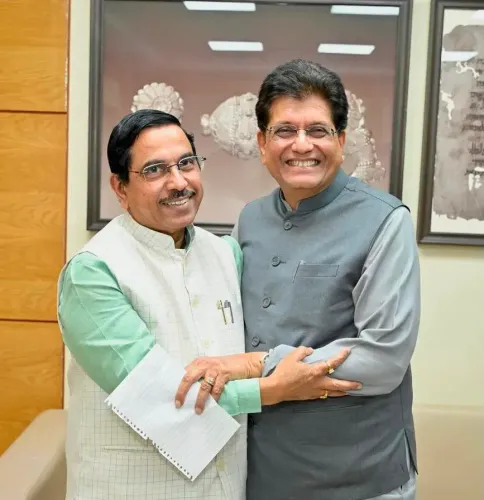
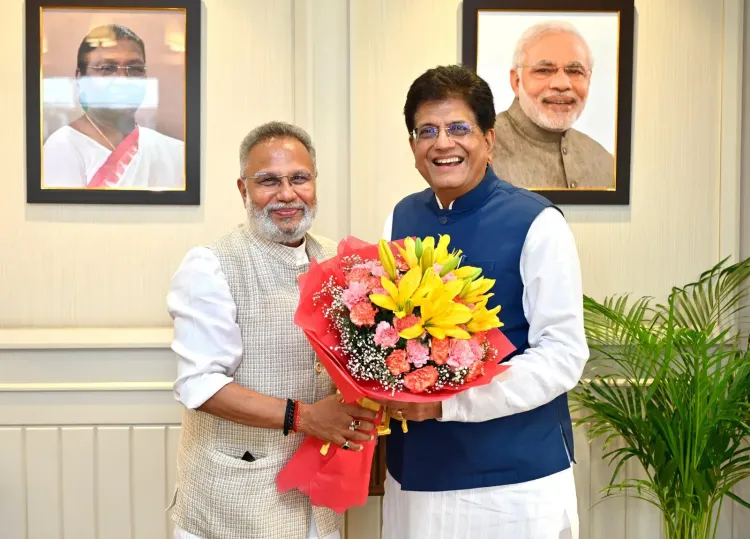
Goyal closed the message with the line that 'when the trader is empowered, the resolve of Atmanirbhar Bharat and Viksit Bharat becomes even stronger', positioning the small-trader constituency at the centre of the government's long-horizon growth narrative. The post was accompanied by two photographs from the meeting.
Policy backdrop
The National Traders Welfare Board is a government body tasked with examining welfare, credit, digital access and policy concerns of India's retail and wholesale trading community, a constituency that has long been a core support base of the ruling Bharatiya Janata Party. Engagements between the commerce ministry and the board typically feed into the annual review of trade policy and feature in pre-Budget consultations.
The two policy planks Goyal flagged - digital expansion and Ease of Doing Business - have a long lineage. The Ease of Doing Business programme, pursued since 2014, has driven changes including the Insolvency and Bankruptcy Code, the rollout of the Goods and Services Tax, labour code consolidation and single-window clearances. The Atmanirbhar Bharat package, announced in May 2020, layered on liquidity support and production-linked incentives aimed at deepening domestic supply chains.
Simultaneously, the formalisation and digitisation of small trade through GST registration, UPI payments and the Open Network for Digital Commerce has been a defining theme of the Modi government's second and third terms, with the trader segment treated as both a beneficiary and a political stakeholder.
Stakeholders and impact
India's organised and unorganised retail trade together employ tens of millions and account for a significant share of non-farm employment. Small shopkeepers, kirana owners and wholesale merchants have repeatedly raised concerns over deep-discounting by large e-commerce platforms, compliance load under GST, and access to affordable working-capital credit.
For the welfare board, a public endorsement from the commerce minister signals that its recommendations are being routed into the ministry's working agenda. For trader associations, the meeting offers a channel to press demands on e-commerce rules, payment-gateway charges and dispute-resolution mechanisms ahead of the next policy cycle.
Politically, the outreach reinforces the BJP's framing of traders as partners in the Viksit Bharat 2047 vision, even as the segment continues to navigate disruption from quick-commerce, digital marketplaces and changing consumer behaviour.
What's next
Specific decisions taken at the meeting were not detailed in the post. The follow-through is likely to surface in the form of board recommendations, departmental circulars or budgetary line items relating to trader welfare, digital onboarding tools and procedural simplification.
Watch for any announcement from the commerce ministry on a refreshed national retail trade policy, an updated framework for e-commerce conduct, or targeted credit and skilling schemes for small traders. Each would convert the broad assurances of Wednesday's meeting into measurable action.
Point of View
E-commerce or GST. By foregrounding digital opportunities alongside Ease of Doing Business, Goyal is signalling that the government wants small traders inside the formal digital economy rather than outside it, even as they remain wary of large platforms. The explicit linkage to Viksit Bharat 2047 also keeps the BJP's core small-business constituency politically anchored to the long-term growth narrative. The substantive test will be whether board recommendations translate into specific rules on e-commerce conduct, credit access or compliance relief.
NationPress
21 Oct 2026
Frequently Asked Questions
Who did Piyush Goyal meet on 3 June 2026?
Piyush Goyal met Sunil Singhi, Chairman of the National Traders Welfare Board, on 3 June 2026 to discuss trader welfare, digital expansion and Ease of Doing Business reforms.
What is the National Traders Welfare Board?
It is a government body that examines welfare, digital access and policy issues affecting India's retail and wholesale trading community and advises the commerce ministry.
What is Ease of Doing Business in India?
It is a regulatory reform programme pursued by the Modi government since 2014 to simplify business operations through measures such as GST, the Insolvency and Bankruptcy Code and single-window clearances.
How is Atmanirbhar Bharat linked to traders?
Atmanirbhar Bharat, launched in May 2020, aims at self-reliance through domestic production and trade, and includes liquidity and incentive measures relevant to small businesses and traders.
What can traders expect after this meeting?
Specific outcomes were not disclosed, but follow-up may include board recommendations on digital tools, credit access, e-commerce rules or compliance simplification entering future budget or commerce ministry plans.