Goyal Pitches India at NAM Roundtable in Milwaukee
Synopsis
Union Commerce Minister Piyush Goyal addressed a National Association of Manufacturers roundtable in Milwaukee on 30 September 2026, pitching India's industrial base and skilled workforce to US manufacturers and inviting them to partner with Indian SMEs and co-invest in advanced manufacturing.
Key Takeaways
Piyush Goyal addressed a NAM Business Roundtable in Milwaukee, US on 30 September 2026 .
He invited American manufacturers to deepen their presence in India, partner with Indian SMEs , and co-invest in advanced manufacturing .
The engagement aligns with the Make in India initiative (launched 2014 ) and the iCET framework announced in 2023 .
NAM represents small and large manufacturers across the United States, making it a high-value outreach target for investment pitches.
The pitch frames India as an equal partner in building resilient supply chains, not merely a low-cost destination.
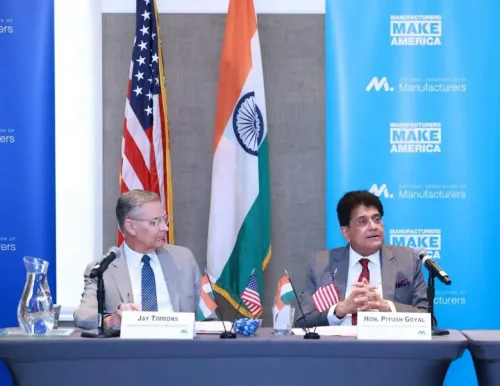
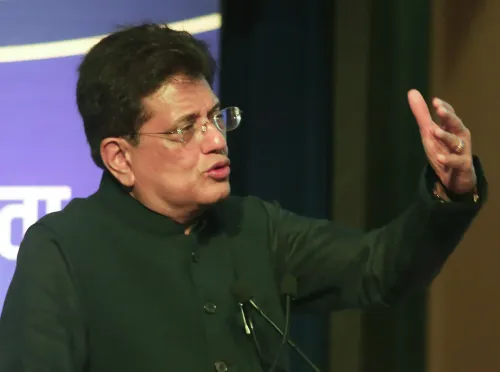
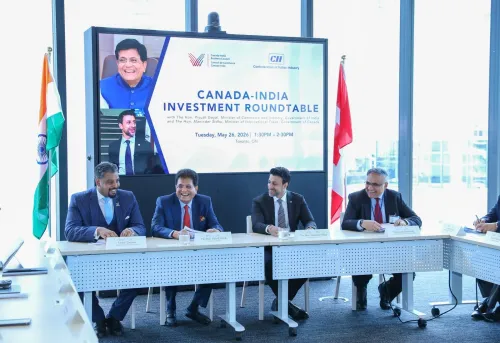
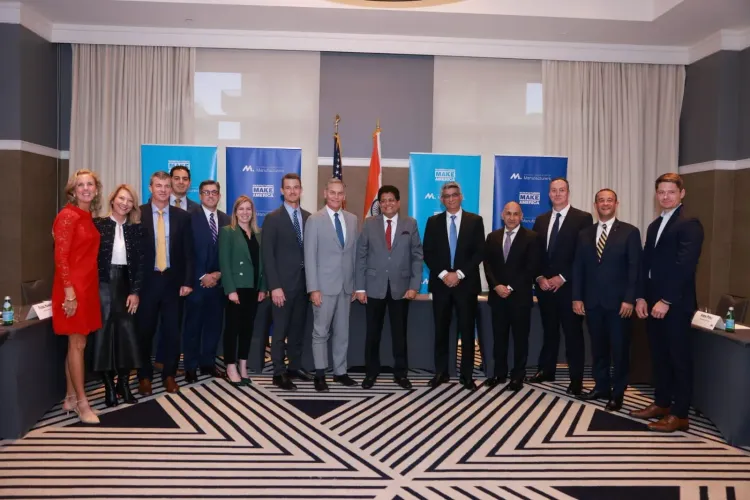
At a Business Roundtable convened by the National Association of Manufacturers (NAM) in Milwaukee, United States, Union Commerce and Industry Minister Piyush Goyal made a direct pitch on Wednesday, 30 September 2026 — urging American manufacturers, both large and small, to plant deeper roots in India and co-build the supply chains the world is scrambling to diversify.
The ask from the factory floor
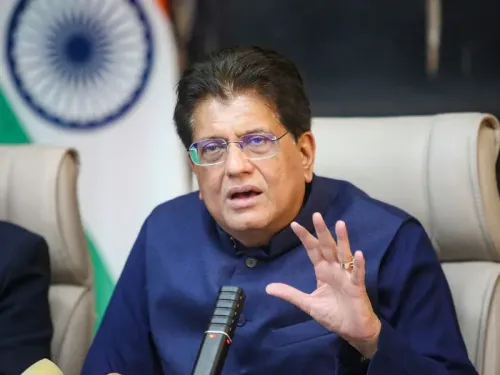
Goyal's message was unusually concrete for a diplomatic circuit stop. He invited US manufacturers to do three specific things: deepen their presence in India, partner with Indian small and medium enterprises (SMEs), and co-invest in advanced manufacturing to forge resilient supply chains. The framing — 'value for both economies' — was deliberate, positioning India not as a recipient of foreign capital but as an equal architect of a shared industrial future.
NAM represents the broadest cross-section of American manufacturing, from family-owned machine shops to Fortune 500 industrial giants. Getting that room's attention matters — these are the decision-makers who authorise factory relocations, supplier contracts, and decade-long capital commitments.
Why Milwaukee, why now
The timing is no accident. US policy has spent the last several years aggressively pushing 'friend-shoring' — redirecting supply chains away from concentrated single-country dependencies toward trusted allied economies. India, with its Make in India initiative (launched 2014) and a rapidly expanding industrial workforce, has positioned itself as the natural beneficiary of that shift.
The India-US Trade Policy Forum, established in 2005, provides the formal bilateral scaffolding for this kind of engagement. More recently, the Initiative on Critical and Emerging Technology (iCET), announced in 2023, specifically opened cooperation channels in advanced manufacturing and supply chains — precisely the language Goyal used in Milwaukee.
Indian SMEs at the centre of the pitch
Notably, Goyal explicitly called out Indian SMEs as potential partners — not just large conglomerates. This signals a maturing pitch: India is no longer only selling cheap labour or land; it is offering an ecosystem of mid-sized, capable manufacturers that can slot into American supply chains as genuine tier-two and tier-three suppliers. That's a harder sell, but a far more durable one if it lands.
The roundtable adds momentum to a visit that underscores how actively New Delhi is working the American business community at every level — not waiting for capital to find its way to India, but going directly to the rooms where investment decisions are made.
The real test arrives when boardrooms translate roundtable handshakes into signed agreements — and India's ability to cut through regulatory friction will determine whether Milwaukee's momentum becomes Milwaukee's legacy.
Point of View
Methodical effort by New Delhi to embed itself in the US manufacturing conversation at the industry-association level — where long-term capital decisions actually incubate. By naming Indian SMEs as co-investment partners rather than just subcontractors, the pitch reflects a deliberate upgrade in India's value proposition, consistent with the iCET framework's emphasis on technology and supply-chain co-creation. The visit also signals that India is watching the US friend-shoring window carefully and moving quickly to claim a larger share before competing economies do. How many of these roundtable conversations convert into binding commitments will be the true measure of this diplomatic groundwork.
NationPress
30 Sept 2026
Frequently Asked Questions
What did Piyush Goyal say at the NAM roundtable in Milwaukee?
Goyal highlighted strong momentum in India-US economic ties and invited American manufacturers to deepen their presence in India, partner with Indian SMEs, and co-invest in advanced manufacturing to build resilient supply chains benefiting both economies.
What is the National Association of Manufacturers (NAM)?
NAM is a major US trade association representing both small and large manufacturers across a wide range of sectors, making it one of the most influential industry bodies for manufacturing investment decisions in the United States.
What is India's Make in India initiative?
Launched in 2014 , Make in India is a government initiative aimed at attracting foreign investment into India's manufacturing sector and building domestic industrial capacity across multiple industries.
What is the iCET framework between India and the US?
The Initiative on Critical and Emerging Technology (iCET), announced in 2023 , is a bilateral framework to expand India-US cooperation in advanced manufacturing, supply chains, and critical technologies.
Why is India pitching to US manufacturers now?
The US has been actively promoting 'friend-shoring' — redirecting supply chains to trusted allied economies — creating a significant opportunity for India to attract American manufacturing investment and integrate into diversified global value chains.