India can be global auto hub as developed economies face cost surge: Goyal
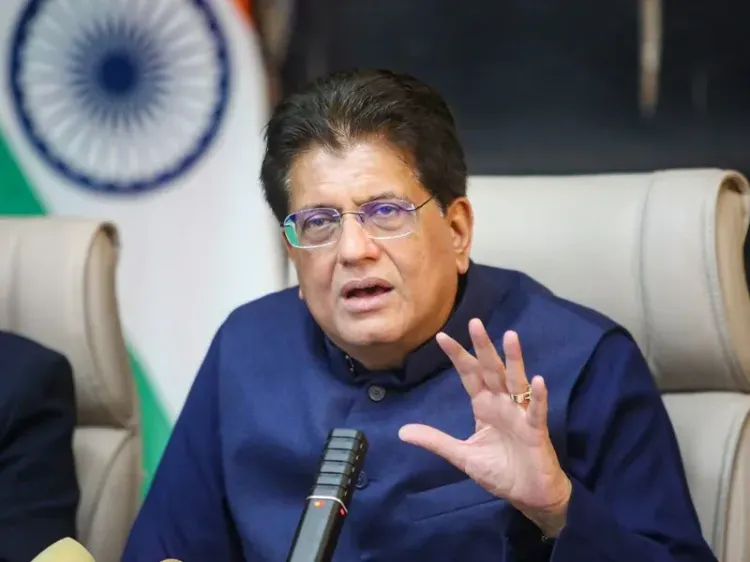
Synopsis
Commerce Minister Piyush Goyal used the 66th SIAM Annual Convention to pitch India as the world's next great auto manufacturing base — arguing that developed economies are pricing themselves out of global production. With a four-pillar strategy of molecules, modules, megawatts and markets, and a firm defence of the India-US trade deal, the government is signalling a decisive push to reposition India in global automotive supply chains.
Key Takeaways
Commerce Minister Piyush Goyal addressed the 66th SIAM Annual Convention on 3 September in New Delhi .
Goyal invited global automakers to manufacture in India and use it as a base to serve international markets.
He cited Maruti's exports to Japan as a model, saying India could 'double every two years' with an aggressive export focus.
India's auto strategy is built around four pillars: molecules, modules, megawatts and markets .
The government is pursuing FTAs and Pax Silica with the US to secure rare earth and critical mineral supply chains.
Goyal asserted that 'not a single sensitivity of India has been compromised' in the proposed India-US BTA .
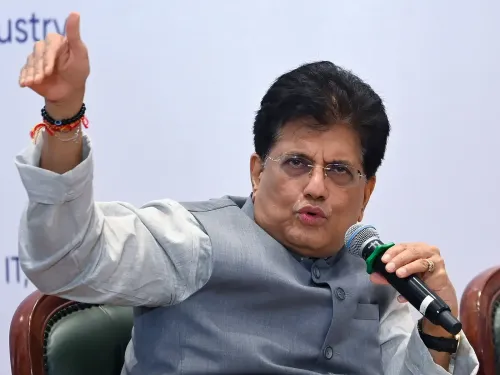
Commerce and Industry Minister Piyush Goyal on Thursday, 3 September called on global automobile companies to set up manufacturing operations in India and use the country as an export base for international markets, arguing that rising production costs, skill shortages, and tightening regulatory frameworks would increasingly shift output away from developed economies. Goyal made the remarks while addressing the 66th SIAM Annual Convention in New Delhi.
The Case for India as an Auto Manufacturing Base
Goyal said the government would actively encourage more global automakers to enter India and leverage its economies of scale. 'We will encourage more and more global companies to come into India and use the economies of scale to serve the global scale,' he said. He pointed to Maruti's car exports to Japan as a benchmark for what Indian manufacturers could achieve with a sharper export focus. 'Look at export market more actively — then we can double every two years if we do what Maruti has done,' the Minister added.
Competitiveness, Localisation and Technology Partnerships
Goyal credited Japanese investments, industry partnerships, and rising localisation rates for making India's automobile sector more globally competitive. He stressed the importance of technology collaborations that would enable domestic production of components currently being imported, with the eventual goal of supplying those parts to international markets. The Minister framed India's automotive strategy around four pillars: molecules, modules, megawatts and markets — covering critical minerals, components and technology, energy security, and access to global trade networks.
Critical Minerals and Strategic Resource Access
The government, Goyal said, is actively negotiating free trade agreements and bilateral partnerships to secure supply chains for rare earths and critical minerals essential to EV and advanced automotive manufacturing. India is also pursuing ocean exploration initiatives and participating in Pax Silica with the United States as part of a broader effort to strengthen access to strategic resources and technologies.
India-US Bilateral Trade Agreement: Goyal's Assurance
On the proposed India-US bilateral trade agreement (BTA), Goyal pushed back firmly against what he described as misinformation circulating about the deal's terms. He asserted that the interests of farmers, fishermen, MSMEs, workers, handloom and handicraft sectors, and the automobile industry had not been compromised in the negotiations. 'The details of the US deal isn't out yet so some people are trying to spread total falsehood. I can state with authority that not a single sensitivity of India has been compromised in the US BTA,' he said. Notably, the full details of the agreement are yet to be made public, leaving some of Goyal's assurances difficult to independently verify at this stage.
What Comes Next
With the India-US trade deal still pending official disclosure, industry bodies and trade analysts will be watching closely for the fine print on automotive tariffs and component imports. The SIAM convention's focus on export-led growth signals a broader policy shift — from a domestically-oriented auto sector toward one positioned to compete in global supply chains. Whether global automakers respond to Goyal's invitation will depend heavily on the pace of FTA closures and the government's ability to secure critical mineral access.
Point of View
And India has a window. But the four-pillar framework of molecules, modules, megawatts and markets is only as credible as the FTAs and mineral deals that underpin it, most of which are still in negotiation. The assurance on the India-US BTA, delivered before the deal's details are public, is a political statement more than a verifiable commitment — and the automobile industry, which has long sought clarity on tariff structures, will be watching the fine print carefully. India's auto export ambitions are real, but execution has historically lagged the rhetoric.
NationPress
19 Oct 2026
Frequently Asked Questions
What did Piyush Goyal say about India becoming a global auto manufacturing hub?
At the 66th SIAM Annual Convention on 3 September, Commerce Minister Piyush Goyal said rising costs, skill shortages, and regulatory pressures in developed economies would push global auto production toward India. He called on international automakers to establish manufacturing bases in India and use it to serve global markets.
What is the India-US bilateral trade agreement and how does it affect the auto sector?
The India-US bilateral trade agreement (BTA) is a proposed trade deal whose full details have not yet been made public. Goyal asserted at the SIAM convention that India's automobile industry interests, along with those of farmers, MSMEs, and other sensitive sectors, have not been compromised in the negotiations.
Why did Goyal cite Maruti's exports to Japan?
Goyal used Maruti's car exports to Japan as an example of what Indian automakers can achieve with an export-oriented strategy. He argued that if the industry adopted a similarly aggressive global outlook, India could double its auto exports every two years.
What are India's critical mineral plans for the EV and auto sector?
India is negotiating free trade agreements and bilateral partnerships to secure rare earth and critical mineral supply chains essential for EV and advanced automotive manufacturing. It is also pursuing ocean exploration initiatives and participating in Pax Silica with the United States to strengthen access to strategic resources.
What is the SIAM Annual Convention?
The Society of Indian Automobile Manufacturers (SIAM) Annual Convention is a major industry gathering that brings together automakers, policymakers, and global partners to discuss trends, policy, and the future of the Indian automotive sector. The 66th edition was held in New Delhi on 3 September.