India to set up modern toy testing labs in manufacturing clusters: Piyush Goyal
Synopsis
Commerce Minister Piyush Goyal has pledged government-backed modern testing labs across India's toy clusters, backed by a public-private Centres of Excellence model and a CAD-CAM technology push — all aimed at capturing a larger slice of the $120 billion global toy market. With 21,000 MSME units and 50-plus clusters already in play, the question is whether infrastructure investment can now match the sector's policy momentum.
Key Takeaways
Commerce Minister Piyush Goyal announced modern testing facilities for toy clusters via BIS , National Test House , and other labs on Saturday, 4 July 2026 .
A public-private partnership model for Centres of Excellence — covering testing, design, and innovation — was proposed.
Manufacturers urged to adopt CAD-CAM and CNC machining for precision and quality improvement.
More than 50 toy clusters and approximately 21,000 MSME units are active under the Make in India framework.
Export turnover excluded from MSME status calculation, enabling enterprises to scale without losing framework benefits.
India targets a larger share of the global toy market, estimated at $120 billion .
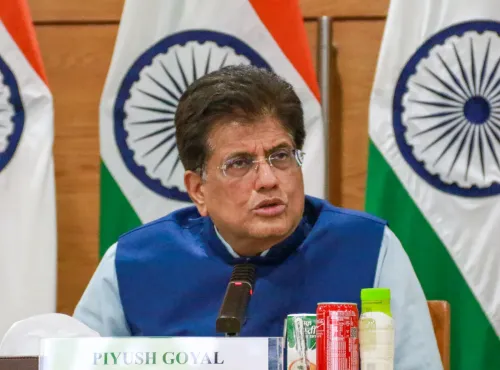
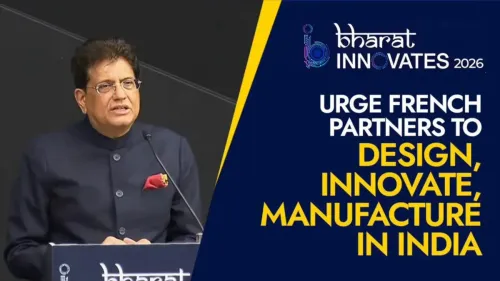
Commerce Minister Piyush Goyal on Saturday announced that the government will establish modern testing facilities across toy manufacturing clusters nationwide, leveraging the Bureau of Indian Standards (BIS), the National Test House, and other government and semi-government laboratories. Speaking at the 17th Toy Biz International B2B Exhibition 2026 in New Delhi, Goyal urged industry stakeholders to identify and communicate the specific testing equipment needed to ensure Indian toys meet the highest quality benchmarks for both domestic and international markets.
Key Announcements at the Exhibition
Goyal proposed a public-private partnership model under which industry and government would jointly establish Centres of Excellence equipped with testing facilities, product development infrastructure, innovation labs, and design centres. He suggested these centres also include dedicated spaces for showcasing newly launched, high-quality products.
The Minister called on industry leaders to set up skill development centres and partner with Industrial Training Institutes (ITIs) to train workers in advanced and good manufacturing practices. He also encouraged manufacturers to pursue brand-building initiatives, assuring support through the Export Promotion Mission.
Technology Upgradation Push
Goyal urged toy manufacturers to adopt Computer-Aided Design and Computer-Aided Manufacturing (CAD-CAM) technologies alongside CNC machining to sharpen product quality, precision, and efficiency. He stated that integrating CAD-CAM with CNC-based manufacturing would enable the industry to develop high-quality products at greater scale. Continuous improvement in manufacturing processes, he said, would help Indian toy makers carve out a distinct position in global markets.
MSME Growth and Sector Scale
Addressing MSME stakeholders, Goyal encouraged every micro enterprise to aspire to become small, every small to become medium, and every medium to become large. He pointed out that export turnover is excluded when determining MSME status, allowing enterprises to expand substantially while continuing to benefit from the MSME framework — a provision that, he argued, removes a key disincentive to scaling up.
Goyal noted that over the 11 years of the 'Make in India' initiative, more than 50 toy clusters have been established across the country. Approximately 21,000 MSME units are now associated with toy manufacturing, with many also undertaking contract manufacturing for Indian and international brands.
India's Opportunity in the Global Toy Market
The global toy market is estimated at around $120 billion, and Goyal underscored that maintaining high quality standards would enable India to significantly expand its share. This comes amid a broader government push to position India as a credible alternative to China in labour-intensive manufacturing sectors. Notably, the toy industry has been among the early beneficiaries of import duty rationalisation and quality control orders introduced since 2020.
With testing infrastructure, design capabilities, and skill development now on the policy agenda simultaneously, the sector appears poised for a more structured phase of growth — provided execution keeps pace with ambition.
Point of View
But the devil is in the timeline and coverage — previous cluster-level quality initiatives have moved slowly, and BIS capacity constraints are well-documented. The exclusion of export turnover from MSME classification is a genuinely useful structural nudge, yet it has existed in policy for years without dramatically shifting the scale distribution of the sector. The $120 billion global market framing is compelling, but India's toy exports remain a fraction of China's; closing that gap requires not just labs and CAD-CAM, but consistent enforcement of quality control orders and a reliable logistics backbone. Goyal's address covered the right themes — what the industry now needs is a binding implementation calendar, not another aspirational roadmap.
NationPress
3 Oct 2026
Frequently Asked Questions
What testing infrastructure did the government announce for toy manufacturing clusters?
The government announced the establishment of modern testing facilities across toy manufacturing clusters through the Bureau of Indian Standards (BIS), the National Test House, and other government and semi-government laboratories. Commerce Minister Piyush Goyal urged industry stakeholders to identify the specific testing equipment required to meet domestic and international quality standards.
What are the proposed Centres of Excellence for the toy industry?
Goyal proposed jointly established Centres of Excellence under a public-private partnership model, equipped with testing facilities, product development infrastructure, innovation labs, dedicated design centres, and spaces for showcasing new high-quality products. Both industry and government would contribute to setting these up.
How large is India's toy manufacturing sector currently?
As of the 17th Toy Biz International B2B Exhibition 2026, more than 50 toy clusters have been established across India, with approximately 21,000 MSME units associated with toy manufacturing. Many of these units also undertake contract manufacturing for Indian and international brands.
Why is the exclusion of export turnover from MSME status significant for toy manufacturers?
Excluding export turnover from MSME classification allows toy enterprises to grow their international business substantially while continuing to access MSME-linked benefits and incentives. Goyal cited this as a key provision that removes a disincentive for MSMEs to scale up their operations.
What is India's target in the global toy market?
The global toy market is estimated at around $120 billion. Goyal stated that by maintaining high quality standards and adopting modern manufacturing technologies such as CAD-CAM and CNC machining, India can significantly expand its presence and market share in this global industry.